Quick Answer
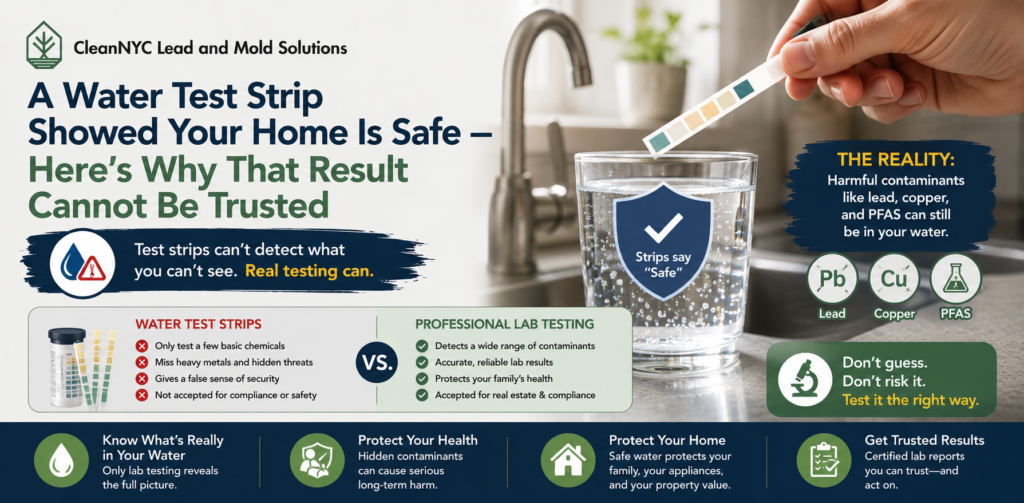
A home water test strip can provide a basic snapshot of your water, but it cannot detect many harmful contaminants such as lead, PFAS, bacteria, volatile organic compounds (VOCs), or certain heavy metals with the accuracy of certified laboratory analysis. If you want dependable results that reflect your home’s actual water quality, professional water testing is the safest and most reliable choice.
Think Your Water Is Safe? That Tiny Test Strip May Be Telling Only Half the Story
You dipped a test strip into a glass of tap water, waited a few seconds, compared the colors, and everything looked normal.
That should be reassuring—right?
Not necessarily.
Every year, homeowners rely on inexpensive home testing kits believing they provide a complete picture of their drinking water. While these kits are convenient, they often test only a handful of basic parameters and leave out contaminants that can affect long-term health. A “safe” result doesn’t always mean your water is free from harmful substances.
Modern plumbing systems, aging infrastructure, seasonal changes, and environmental pollution all influence what comes out of your tap. Many contaminants are invisible, odorless, and tasteless, making them impossible to detect without proper laboratory analysis.
Understanding the limitations of home kits is the first step toward protecting your household. Professional water quality testing goes beyond color-changing strips by identifying contaminants that simple consumer tests often miss.
Why Millions of Homeowners Use Water Test Strips
Water test strips have become increasingly popular because they are:
- Affordable
- Easy to purchase
- Quick to use
- Simple to understand
- Available online and in local stores
Most products promise results in just a few minutes, making them appealing for homeowners who want immediate answers.
Depending on the brand, a strip may measure:
- pH
- Chlorine
- Hardness
- Nitrate
- Nitrite
- Iron
- Alkalinity
These measurements can provide useful information about certain aspects of water chemistry. However, they represent only a small portion of overall water safety.
Many buyers mistakenly assume that because a strip shows acceptable readings, every possible contaminant has been ruled out. That assumption creates one of the biggest misconceptions surrounding home water testing.
The Biggest Limitation of Home Water Test Strips
Water quality is far more complex than a few color changes on a testing strip.
Professional laboratories use advanced analytical instruments capable of detecting contaminants at extremely low concentrations. Home strips simply cannot match that level of precision.
A typical strip cannot reliably identify contaminants such as:
- Lead
- PFAS (“forever chemicals”)
- Arsenic
- Copper at very low levels
- Mercury
- Volatile Organic Compounds (VOCs)
- Industrial chemicals
- Pharmaceutical residues
- Many pesticides
- Certain harmful bacteria
Some kits advertise broader testing capabilities, but even those generally lack the sensitivity required for accurate health-related decisions. According to the CDC’s guidance on lead in drinking water, laboratories certified to test for lead are the recommended way to confirm whether it is present in a home’s tap water. Regulators are also expanding oversight of PFAS in drinking water, a category of chemicals that home strips are not designed to catch at all.
This is why many environmental professionals recommend certified drinking water testing whenever homeowners need dependable answers.
Why “Safe” Doesn’t Always Mean Safe
One of the most dangerous aspects of home testing is the possibility of a false negative.
A false negative occurs when contaminants are present, but the test fails to detect them.
This can happen because:
- The contaminant isn’t included on the strip.
- The concentration falls below the strip’s detection range.
- The strip has deteriorated over time.
- Sampling procedures weren’t followed correctly.
- Chemical interference affects the reading.
Unlike a false positive—which simply causes unnecessary concern—a false negative may allow families to continue consuming contaminated water for months or even years.
That hidden exposure is what makes inaccurate testing especially concerning.
Your Water Changes More Often Than You Think
Many homeowners believe their tap water remains the same every day.
In reality, water quality changes continuously.
Several factors influence your home’s water supply, including:
Aging Plumbing
Corrosion inside older pipes can introduce metals into drinking water over time.
Municipal System Maintenance
Water treatment facilities occasionally adjust disinfectants, treatment methods, or water sources depending on operational needs.
Seasonal Weather
Heavy rainfall, flooding, drought, and snowmelt can all influence source water quality.
Construction Projects
Nearby roadwork or underground utility repairs may temporarily disturb water distribution systems.
Household Plumbing Repairs
Replacing fixtures, valves, or pipes may loosen accumulated mineral deposits that affect short-term water quality. If a renovation also disturbs painted surfaces, our dust wipe clearance testing service can confirm the space is safe once the work is finished.
Because conditions change, relying on a single home test strip months—or even years—after purchase provides only a limited snapshot.
Routine water contamination testing offers a much clearer understanding of what your household is actually consuming.
Clear Water Can Still Contain Harmful Contaminants
One of the biggest myths about drinking water is that clean-looking water must also be safe.
Unfortunately, appearance tells us very little.
Many contaminants have:
- No color
- No smell
- No unusual taste
This includes substances such as:
| Contaminant | Can You See It? | Home Strip Reliability |
|---|---|---|
| Lead | No | Limited |
| PFAS | No | Generally No |
| Arsenic | No | Often Limited |
| VOCs | No | No |
| Bacteria | No | Very Limited |
| Copper (low levels) | No | Limited |
A glass of crystal-clear water may still contain contaminants that require sophisticated laboratory equipment to identify accurately.
That is why agencies such as the U.S. Environmental Protection Agency (EPA) and the Centers for Disease Control and Prevention (CDC) emphasize appropriate testing methods when water safety is uncertain.
Home Test Strip vs Professional Water Testing
Choosing between a home kit and professional analysis depends on what you need to know.
| Feature | Home Water Test Strip | Professional Laboratory Testing |
|---|---|---|
| Results Time | Minutes | Several days |
| Number of Contaminants | Limited | Comprehensive |
| Accuracy | Moderate | High |
| Detects Lead Reliably | Limited | Yes |
| Detects PFAS | No | Available |
| Detects VOCs | No | Yes |
| Laboratory Verification | No | Yes |
| Detailed Report | No | Yes |
| Health-Based Interpretation | Limited | Comprehensive |
While home kits are useful as a preliminary screening tool, laboratory analysis provides significantly greater confidence when making decisions about drinking water safety.
Older Homes Face Higher Risks
If your home was built several decades ago, your water deserves closer attention.
Older residential plumbing may contain:
- Lead service lines
- Lead solder
- Brass plumbing fixtures
- Galvanized steel pipes
- Corroded copper plumbing
Even if your municipality supplies treated water that meets regulatory standards, contaminants can enter the water after it leaves the treatment plant and travels through aging household plumbing. Federal oversight of these sources falls under the EPA’s Lead and Copper Rule, which sets the action levels water systems must follow.
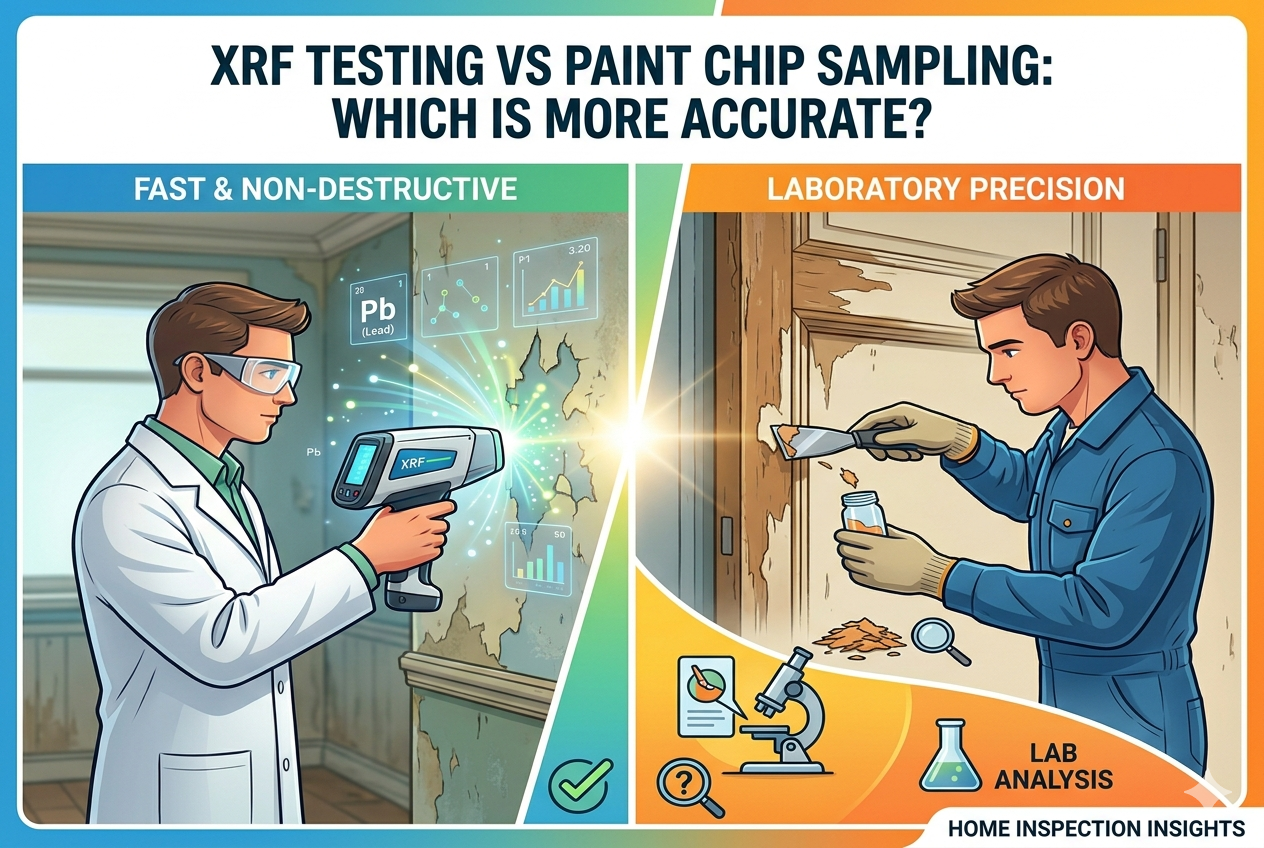
Older buildings that still carry lead solder or fixtures often also have lead-painted surfaces from the same era. If you’d like that risk checked at the same time, our XRF testing service can identify lead paint non-destructively, and paint chip sampling is available as an alternative lab-based method.
This is particularly important for families with young children, pregnant women, or older adults, as these groups may be more vulnerable to certain water contaminants.
Regular professional water testing helps identify these hidden risks before they become larger problems.
When Should You Schedule Professional Water Testing?
Many homeowners wait until they notice cloudy water or an unusual taste before considering professional testing. Unfortunately, by the time obvious changes appear, contamination may have already been present for weeks or even months.
A certified laboratory analysis is recommended if:
- You recently purchased a home.
- Your home was built before the late 1980s.
- You have never tested your tap water.
- Your plumbing has been repaired or replaced.
- You notice changes in taste, smell, or color.
- Someone in your household has health concerns that may be linked to water exposure.
- Nearby construction has disturbed underground water lines.
- You use a private well.
- You want peace of mind about your family’s drinking water.
If your building also falls under NYC’s lead paint inspection deadlines, our Why Test page explains those requirements and how they overlap with a broader household testing plan.
Routine water quality testing provides valuable information that helps homeowners address potential issues before they become expensive or hazardous.
What Happens During Professional Water Testing?
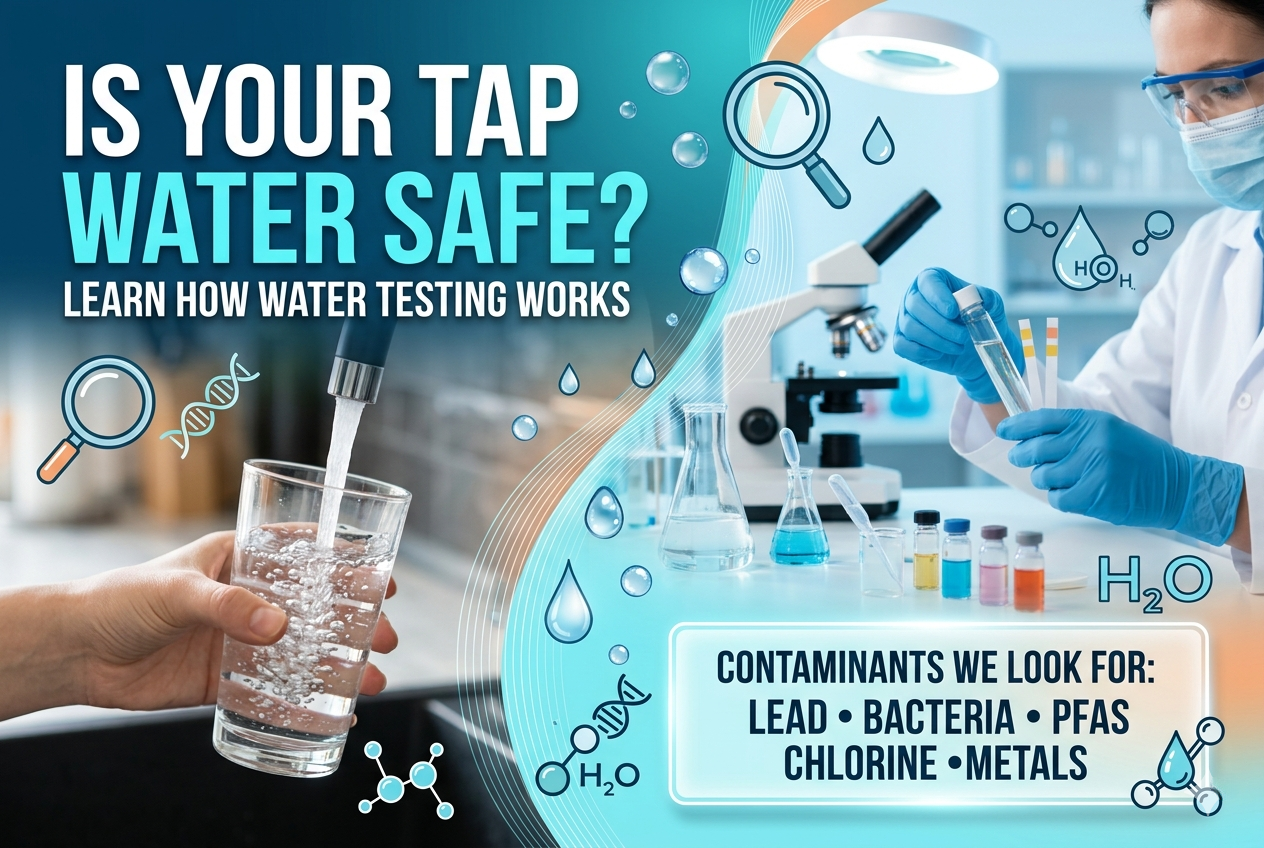
Unlike home strips, professional testing follows standardized procedures that reduce the risk of inaccurate results.
The process generally includes:
Step 1: Proper Sample Collection
Water samples are collected using clean, approved containers while following strict collection guidelines. In some cases, multiple samples are taken from different faucets to provide a more complete picture.
Step 2: Certified Laboratory Analysis
The samples are analyzed using sophisticated laboratory instruments capable of detecting contaminants at extremely low concentrations. Our certified specialists oversee sample handling from collection through to lab submission.
Depending on the testing package, laboratories may evaluate:
- Lead
- Copper
- Arsenic
- Mercury
- PFAS
- Nitrates
- Nitrites
- Coliform bacteria
- E. coli
- Volatile Organic Compounds (VOCs)
- General water chemistry
Step 3: Detailed Reporting
Instead of simply indicating “pass” or “fail,” laboratory reports explain:
- Which contaminants were tested
- Measured concentrations
- Laboratory detection methods
- Regulatory reference levels
- Recommendations when elevated levels are found
This level of detail helps homeowners make informed decisions about filtration, plumbing upgrades, or additional investigations.
Why Certified Laboratory Testing Is More Reliable
Professional laboratories follow strict quality assurance procedures that home kits cannot replicate.
These may include:
- Instrument calibration
- Quality control samples
- Duplicate testing
- Chain-of-custody documentation
- Certified analytical methods
Organizations such as the National Sanitation Foundation (NSF) establish standards for drinking water products, while federal regulations under the Safe Drinking Water Act (SDWA) help guide public water quality requirements. Although these standards primarily apply to public water systems, they also reinforce the importance of accurate testing methods when evaluating residential water. When elevated levels do turn up, our HPD filing service can help keep the resulting paperwork and compliance records in order.
This scientific approach provides a much higher level of confidence than color comparisons on a disposable strip.
The Hidden Cost of Assuming Your Water Is Safe
A water test strip costs very little, which is one reason homeowners choose them.
However, relying on incomplete information can become far more expensive.
Undetected contamination may contribute to:
- Plumbing corrosion
- Appliance damage
- Reduced filtration efficiency
- Costly pipe replacements
- Long-term exposure to contaminants
- Unexpected repair expenses
You can browse examples of how thorough testing has helped other NYC property owners avoid these costs on our past projects page.
The purpose of professional water contamination testing is not to create unnecessary concern. It is to replace assumptions with reliable information so homeowners can take action only when it is truly needed.
Key Takeaways
Before you rely on a home test strip, remember these important points:
- A “safe” strip result does not guarantee contaminant-free water.
- Many harmful substances cannot be detected by consumer test strips.
- Water quality changes over time due to plumbing, weather, and infrastructure.
- Older homes often face a greater risk of contamination from aging pipes.
- Professional laboratory analysis provides a more complete understanding of your home’s drinking water.
- Regular water testing helps identify potential concerns before they become larger problems.
Conclusion
Home water test strips have their place as convenient screening tools, but they should never be viewed as a complete assessment of drinking water safety. Many contaminants—including lead, PFAS, bacteria, volatile organic compounds, and certain heavy metals—require laboratory analysis for accurate detection.
Every home has a unique plumbing system, water source, and environmental conditions. What appears safe today may not reflect the actual quality of the water flowing from your tap tomorrow.
Choosing professional water testing gives homeowners a clearer understanding of potential contaminants, supports informed decisions about filtration or plumbing improvements, and provides greater confidence that the water their family uses every day has been evaluated with dependable methods.
When it comes to something as essential as drinking water, accurate information is always more valuable than assumptions.
Frequently Asked Questions
About the Author
This article was developed by an environmental health content specialist in collaboration with professionals experienced in residential water analysis and environmental inspection. The information is based on current scientific research, recognized industry standards, and established public health guidance to help homeowners better understand drinking water quality. Every article is carefully reviewed to provide accurate, practical, and trustworthy information that supports informed decisions and safer homes. This article is published on behalf of CleanNYC Lead and Mold Solutions.