Imagine this: you’re a landlord preparing for an apartment turnover in New York City. You notice a few painted window frames in an older building, buy a DIY lead swab from a hardware store, and every test comes back negative. Feeling confident, you move forward—only to receive an HPD violation weeks later after a professional inspection uncovers lead-based paint hidden beneath newer layers. Understanding how professional lead testing actually works can prevent this exact situation from happening to you.
This scenario is more common than many property owners realize.
A DIY swab can be useful for personal curiosity, but it is not designed to determine whether your property complies with New York City’s lead safety requirements. As enforcement under HPD, Local Law 1, and Local Law 31 continues to focus on preventing childhood lead exposure, relying on a consumer test kit alone can leave owners, landlords, and property managers with a false sense of security.
Professional lead testing goes far beyond checking a single painted spot. It evaluates the condition of an entire property, identifies hidden risks, and provides the documentation needed to make informed maintenance decisions.
In this guide, you’ll learn why DIY swabs have important limitations, what inspectors actually look for during a compliance evaluation, and how professional inspections help reduce the risk of unexpected violations.
Quick Answer
Can a DIY lead swab prevent an HPD violation?
No. DIY lead swabs are intended only for basic screening. They cannot replace professional lead paint inspection methods, certified documentation, or comprehensive evaluations expected during NYC housing compliance inspections.
Why Many Property Owners Trust DIY Lead Swabs
DIY lead swabs are widely available, inexpensive, and easy to use. For homeowners performing a quick check on a painted surface, they may seem like a practical first step.
Many people choose them because they:
- Produce results within minutes.
- Require no specialized equipment.
- Cost significantly less than a professional inspection.
- Are simple enough for most homeowners to use.
These advantages make DIY kits appealing—but convenience should never be mistaken for certainty.
The biggest misconception is believing a negative swab means the property is free of lead hazards. Unfortunately, that conclusion isn’t always accurate.
The Biggest Limitation of DIY Lead Swabs
Lead-based paint is rarely confined to one visible layer.
In many older NYC buildings, original lead paint has been covered by multiple coats of newer paint over several decades. A surface may appear perfectly safe while lead remains underneath.
A swab only reacts to the material it reaches. If the lead-containing layer is buried beneath newer coatings or inaccessible without disturbing the paint, the result may not reflect the true condition of the surface.
Other factors can also affect screening results, including:
- Thick paint buildup
- Dirt, dust, or residue
- Surface moisture
- Incorrect testing technique
- Painted-over repairs
- Small testing areas that don’t represent the entire component
This is why environmental professionals treat consumer swabs as preliminary screening tools—not definitive evaluations.
What HPD Actually Looks For During an Inspection
When the New York City Department of Housing Preservation and Development (HPD) investigates a property, the focus extends well beyond whether lead exists on one painted area.
Inspectors evaluate whether a property presents conditions that could expose occupants—especially young children—to lead hazards.
Depending on the situation, they may consider:
- The age of the building.
- The condition of painted surfaces.
- Areas affected by friction or impact, such as doors and windows.
- Signs of deteriorated or peeling paint.
- Previous inspection records.
- Required documentation related to lead hazard management.
A DIY swab cannot provide this broader picture.
Professional lead inspection services are designed to assess the property systematically, producing records that help owners understand potential risks and plan corrective actions before problems escalate.
Why Professional Lead Testing Is Different
Professional lead testing is not simply a more expensive version of a DIY kit—it is an entirely different process.
Instead of sampling one small location, trained inspectors examine the building as a whole using established inspection procedures and specialized equipment.
The objective is to answer questions such as:
- Which painted components contain lead?
- Which areas are most likely to create exposure?
- Are friction surfaces becoming hazardous?
- Which locations should be monitored during future maintenance?
- What documentation should be retained for property records?
These answers provide far greater value than a simple positive or negative result from a consumer swab. Depending on the property, inspectors may recommend X-Ray Fluorescence testing or laboratory-based paint chip sampling to confirm results with certainty.
How XRF Technology Improves Accuracy
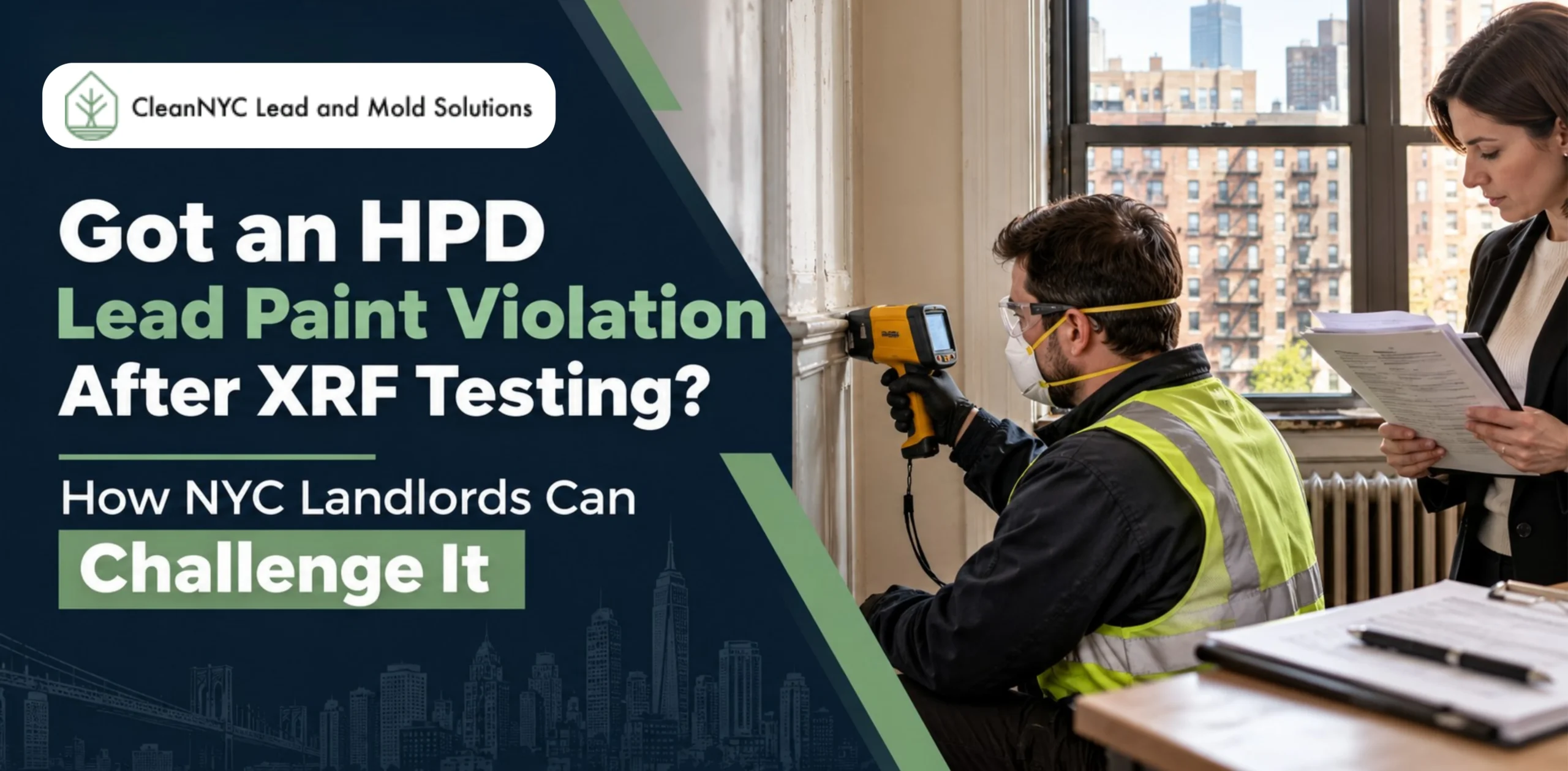
One of the most widely used tools for professional lead paint testing is X-ray Fluorescence (XRF) testing.
Unlike a swab, an XRF analyzer measures lead content beneath multiple paint layers without damaging the surface. This allows inspectors to evaluate painted components quickly while preserving the property’s finishes.
Key advantages of XRF testing include:
- Non-destructive testing
- Immediate readings
- Evaluation of multiple paint layers
- Consistent testing across numerous surfaces
- Detailed inspection documentation
Because of these capabilities, XRF technology has become a trusted method for evaluating older residential properties where hidden lead-based paint is common.
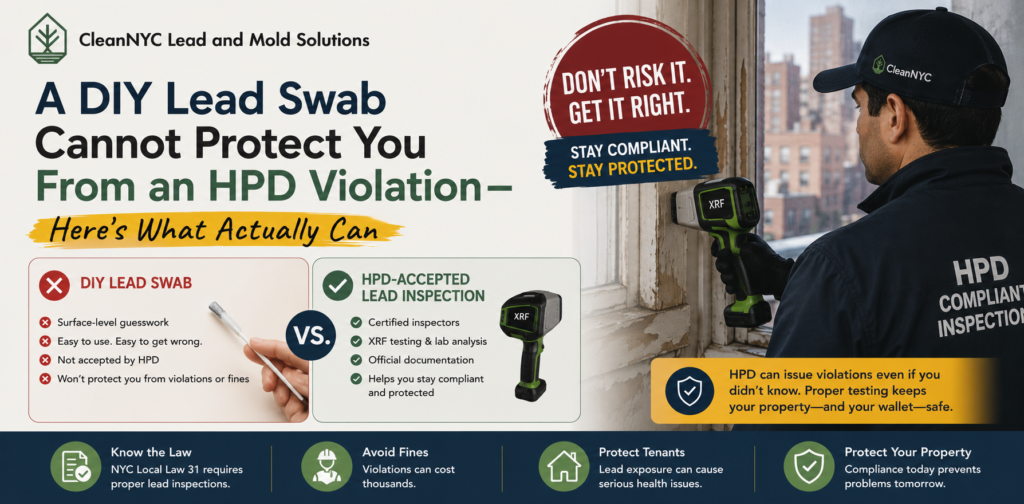
DIY Swab vs. Professional Lead Inspection
The difference between these two approaches becomes clear when you compare what each is designed to accomplish.
| Feature | DIY Lead Swab | Professional Lead Inspection |
|---|---|---|
| Coverage | Screens a small painted area | Evaluates the entire property |
| Purpose | Intended for personal screening | Intended for comprehensive assessment |
| Documentation | Limited documentation | Detailed inspection report |
| Hidden paint layers | May not detect hidden paint layers | Can evaluate multiple paint layers using professional methods |
| Scope | No property-wide assessment | Systematic review of painted components |
| Compliance | Cannot replace compliance documentation | Supports informed maintenance and compliance planning |
For property owners responsible for maintaining older NYC buildings, the second approach provides a much clearer understanding of the property’s actual condition.
Why Older NYC Buildings Require Extra Attention
Thousands of residential buildings constructed before the late 1970s still contain original layers of lead-based paint beneath modern finishes. Even if walls have been repainted several times, hidden lead may remain on:
- Window sashes
- Door frames
- Baseboards
- Crown molding
- Stair railings
- Built-in cabinets
- Interior trim
- Decorative woodwork
These are also the surfaces most likely to experience daily wear, increasing the chance that older paint layers become exposed over time. This is especially important given that young children face the greatest health risks from lead exposure, since their developing bodies absorb lead more readily than adults.
Routine professional inspections help identify these hidden risks before they become larger maintenance or compliance issues. If a property also relies on older plumbing, pairing an inspection with professional water testing helps rule out lead exposure from pipes and fixtures as well.
Common Mistakes That Can Lead to HPD Violations
Many HPD violations are not the result of intentional neglect. They often happen because property owners assume that a quick visual inspection or a DIY test is enough. Understanding these common mistakes can help you stay ahead of potential issues.
1. Assuming Fresh Paint Solves the Problem
Painting over older surfaces may improve appearance, but it does not remove lead-based paint underneath. If the original coating remains and later becomes damaged, the potential hazard still exists.
2. Testing Only One Area
Lead hazards are not always limited to walls. Windows, doors, trim, and other high-contact surfaces may contain lead even when nearby areas do not. A single swab cannot represent the condition of an entire apartment.
3. Waiting for a Complaint
Some owners delay lead testing until a tenant reports peeling paint or an inspection is scheduled. By that point, repairs, documentation, and timelines may become more complicated than if the issue had been addressed earlier.
4. Keeping Little or No Documentation
Even when maintenance has been completed, failing to maintain inspection records can create challenges if questions arise later. Organized documentation demonstrates that reasonable steps were taken to evaluate and manage potential lead hazards.
A Practical Checklist for Property Owners
If your property was built before lead-based paint was phased out, following a proactive maintenance plan is a smart approach.
Before Renovating
- Review the building’s construction year.
- Identify painted surfaces that may require evaluation.
- Arrange professional lead paint inspection if appropriate.
- Keep inspection records with your property documents.
During Routine Maintenance
- Inspect painted surfaces for deterioration.
- Pay close attention to windows, doors, and trim that experience frequent use.
- Address peeling or damaged paint promptly using safe work practices.
- Update maintenance records after repairs.
Before a New Tenant Moves In
- Check high-contact painted components.
- Verify that previous inspection reports are easily accessible.
- Resolve visible paint damage before occupancy.
- Consider professional testing if the property’s lead status is uncertain.
These steps not only support better property maintenance but also reduce the likelihood of unexpected compliance concerns. After any lead-safe renovation or repair work, a certified dust wipe clearance test confirms the space is safe for reoccupancy.
Why Documentation Is Just as Important as Testing
Professional lead inspection is valuable because it creates a record of your property’s condition at a specific point in time.
A detailed inspection report can help you:
- Track changes over the years.
- Plan future maintenance.
- Support property transactions.
- Respond to tenant questions with confidence.
- Demonstrate responsible property management practices.
Without documentation, it can be difficult to establish when inspections were performed or what conditions existed at the time. Our team can also assist with HPD filing and recordkeeping requirements so your records stay audit-ready.
Expert Insight: Prevention Costs Less Than Correction
Environmental professionals often see the same pattern: issues that could have been identified during routine inspections become more expensive after a complaint or enforcement action.
A proactive approach allows property owners to:
- Identify hidden concerns before they worsen.
- Schedule maintenance on their own timeline.
- Reduce unexpected repair costs.
- Improve confidence during inspections.
- Create a safer living environment for occupants.
Rather than viewing professional lead paint testing as a one-time expense, many experienced property managers consider it part of a long-term building maintenance strategy.
What This Means for NYC Property Owners in 2026
As housing regulations continue to emphasize prevention and occupant safety, expectations for property maintenance have become more comprehensive. Agencies such as HPD, along with guidance from the EPA’s Lead Renovation, Repair and Painting Program and HUD’s guidelines for the evaluation and control of lead-based paint, encourage property owners to identify and address potential lead hazards before they create health or compliance concerns.
For buildings where Local Law 1 and Local Law 31 apply, relying solely on a consumer test kit may leave important questions unanswered. Property owners can review their testing obligations under Local Law 31 to understand what a compliant inspection actually requires. Professional evaluations provide a more complete understanding of painted surfaces and help owners make informed maintenance decisions based on reliable information.
The goal is not simply to avoid a violation—it is to understand your property’s condition, reduce preventable risks, and maintain accurate records that support responsible ownership.
Conclusion
A DIY lead swab can be a useful screening tool, but it should never be confused with a comprehensive property evaluation. While it may provide a quick indication of lead on a small surface, it cannot assess an entire apartment, identify hidden layers of lead-based paint, or produce the documentation expected during professional evaluations.
For owners of older NYC properties, professional lead testing offers a more complete picture of potential hazards. Combined with routine maintenance, accurate records, and timely inspections, it helps support informed decisions that protect both your investment and the people who live in your building.
Taking action before problems arise is almost always easier—and often more cost-effective—than responding after a complaint or inspection.
Frequently Asked Questions
About the Author
The editorial team at CleanNYC Lead and Mold Solutions develops educational resources focused on lead safety, environmental inspections, and property compliance in New York City. Drawing on industry knowledge, current regulations, and practical field experience, the team creates content that helps landlords, homeowners, property managers, and real estate professionals understand complex environmental topics and make informed decisions about protecting their properties and occupants.