Lead Paint Removal forNYC Properties
Lead Removed from Paint: How It’s Done Safely and Legally
You peel a flake off an old window frame and wonder what is actually in that paint. Homes built before 1978 may contain lead-based paint, and getting lead removed from paint is a very different job from stripping ordinary paint. Done wrong, one peeling spot becomes a cloud of fine lead dust that settles on floors, toys, and hands. Done right, the job follows a clear order: test, contain, remove, clean, and verify.
This guide walks through that order, explains where federal and NYC rules apply, and shows when to hand the job to a professional.
What Does It Mean to Have Lead Removed from Paint?
Lead-based paint is paint with enough lead in it to count as a hazard under the rules. EPA’s renovation program targets homes, child care facilities, and preschools built before 1978. Lead can also hide under newer coats, so a freshly painted wall does not prove a lead-free wall.
Intact lead paint in good condition poses a lower risk. Deteriorating paint is the real problem, because peeling and chipping paint sheds chips and dust. Disturbing sound paint causes the same trouble. Sanding, scraping, and demolition grind paint into particles you cannot see. CDC notes that people take in lead by eating paint chips or breathing lead dust.
So having lead removed from paint really means controlling chips and dust from the first test to the final wipe-down, not just making the old coat disappear.
Consider a professional assessment when the building predates 1978, the paint is failing, a young child lives there, or you plan any renovation that touches painted surfaces.
Why Is Lead Paint Removal Necessary?
Health Risks of Lead Exposure
CDC says no safe blood lead level has been identified in children, and the effects of lead poisoning can be permanent. CDC uses a blood lead reference value of 3.5 micrograms per deciliter to flag children who carry more lead in their blood than most.
Children, pregnant people, and adults all face risk, and renovation raises exposure because sanding and demolition turn paint into dust. A blood lead test is the best way to learn whether a child was exposed, so talk with a healthcare provider if you have concerns.
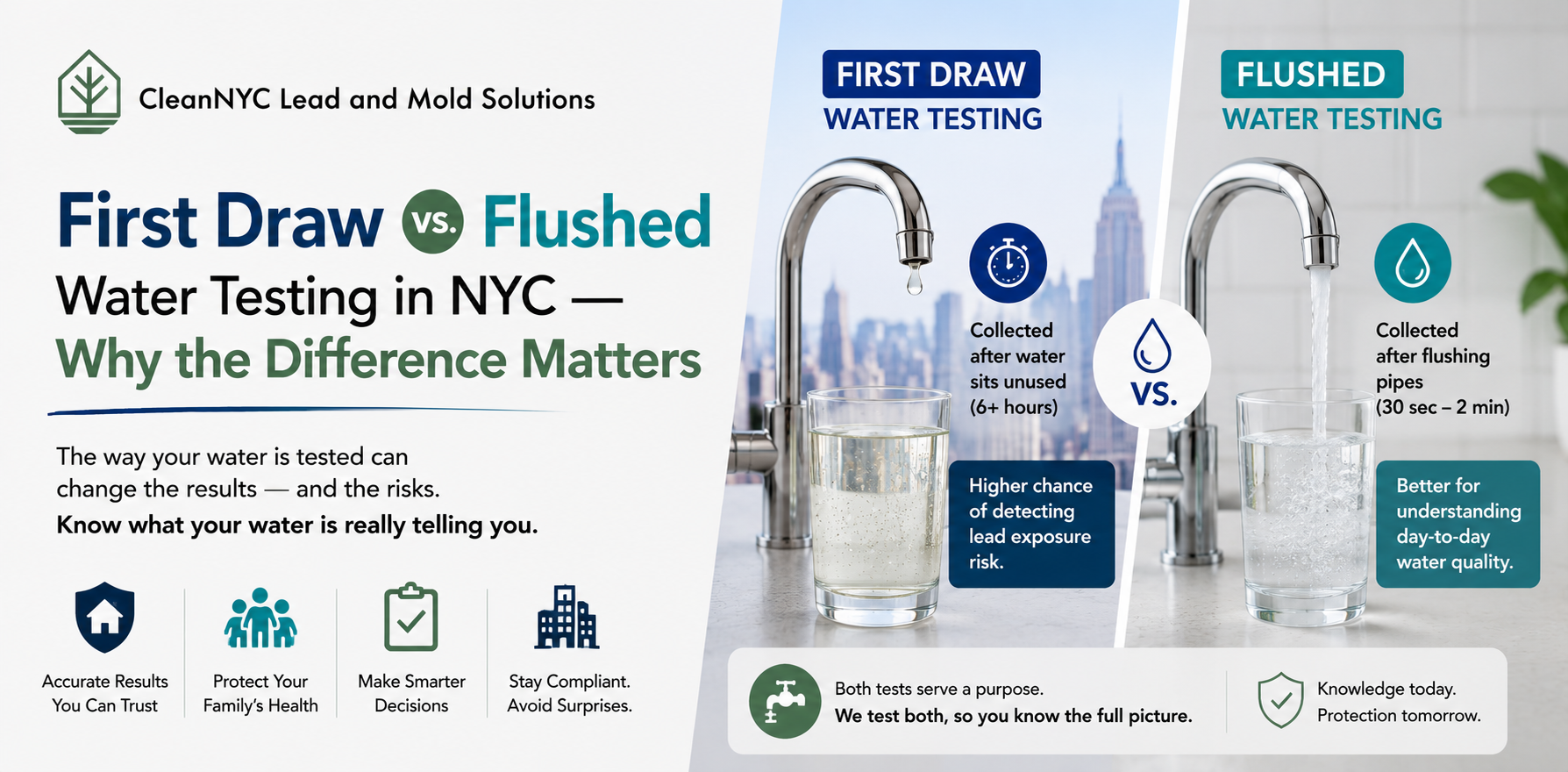
Paint is not the only source. CDC also lists contaminated water, so older plumbing may justify water testing alongside a paint check.
Property and Compliance Risks
For owners, the stakes go beyond health. Tenant safety is a legal responsibility in many buildings. Renovation work can trigger lead-safe requirements, and a contractor who skips them invites enforcement.
How Is Lead Removed from Paint Safely?
Professionals follow five steps in order. Skip one, and the others lose their value.
1. Identify and Test for Lead
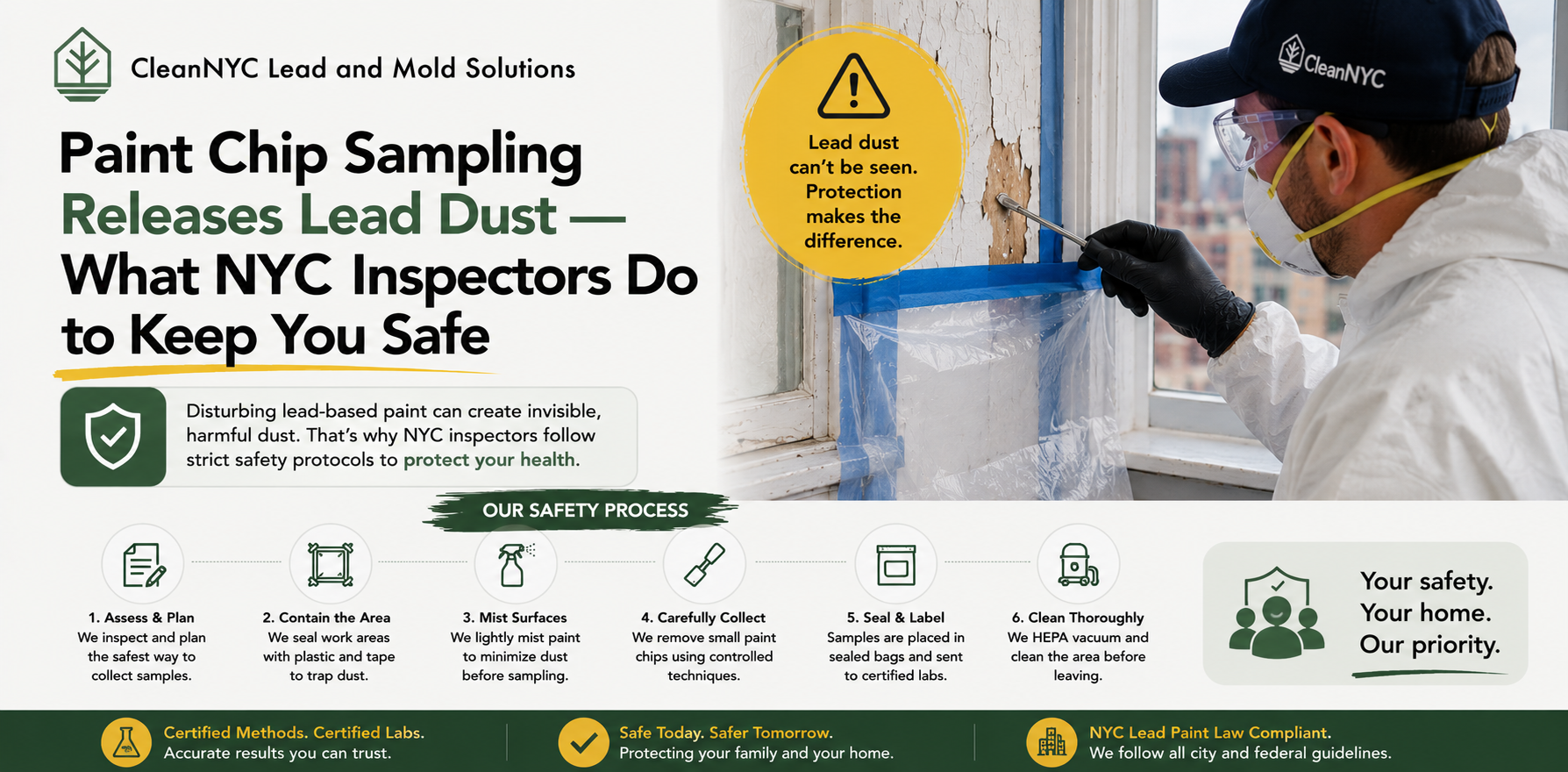
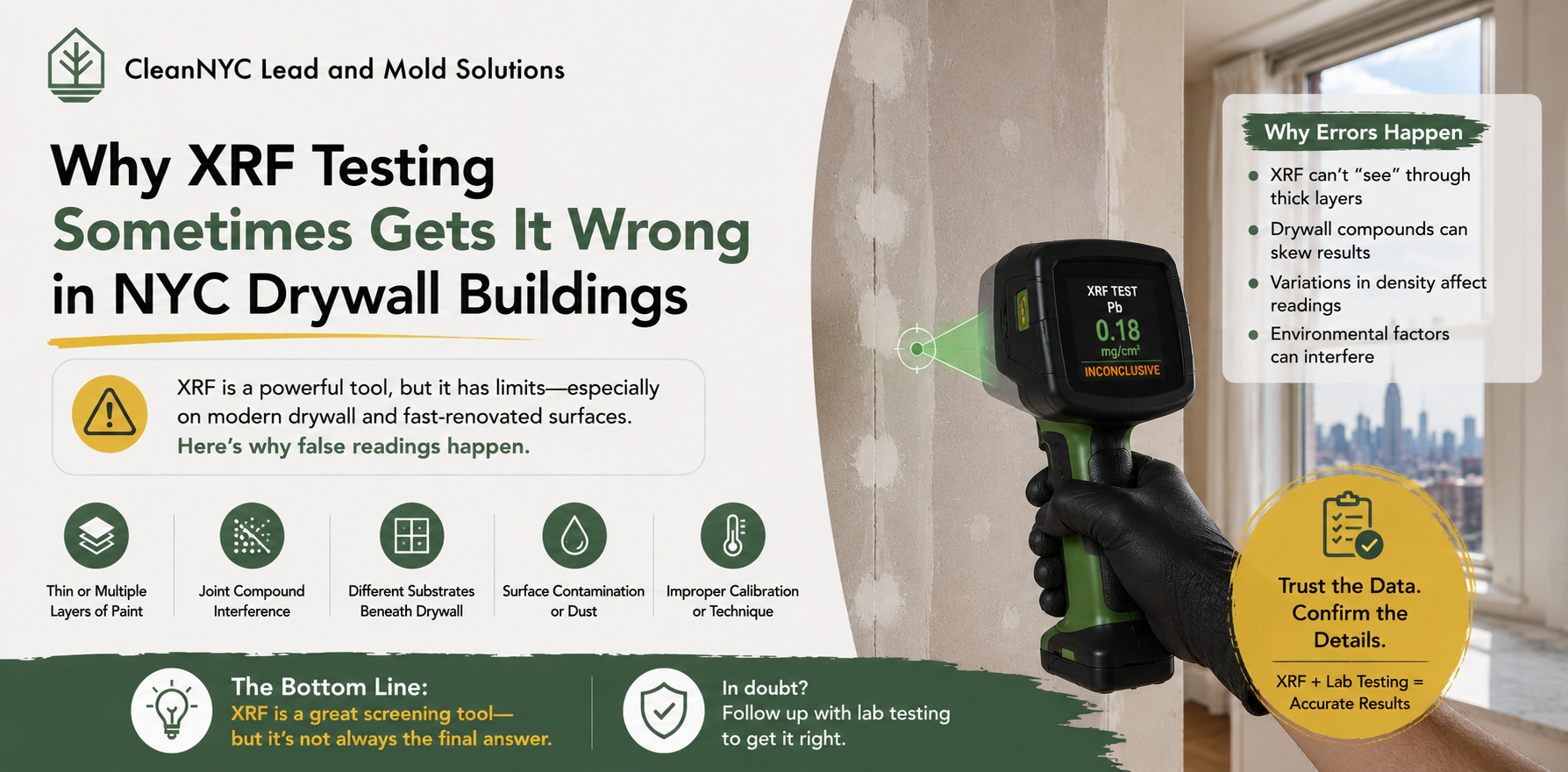
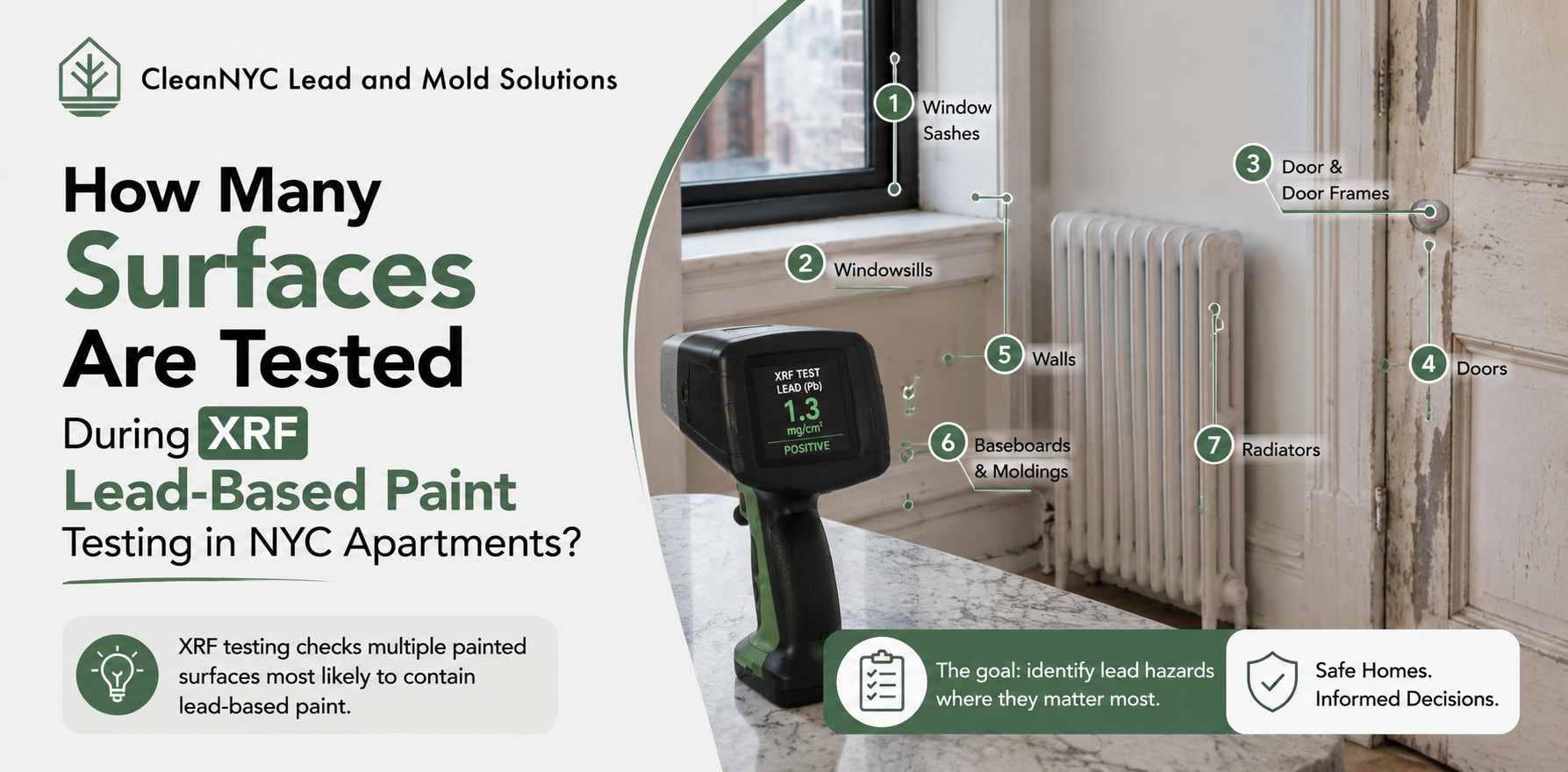
Guessing is not a testing method, so testing comes first. An EPA-certified inspector usually uses an XRF analyzer, a handheld device that reads lead in paint without damaging the surface. When XRF is impractical, or you need a lab result, the inspector collects paint chip sampling for laboratory analysis. Either way, you learn which surfaces carry lead, so you treat those and skip the rest.
2. Create a Containment Area
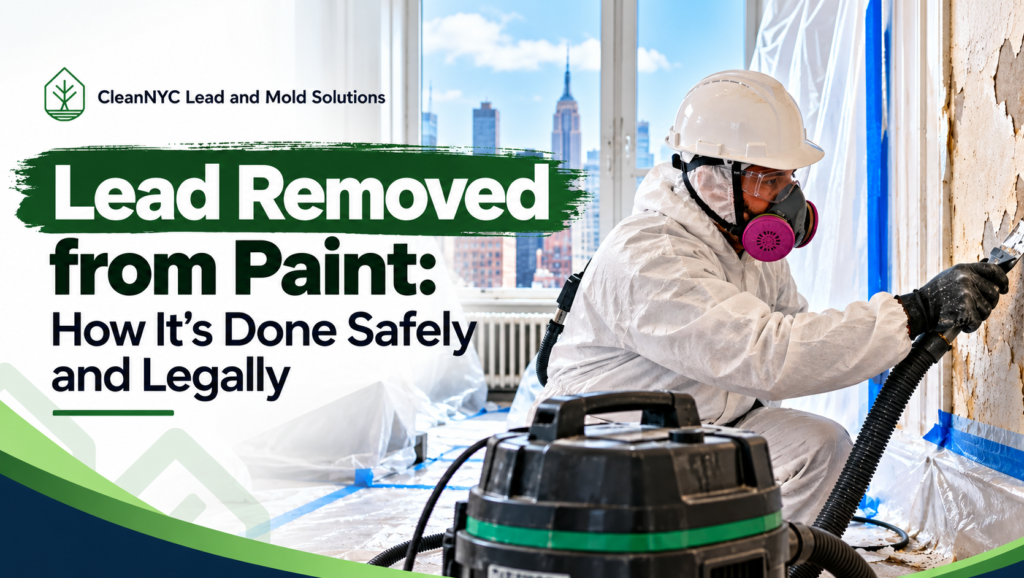
Crews seal off the work area with plastic sheeting, cover floors and furniture, post warning signs, and keep people and pets out. EPA’s lead-safe practices call for containment that stops dust and debris from escaping the work area. Good containment keeps one bad window from contaminating the whole apartment.
3. Choose the Appropriate Removal Method
Common options include:
- Wet scraping: Misting the paint first keeps dust down.
- Chemical stripping: It suits trim and detail work, but strippers carry their own chemical hazards, so read the safety data sheet.
- HEPA-assisted tools: Power tools qualify only when they connect to a HEPA vacuum at the point where dust forms.
- Encapsulation: Sealing intact lead paint works when full removal is not necessary.
For work covered by EPA’s renovation rule, three methods are off the table: open-flame burning or torching, heat guns above 1,100°F, and power sanding or grinding without HEPA exhaust control.
4. Control Lead Dust During Removal
Wet methods, HEPA vacuums, and respirators matched to the task do the heavy lifting. Crews also collect paint chips and debris at the end of each workday and store them behind a barrier so nothing escapes.
5. Clean and Verify the Area
Cleanup runs from top to bottom: HEPA vacuum, damp wipe, and a wet mop that keeps wash water separate from rinse water. A visual check follows, and dust-wipe testing confirms the result where required. Nobody should move back in until the area passes.
Lead Paint Removal vs. Lead Paint Encapsulation
| Lead Paint Removal | Lead Paint Encapsulation | |
|---|---|---|
| What it does | Removes the existing lead-containing coating | Seals the existing coating |
| Disruption | Can be more invasive | Usually less disruptive |
| Setup | Requires careful containment | Requires compatible surfaces |
| Debris | Generates removal waste | Reduces disturbance of existing paint |
The right choice depends on the paint’s condition, the surface, the project scope, and the rules that apply to your building. Encapsulation works only on surfaces that can hold the coating, so failing paint often needs attention first.
What Makes Lead Paint Removal Legal?
Requirements depend on the property, the type of work, and the location. No single regulation covers every project, so confirm which federal, state, and local rules apply before work starts. Where certification is required, hire trained professionals. Keep the paperwork, too, because documentation proves the job followed the rules.
Lead-Safe Renovation Requirements
EPA’s Renovation, Repair and Painting (RRP) rule applies to paid work that disturbs lead-based paint in homes, child care facilities, and preschools built before 1978. Firms need EPA certification (or certification from an EPA-authorized state), a certified renovator on each job, pre-renovation education for occupants, and complete records.
Contractors must contain the work area, minimize dust, and clean up thoroughly. Small jobs under 6 square feet per room indoors or 20 square feet outdoors can qualify for an exemption, as long as the crew uses no prohibited methods. Projects meant to eliminate lead hazards permanently fall under separate abatement rules with their own certification requirements.
Lead Paint Waste and Disposal
Chips and dust do not belong in an ordinary trash can. EPA guidance says crews must store waste behind containment during the job and contain it in transit. Dumping or open burning of residential lead paint waste is not allowed. Residential renovation waste generally falls under the household waste exclusion, while non-residential projects may face stricter hazardous waste rules. State and local rules add their own limits, so ask your contractor how they handle disposal and get the answer in writing.
Can You Remove Lead Paint Yourself?
EPA generally does not apply the RRP rule to homeowners working in their own homes, but it recommends hiring a lead-safe certified contractor. DIYers should still use lead-safe practices. Legal permission is not a safety guarantee, and property managers and rental owners face different rules.
These DIY mistakes cause the most damage:
- Dry sanding old paint
- Running power tools without HEPA dust control
- Using open flame or a hot heat gun
- Skipping containment and sweeping with a regular household vacuum
- Throwing chips and sheeting into regular trash
A belt sander and a 1920s window frame are not friends. Call a professional when children live in the home, the project is large, the property is a rental, or testing confirms lead.
How to Know If Lead Has Been Properly Removed
Start with a visual check for chips, dust, and damaged surfaces. Eyes cannot see lead dust, though, so dust-wipe clearance testing by an independent professional gives you real numbers. As of January 12, 2026, EPA’s post-abatement dust-lead action levels are 5 micrograms per square foot on floors, 40 on window sills, and 100 on window troughs.
Ask for written proof that the lead removed from paint is actually gone: laboratory results plus a report listing the work and the areas covered. Keep that report with your inspection records, contractor certifications, and contracts.
Lead Paint Removal for NYC Properties
Why NYC Property Owners Need to Pay Attention
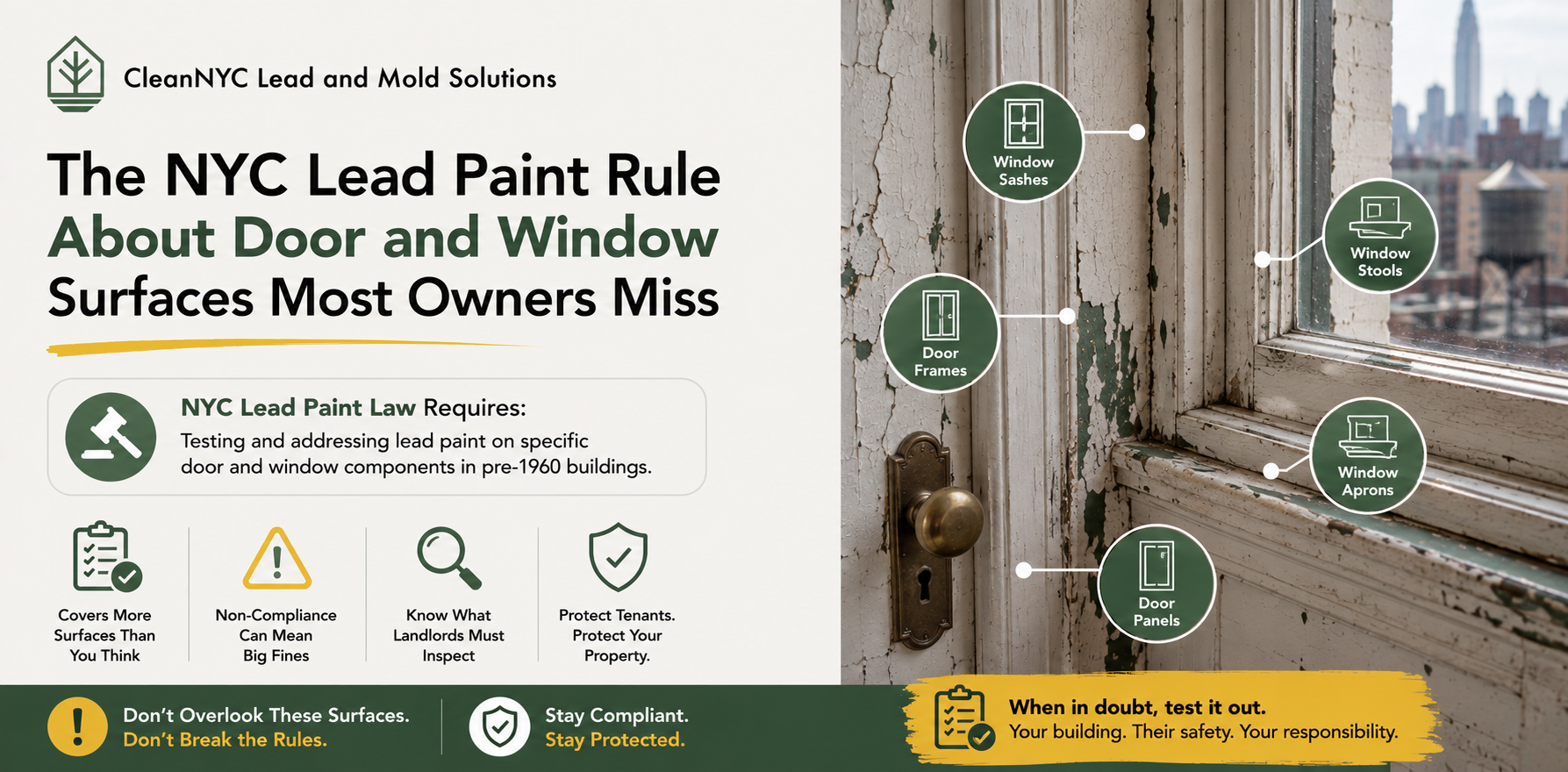
New York City adds its own layer. Local Law 31 of 2020 requires owners of buildings built before 1960, and of 1960 to 1978 buildings where the owner knows lead paint is present, to have an EPA-certified inspector or risk assessor test with XRF at the 0.5 mg/cm² action level. The deadline was August 9, 2025. The inspector must work independently of the owner and of any firm hired to remove lead, and owners keep testing records for at least 10 years.
Local Law 1 of 2004 adds trained workers, lead-safe work practices, and clearance dust testing in many situations, with results shared with tenants. Owners who want help sorting through this can work with CleanNYC Lead and Mold Solutions, an NYC environmental inspection company.
Lead Inspection, Testing, and Documentation
- Identify affected surfaces with XRF testing.
- Decide whether paint chip or dust-wipe sampling should back up the XRF results.
- Keep inspection reports, certifications, and clearance results.
- Work with appropriately qualified professionals, and read why testing comes first.
- If an EPA-certified inspector finds no lead paint, or finds that it was fully abated, owners can apply for a Lead-Free or Lead-Safe exemption through an HPD filing.
Common Mistakes When Removing Lead Paint
- Sanding without dust control
- Using heat or tools incorrectly
- Skipping testing
- Failing to contain the area
- Leaving occupants in the work zone
- Rushing the final cleanup
- Disposing of debris improperly
- Assuming that visible paint removal means the area is lead-free
Frequently Asked Questions
Final Takeaway
Lead paint is not ordinary household paint. Test before you disturb a suspect surface, and plan before you pick up a scraper. Safe removal takes dust control, containment, thorough cleanup, and the right compliance steps. When a project involves exposure risk or regulatory questions, use qualified professionals.
Need to know whether your property has lead paint? Contact a qualified NYC lead paint inspection professional for testing, assessment, and guidance before you start renovation or paint-removal work. You can also review completed inspection projects to see how the process looks in practice.
About the Author
This guide comes from the content team at cleannyclmd.com, which publishes plain-language information on lead paint testing, clearance, and NYC compliance. Each regulatory point links to its EPA, CDC, or NYC HPD source so readers can verify it.