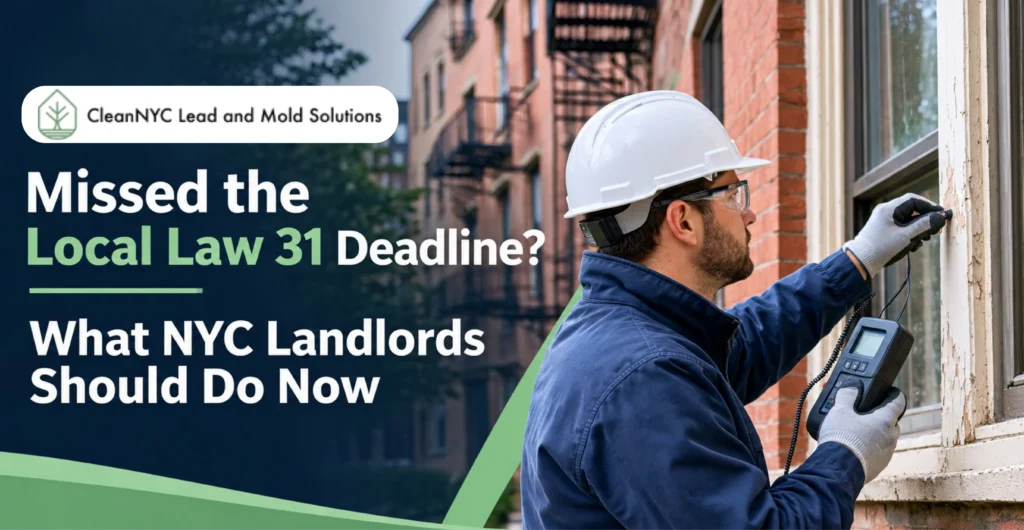
Missed the Local Law 31 Deadline?w
If you own a pre-1960 rental building in New York City and still haven’t completed XRF lead paint testing, you missed the Local Law 31 deadline. That deadline was August 9, 2025. The good news is that you can still get compliant, and acting now is far cheaper than waiting for HPD to come to you.
Quick answer: If you missed the Local Law 31 deadline, hire an EPA-certified lead inspector or risk assessor right away. Have every rental unit and common area XRF-tested. Fix any lead-based paint hazards through EPA-certified contractors, and keep complete records. If everything tests negative, apply for an HPD Lead-Free Exemption to reduce your obligations going forward.
This guide covers what the law requires, what the real risks are in 2026, and a step-by-step plan to get your building compliant.
What Is the Local Law 31 Deadline?
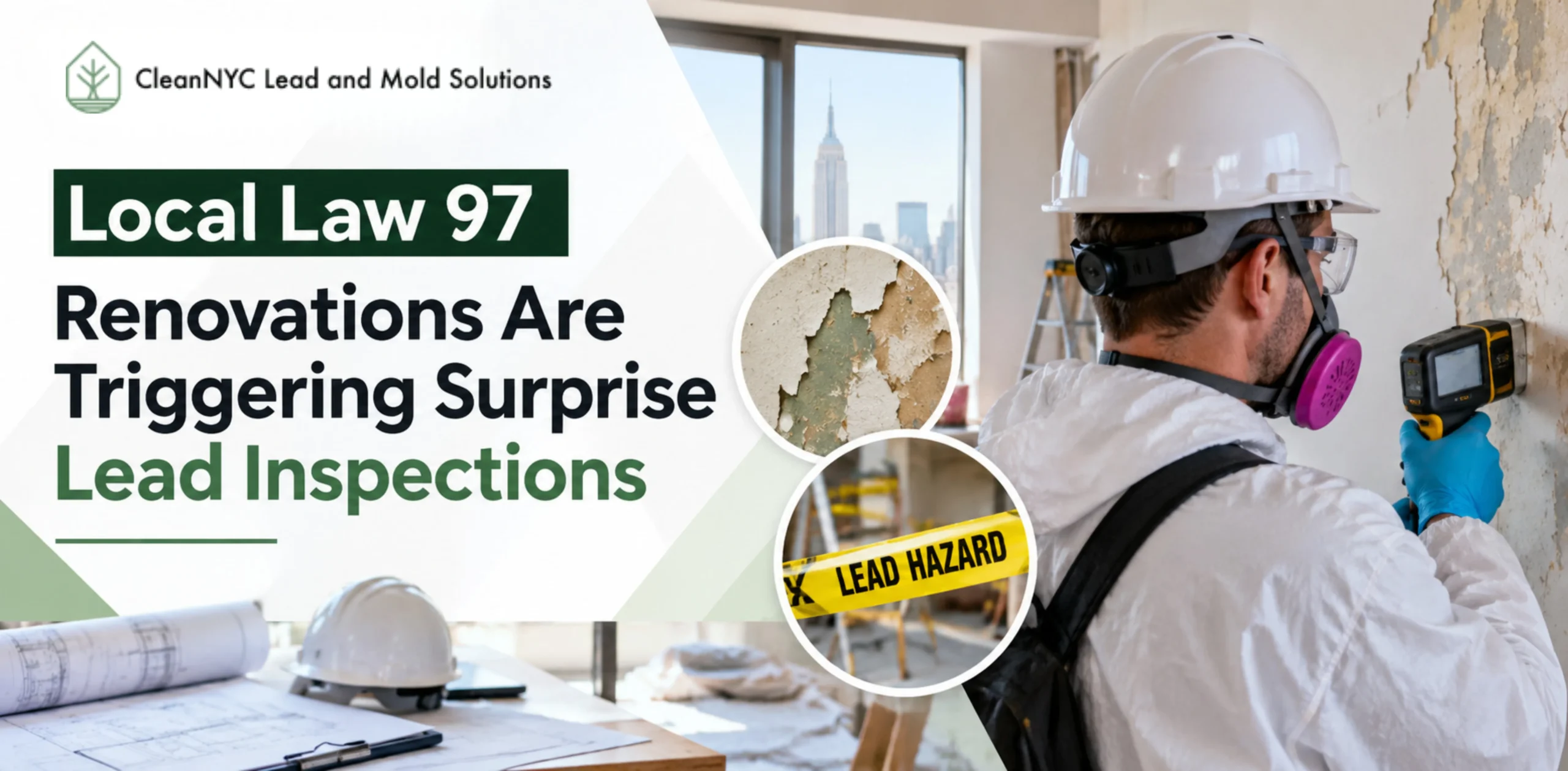
Local Law 31 of 2020 requires owners of residential buildings built before 1960 to have their rental units tested for lead-based paint using X-ray fluorescence (XRF) technology. The testing must be done by an EPA-certified lead inspector or risk assessor.
The law set two deadlines, and whichever came first applied:
- August 9, 2025, for all covered rental units
- Within one year of learning that a child under 6 lives in a unit. A child “lives” there if they routinely spend 10 or more hours per week in it.
Which buildings and units are covered?
| Covered | Generally not covered |
|---|---|
| Rental units in buildings built before 1960 | Units occupied by the owner or owner’s family |
| 1–2 family homes with a tenant-occupied unit (built before 1960) | Buildings built after 1960 (unless lead paint is known to be present) |
| Common areas such as hallways, stairwells and lobbies (added by Local Law 111 of 2023) | |
| Sublet co-op and condo units, even temporary sublets |
The last row catches many co-op and condo owners off guard. An owner-occupied apartment is exempt. Once it’s sublet, even briefly, it becomes subject to Local Law 31.
How Local Law 31 fits with related lead laws
Local Law 31 is one part of NYC’s lead paint framework:
- Local Law 1 of 2004: annual notices, turnover work, safe work practices and 10 years of recordkeeping. These are ongoing duties.
- Local Law 111 of 2023: extended XRF testing to common areas.
- Local Law 122 of 2023: requires owners to submit XRF records and lead documents to HPD when a lead violation is issued.
- Local Law 123 of 2023: sets remediation requirements for lead-based paint hazards.
Completing an XRF test does not replace your Local Law 1 duties. You still owe annual notices, turnover work and recordkeeping.
What Happens If You Missed the Local Law 31 Deadline?
Missing the deadline does not mean HPD immediately sends a fine. Untested buildings do carry real exposure, though, and HPD has moved from the education phase to enforcement.
Where the risk actually comes from
1. HPD audits. HPD audited close to 700 buildings in fiscal year 2025. During an audit, inspectors review your inspection reports, annual tenant notices and turnover records. Buildings where children under 6 live get priority.
2. Violations and civil penalties. Lead violations can carry civil fines of roughly $1,000 to $1,500 each. Unpaid fines can become liens on the property. In March 2026, HPD announced $150,000 in civil penalties secured through lead recordkeeping enforcement.
3. Elevated blood lead level cases. If a child in your building is found to have elevated blood lead levels, the NYC Department of Health may order the hazards abated. HPD may then audit every unit with a child under 6 and your full lead records. Missing XRF results at that point puts you in a very weak position.
4. Sales, refinancing and insurance. Open violations and liens slow down closings and refinancing. Buyers, lenders and insurers increasingly ask for lead compliance documentation.
The hidden cost of waiting
From our work in NYC buildings, the most expensive scenario is rarely the test itself. It’s the chain reaction that follows a tenant complaint or a child’s blood test:
- A violation comes with a short correction window
- Abatement has to be scheduled under pressure
- Turnovers stall because units can’t be re-rented
- Missing records make it harder to dismiss violations
Testing on your own schedule lets you plan abatement, budget for it and handle units during natural vacancies. Testing after a violation takes all of that control away.
Step-by-Step: How to Get Compliant After Missing the Deadline
Here is the practical sequence we recommend to NYC owners and property managers who are behind on Local Law 31.
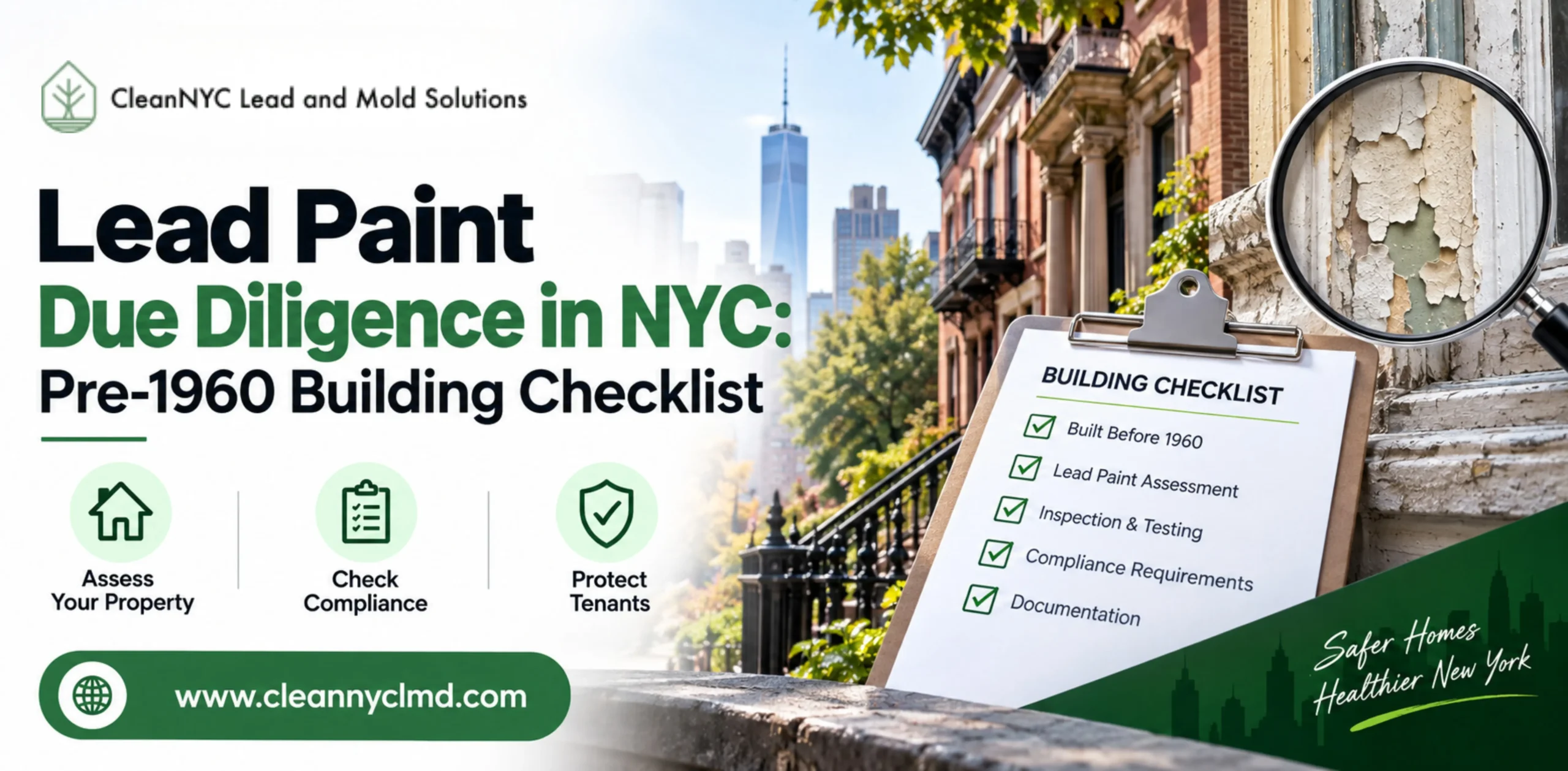
Step 1: Confirm your building is covered
Check three things:
- Year built: Look up your property on HPD Online or the NYC Department of Finance records. Pre-1960 means the law applies.
- Rental status: List every unit that is rented, sublet or otherwise not owner-occupied.
- Children under 6: Review your annual notice responses. These units are your highest priority.
Step 2: Check HPD Online for existing violations
Before you book testing, search your building on HPD Online. Look for open lead-based paint violations and anything in the overdue violations tab. An open violation changes your timeline and may need to be handled first.
Step 3: Hire an EPA-certified lead inspector or risk assessor
Only XRF testing performed by an EPA-certified professional counts. Before hiring, ask:
- Are you EPA-certified as a lead inspector or risk assessor? (Ask for the certificate.)
- Is your XRF instrument set to NYC’s 0.5 mg/cm² threshold?
- Will the report cover every component HPD requires, room by room?
- Do you test common areas under Local Law 111?
- How fast will I get the written report?
Important: Any test done before December 1, 2021, under the old 1.0 mg/cm² threshold, cannot be used to meet current Local Law requirements. If your “old test” predates that, you need a new one.
Step 4: Test units in priority order
If you can’t test everything in one visit, test in this order:
- Units where a child under 6 lives
- Vacant units and upcoming turnovers
- Common areas: hallways, stairwells, lobbies
- All remaining rental units
Step 5: Review the XRF results
Results generally fall into three groups:
| Result | What it means | Next step |
|---|---|---|
| All surfaces negative | No lead-based paint found | Apply for a Lead-Free Exemption |
| Positive, paint intact | Lead present but not currently a hazard | Monitor; address at turnover; keep records |
| Positive, deteriorated or on friction/impact surfaces | Lead-based paint hazard | Remediate with EPA-certified contractors |
A positive XRF result does not automatically trigger a violation. Deteriorated paint and high-risk surfaces, such as door and window friction surfaces, are what create hazards.
Step 6: Fix hazards the right way
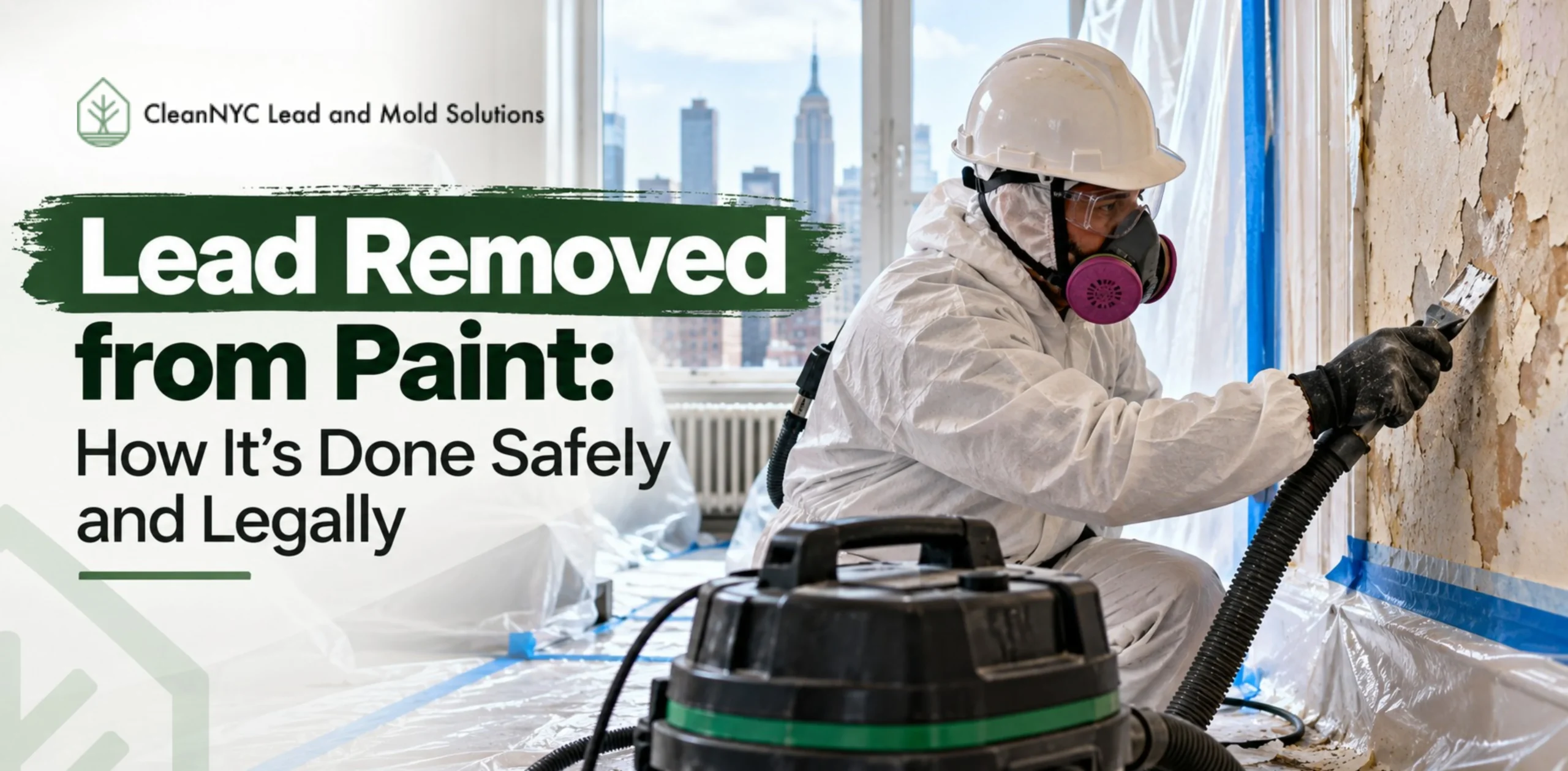
All lead work must be done by EPA-certified firms using lead-safe work practices:
- Containment of the work area
- Specialized cleanup
- Dust wipe clearance testing after the work, done by a separate, independent party
Skipping clearance testing is one of the most common mistakes we see. Without it, the work isn’t documented as complete.
Step 7: Apply for a Lead-Free Exemption if you qualify
HPD strongly encourages owners to apply for a Lead-Free Exemption when:
- All tested surfaces are negative, or
- All lead-based paint was permanently removed or replaced
An exemption can significantly reduce your future obligations, including annual notices and turnover work for that unit. For many owners, this is the biggest long-term payoff of XRF testing.
Step 8: Organize your records
NYC requires 10 years of lead-based paint records. Keep these together and easy to produce:
- XRF reports for every unit and common area
- Annual notices and tenant responses
- Turnover work and clearance results
- Contractor certifications
- Any HPD correspondence and exemption filings
Under Local Law 122, you may have to submit these records quickly if HPD issues a lead violation.
Got an XRF-Based Violation? Your Options
If HPD has already issued a violation based on an XRF result, you generally have two paths:
- Correct it: Have EPA-certified contractors remediate the hazard, pass clearance testing and certify the correction with HPD by the deadline on the notice.
- Contest it: HPD’s rules allow owners to challenge certain XRF-based violations by submitting a laboratory paint chip analysis from the same surface. Watch the “correct by” date on your notice. It’s separate from, and earlier than, the certification due date.
You may also be able to request a postponement in some situations. Instructions are included with your Notice of Violation.
How Much Does Local Law 31 Compliance Cost?
Costs depend on your building, so be careful with any flat “one price” quotes. The main factors are:
- Number of units and common areas to be tested
- Unit size and layout, which affect the number of components tested
- Access and scheduling, especially occupied units
- Report turnaround time you need
- Remediation scope if hazards are found
A business owner’s way to think about it
Compare the cost of testing against:
- Potential fines of $1,000–$1,500 per violation
- Lost rent from delayed turnovers
- Emergency abatement pricing
- The long-term savings of a Lead-Free Exemption
For most multi-unit buildings, proactive testing is the lower-risk, lower-cost option. Owners with limited budgets should also check HPD’s Lead Hazard Reduction and Healthy Homes Program, which has offered free grants to eligible owners for testing and remediation.
Common Mistakes NYC Landlords Make With Local Law 31
- Relying on pre-December 2021 test results. Old-threshold tests don’t count.
- Forgetting common areas. Hallways, stairwells and lobbies are required under Local Law 111.
- Assuming a gut renovation exempts the building. The presumption of lead still applies to pre-1960 buildings until testing proves otherwise.
- Treating XRF testing as a replacement for Local Law 1. Annual notices and turnover duties continue.
- Skipping clearance testing after lead work.
- Not applying for exemptions after negative results.
- Overlooking sublet co-op or condo units.
Choosing the Right Inspection Partner
Look for a team that does more than run the XRF gun. The right partner should:
- Hold current EPA certifications
- Use instruments calibrated for NYC’s 0.5 mg/cm² standard
- Deliver clear, HPD-ready reports
- Offer related services such as paint chip sampling, dust wipe clearance testing and HPD filings
- Explain results in plain language, so you can make decisions about budget and timing
CleanNYC Lead and Mold Solutions provides EPA-certified XRF testing, paint chip sampling, dust wipe clearance testing and HPD exemption filings for property owners across New York City.
Frequently Asked Questions
Can I still comply with Local Law 31 after the deadline?
Yes. You can and should complete XRF testing now. Testing late is far better than having no results when HPD audits your building or issues a violation.
What is the fine for missing the Local Law 31 deadline?
Lead-related HPD violations can carry civil penalties of roughly $1,000 to $1,500 per violation. Unpaid fines can become liens on your property. Recordkeeping failures can lead to additional penalties.
Does Local Law 31 apply to co-ops and condos?
It applies to rental units in pre-1960 buildings, including sublet co-op and condo apartments. Owner-occupied units are exempt, but common areas still need testing.
Who can perform XRF testing in NYC?
Only an EPA-certified lead inspector or risk assessor. Testing by anyone else does not satisfy Local Law 31.
Are lead tests from before 2021 still valid?
No. Tests done before December 1, 2021, under the old 1.0 mg/cm² threshold cannot be used to meet current NYC Local Law requirements.
What happens if my XRF test finds lead?
Lead found in intact paint isn’t automatically a violation. Deteriorated paint or lead on friction and impact surfaces must be remediated by EPA-certified contractors and followed by clearance testing.
How do I get a Lead-Free Exemption from HPD?
If all surfaces test negative, or all lead-based paint was permanently removed, you can apply to HPD with your XRF results and abatement documentation.
Get Your Building Compliant Before HPD Finds It
Missing the Local Law 31 deadline is a fixable problem, but the window for fixing it on your own terms is shrinking as HPD audits continue. Start with the units that matter most, document everything and use negative results to secure exemptions.
Need XRF testing for a pre-1960 NYC building? Book an inspection with CleanNYC Lead and Mold Solutions or call (212) 381-6001 to get a clear plan for your building.