If you’ve ever received an unexpected lead paint result in a New York City apartment, you’re not alone.
Many property owners are surprised when XRF lead testing identifies lead on walls that appear newly renovated, freshly painted, or covered with modern drywall. In some cases, the findings seem inconsistent with what building owners expect to see. However, the explanation often lies beneath the surface.
NYC buildings have unique construction histories. Decades of renovations, repairs, paint layers, and hidden materials can affect how testing equipment interprets a wall assembly. While XRF technology remains the gold standard for identifying lead-based paint, understanding its limitations is essential for making informed compliance decisions.
This guide explains why XRF lead paint testing can sometimes produce unexpected results in drywall buildings, what NYC property owners should know, and when additional testing may be necessary.
Quick Answer: Why Does XRF Testing Sometimes Get It Wrong?
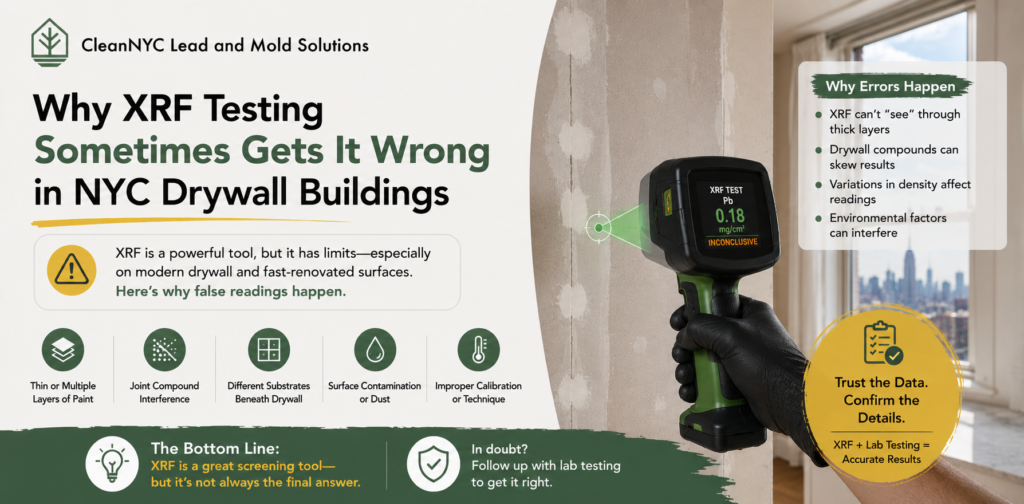
XRF testing may produce unexpected results in NYC drywall buildings because the analyzer measures lead through multiple paint layers and can detect lead hidden behind newer surfaces. Variations in drywall density, repair materials, and concealed substrates may also influence readings. When results are unclear, inspectors often recommend laboratory confirmation testing.
What Is XRF Lead Testing?
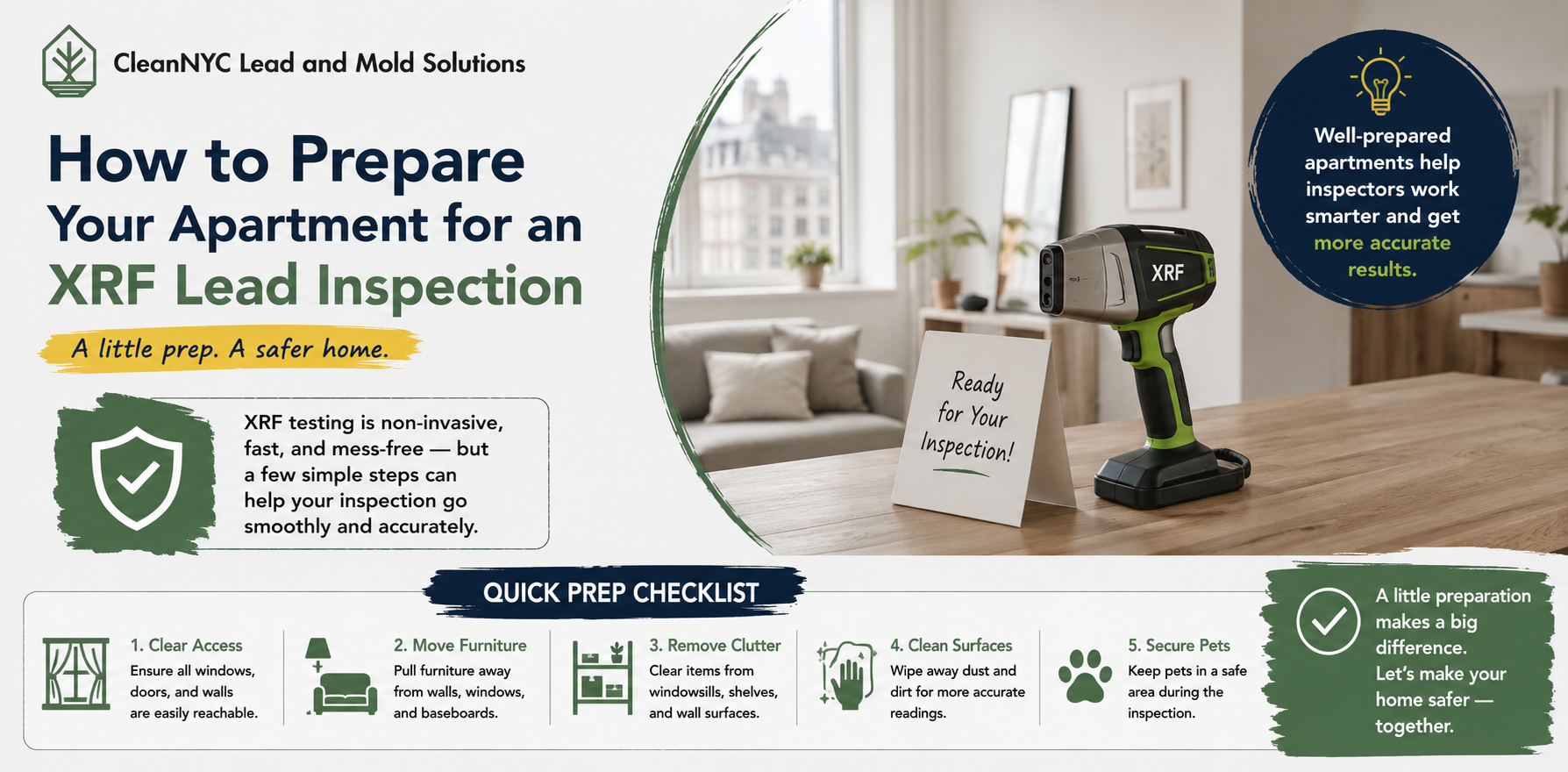
XRF lead testing uses a portable XRF analyzer to detect lead-based paint without damaging walls, doors, windows, trim, or other building components.
The device emits low-level radiation that interacts with materials beneath the surface. By analyzing the returned energy signature, inspectors can determine whether lead is present and whether it exceeds regulatory thresholds.
Because results are available immediately, XRF testing has become the preferred method for conducting a professional lead paint inspection throughout New York City. Visit our Why Test page to learn more about the science behind these inspections.
Benefits include:
- Non-destructive testing
- Immediate results
- Fast apartment surveys
- Minimal disruption for occupants
- Accepted for NYC compliance requirements
- Efficient testing of multiple surfaces
Why NYC Drywall Buildings Create Unique Challenges
Unlike newly constructed buildings, many NYC properties have undergone multiple renovation cycles spanning decades.
Behind a seemingly simple drywall surface may be:
- Original plaster walls
- Historic paint layers
- Repair compounds
- Joint treatments
- Hidden coatings
- Covered architectural surfaces
These conditions create a more complex environment for testing.
A wall that appears modern may contain materials dating back fifty or even one hundred years. This hidden history can affect how a portable XRF analyzer interprets lead concentrations.
Multiple Paint Layers Can Trigger Unexpected Results
One of the most common reasons for confusing test results involves accumulated paint layers.
In older NYC apartments, walls often contain:
- Original coatings
- Renovation paint applications
- Maintenance repainting
- Encapsulation coatings
Although the visible surface may not contain lead, older layers underneath may still be present.
Because XRF technology evaluates the entire paint system rather than just the outermost layer, buried lead-containing coatings can generate a positive result.
For landlords and building owners, this is often the biggest surprise during a lead paint inspection. Unlike paint chip sampling, which targets a single layer at a time, XRF reads through the entire paint system at once.
Hidden Materials Behind Drywall Can Affect Readings
Many New York City renovation projects involved installing drywall directly over older surfaces instead of removing them.
As a result, hidden lead-containing materials may remain trapped behind newer construction.
Examples include:
- Lead-painted plaster walls
- Original decorative finishes
- Historic trim components
- Legacy building materials
Even though these materials are no longer visible, they may still be detected during XRF lead paint testing.
This is especially common in pre-war buildings and multifamily housing constructed before modern lead regulations existed. Browse our past project case studies to see real examples of how hidden lead has been identified in NYC buildings.
How Drywall Repairs Influence XRF Lead Testing
Drywall repairs can alter testing conditions.
Common repair methods include:
- Skim coating
- Joint compound applications
- Surface patching
- Texture corrections
- Wall resurfacing
These materials change the density and composition of the tested area.
Since XRF analyzers calculate lead concentration partly based on substrate characteristics, unusual wall conditions may occasionally produce readings that require additional evaluation.
This does not mean the technology is inaccurate. Rather, it reflects the complexity of real-world building conditions. Our certified dust wipe clearance testing service can help confirm safe conditions after renovation work is complete.
Why Inspector Experience Matters
Technology alone does not determine the quality of an inspection.
Experienced inspectors understand:
- Building construction methods
- Substrate variations
- Drywall characteristics
- Historical renovation practices
- Regulatory testing requirements
Certified professionals recognize situations where unusual readings may occur and know when further analysis is warranted.
This expertise is particularly important in older NYC housing stock where hidden materials are common. Our team at CleanNYC Lead and Mold Solutions brings deep experience with pre-war buildings and multifamily properties across New York City.
NYC Lead Regulations Make Accurate Testing Critical
Accurate lead identification is essential for compliance with NYC requirements.
Property owners should understand regulations such as:
Local Law 31
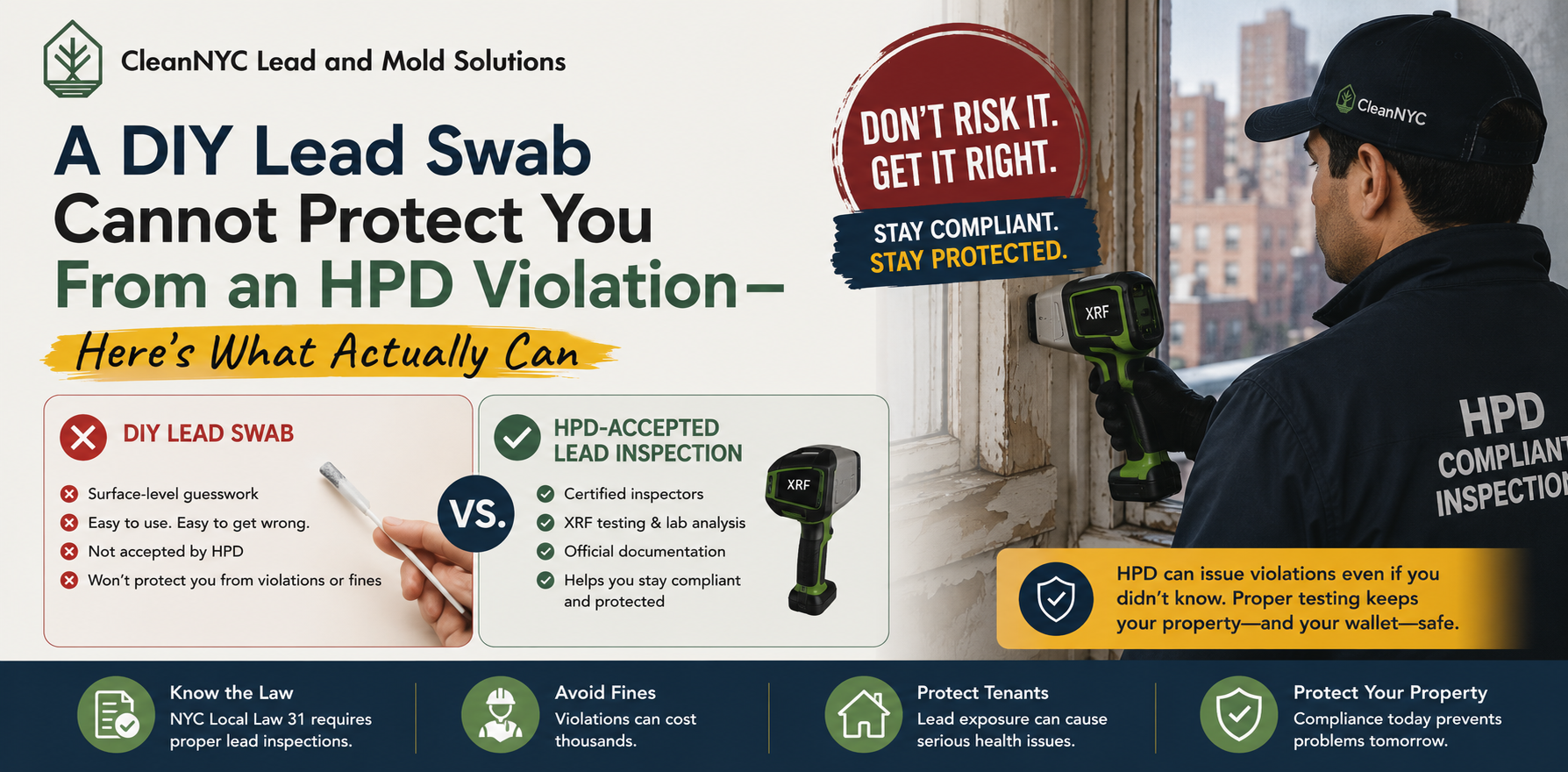
NYC Local Law 31 requires many residential property owners to identify lead-based paint hazards in qualifying dwelling units.
HPD Lead Compliance Requirements
The NYC Department of Housing Preservation and Development (HPD) enforces various lead safety requirements designed to protect children from lead exposure. Our team handles HPD filing requirements to keep your property fully documented and compliant.
Federal EPA and HUD Guidance
The Environmental Protection Agency (EPA) and Department of Housing and Urban Development (HUD) provide nationally recognized standards that influence inspection practices and lead hazard management.
Because compliance decisions often depend on inspection findings, reliable testing is essential.
When Additional Environmental Lead Testing Is Recommended
Sometimes XRF results fall into an inconclusive range.
This can happen when:
- Lead levels are near regulatory thresholds
- Surface conditions are unusual
- Hidden substrates complicate readings
- Multiple coatings create uncertainty
In these situations, additional environmental lead testing may be recommended.
Laboratory paint chip analysis can provide confirmation and help property owners move forward with confidence.
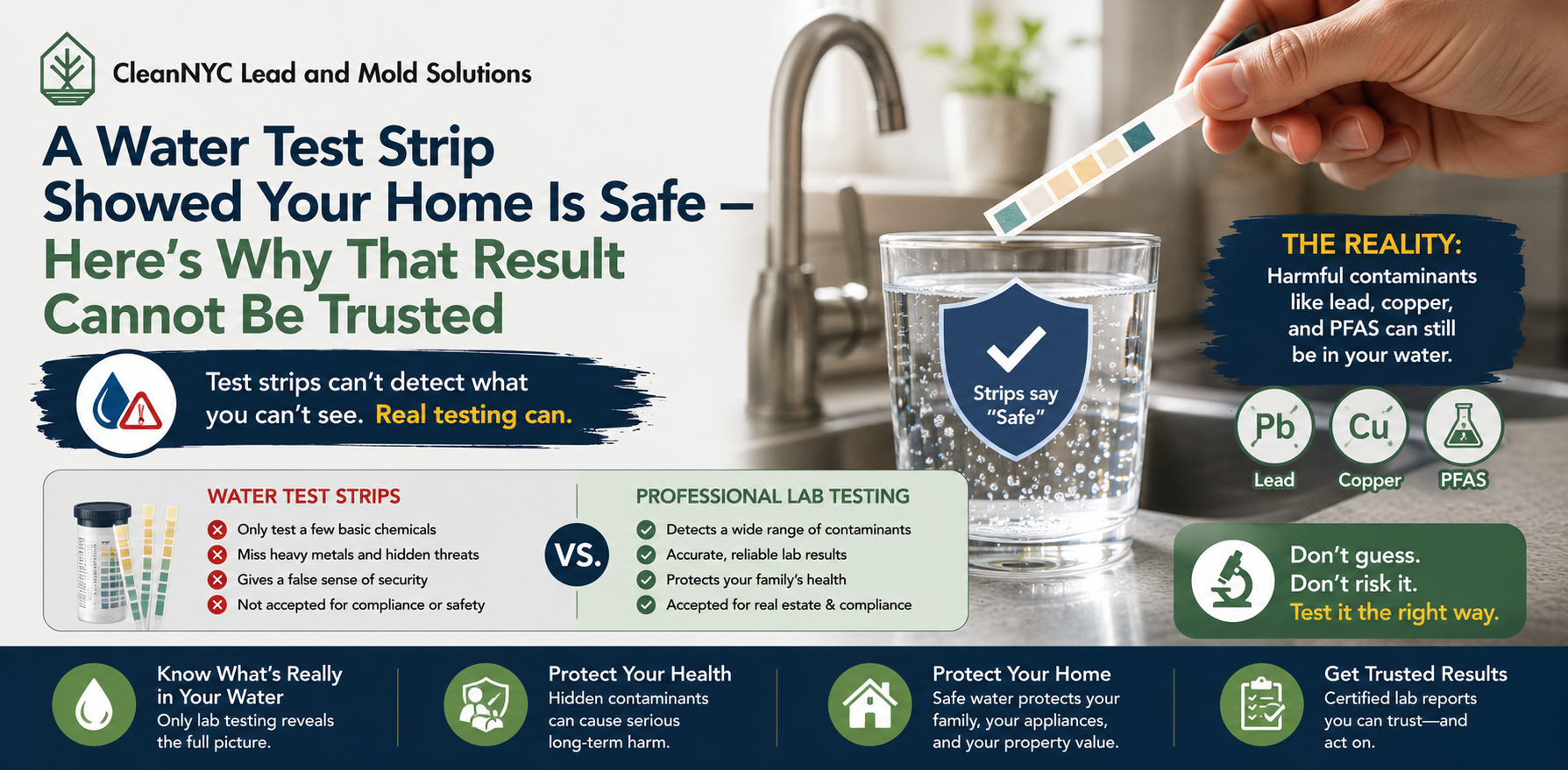
Rather than indicating a problem with the inspection, supplemental testing helps ensure the highest level of accuracy. If your property also has older plumbing or water supply concerns, our water testing services can evaluate those additional exposure risks alongside your lead inspection.
Common Misconceptions About XRF Lead Testing
“Fresh Paint Means No Lead Exists”
Fresh paint does not automatically eliminate lead-containing layers beneath the surface.
“Drywall Always Blocks Lead Detection”
Lead hidden behind drywall may still be detected depending on construction conditions.
“One Negative Result Means the Entire Apartment Is Clear”
Lead hazards can vary between rooms, components, and surfaces.
“Only Very Old Buildings Need Testing”
Many renovated properties still contain older materials hidden beneath modern finishes.
What NYC Property Owners Should Do Before Renovating
Before beginning renovations, owners should:
- Schedule a professional lead paint inspection
- Review historical renovation records
- Identify regulated surfaces
- Understand Local Law 31 requirements
- Address potential lead hazards early
Taking these steps can help avoid project delays, unexpected expenses, and compliance concerns. According to the NYC HPD Lead-Based Paint page, all residential buildings constructed before 1960 are presumed to contain lead-based paint under New York City law. The CDC’s Childhood Lead Poisoning Prevention program also notes that children are particularly vulnerable, making early detection especially critical in occupied residential buildings.
Final Thoughts
XRF lead testing remains one of the most reliable methods available for identifying lead-based paint in NYC buildings. However, drywall surfaces, hidden substrates, decades of renovations, and multiple paint layers can occasionally create unexpected findings.
Understanding why these results occur allows property owners to interpret inspection reports more effectively and make better decisions about compliance, maintenance, and renovation planning.
When performed by qualified professionals using properly calibrated equipment, XRF lead paint testing continues to provide a fast, accurate, and non-destructive solution for identifying lead hazards throughout New York City’s complex housing inventory.
Frequently Asked Questions
About the Author
This content is reviewed and developed by professionals who specialize in lead hazard identification, environmental compliance, housing regulations, and property safety requirements. Research is based on industry best practices, current regulatory guidance, inspection methodologies, and practical experience supporting property owners navigating lead-related compliance responsibilities in New York City.