Local Law 1 Lead Paint Exemption in NYC
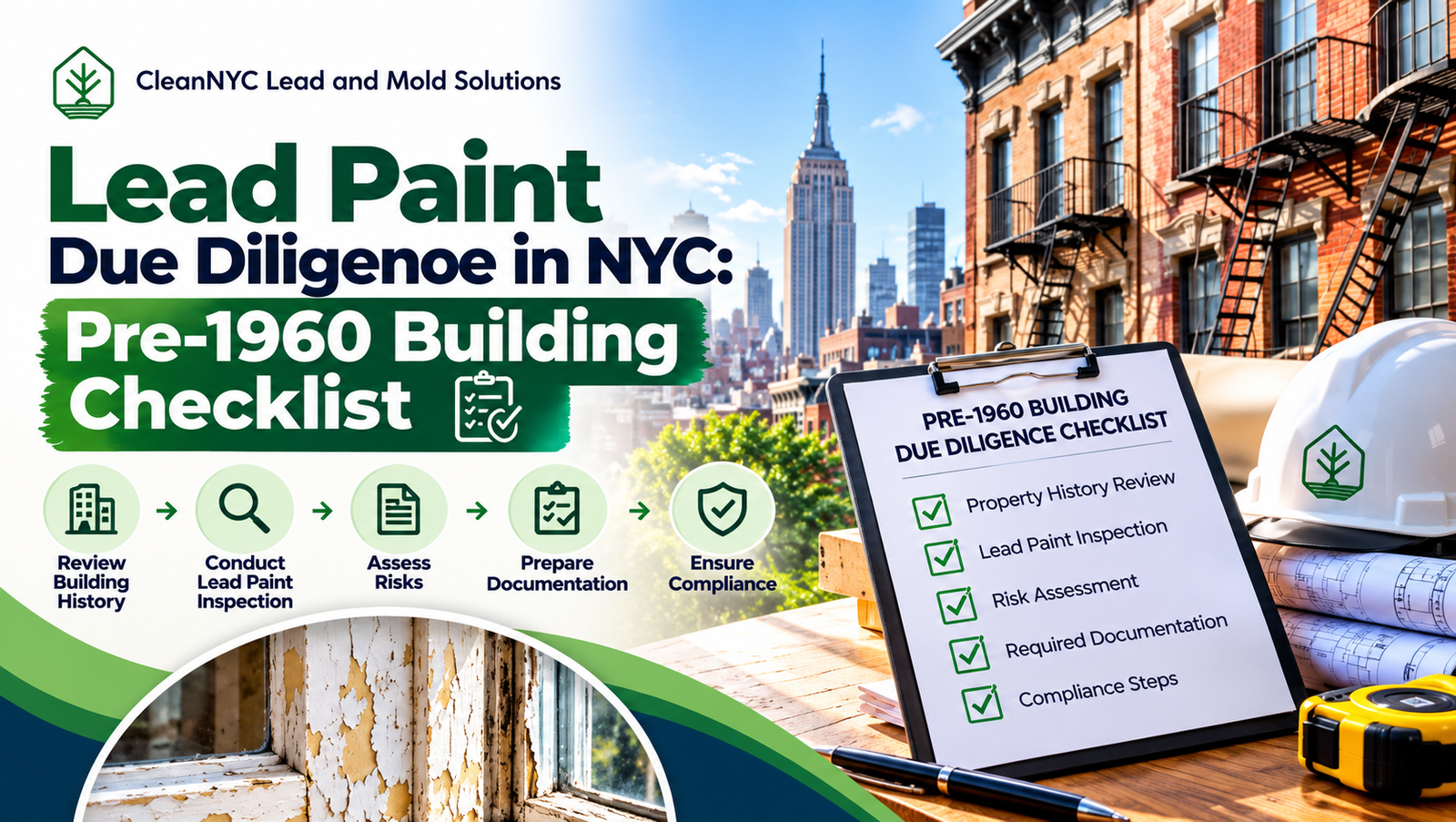
Here’s a fun fact nobody asked for. In New York City, your pre-1960 building is presumed to have lead paint until you prove otherwise. There’s no trial and no jury, just a legal presumption and a mountain of paperwork. A Local Law 1 lead paint exemption is how you get out of it.
That presumption comes from Local Law 1 of 2004, and it drives annual notices, turnover work, and years of recordkeeping. The way out is a Local Law 1 lead paint exemption. It tells HPD that a tested unit or common area is clear, and it lifts the presumption for that space.
This guide covers who qualifies, which testing counts, and how to file.
Quick answer: To get a Local Law 1 lead paint exemption, hire an EPA-certified lead inspector or risk assessor to XRF-test your units and common areas at the 0.5 mg/cm² action level. If every surface tests negative, or you permanently abated the positives, file through HPD’s Lead Exemption Online Portal (LEOP).
What Is a Local Law 1 Lead Paint Exemption?
Local Law 1 is NYC’s Childhood Lead Poisoning Prevention Act. Under it, paint is presumed to be lead-based when all three of these are true:
- The building is a multiple dwelling (three or more units), or a private dwelling with a tenant-occupied unit.
- The building went up before January 1, 1960.
- A child under six lives there, or spends 10 or more hours a week there.
An exemption flips that presumption. HPD says an approved exemption removes it and means several of the law’s requirements no longer apply to that space. You earn it with test results, not with a hunch that your gut-renovated building is probably fine. HPD is clear that the presumption applies to pre-1960 buildings even after a gut renovation.
The bar is also strict. Since December 1, 2021, lead-based paint means paint with a lead content of 0.5 mg/cm² or more. HPD treats an XRF reading of exactly 0.5 as inconclusive and presumes it is lead-based paint. So “close enough” won’t pass.
Do You Actually Need a Local Law 1 Lead Paint Exemption?
Testing is mandatory. The exemption is optional.
Local Law 31 of 2020 required owners of pre-1960 buildings to XRF-test every dwelling unit and common area by August 9, 2025. HPD confirms that deadline has passed. The requirement also covers rental units in 1960 to 1978 buildings when the owner knows lead-based paint is present.
Owner-occupied co-op and condo apartments are exempt from the testing requirement, according to Habitat magazine. Once an owner rents or sublets the unit, the obligations apply.
HPD strongly encourages owners to apply if testing came back fully negative. It also encourages owners who abated every lead-based paint surface to apply. So ask yourself one question: do you enjoy annual notices, turnover work, and ten years of recordkeeping on spaces that tested clean? If not, file.
What You Gain From a Local Law 1 Lead Paint Exemption
An approved exemption gives you three main things:
- A lifted presumption. HPD no longer assumes lead for the exempt space.
- Fewer ongoing duties. Several Local Law 1 requirements stop applying to exempt space.
- A stronger audit position. HPD audited close to 700 buildings in fiscal year 2025. Almost 650 received violations for failing to provide requested documents, and more than 600 for skipping the annual notice and investigation.
Clean paperwork matters. Auditors don’t hand out partial credit for good intentions.
How to Apply for a Local Law 1 Lead Paint Exemption: Step by Step
Step 1: Confirm your building and units are in scope
Check the build year, the unit count, and whether any unit is rented. Then decide which units and common areas you want exempted. Many owners file one unit at a time as results come in.
Step 2: Hire the right tester
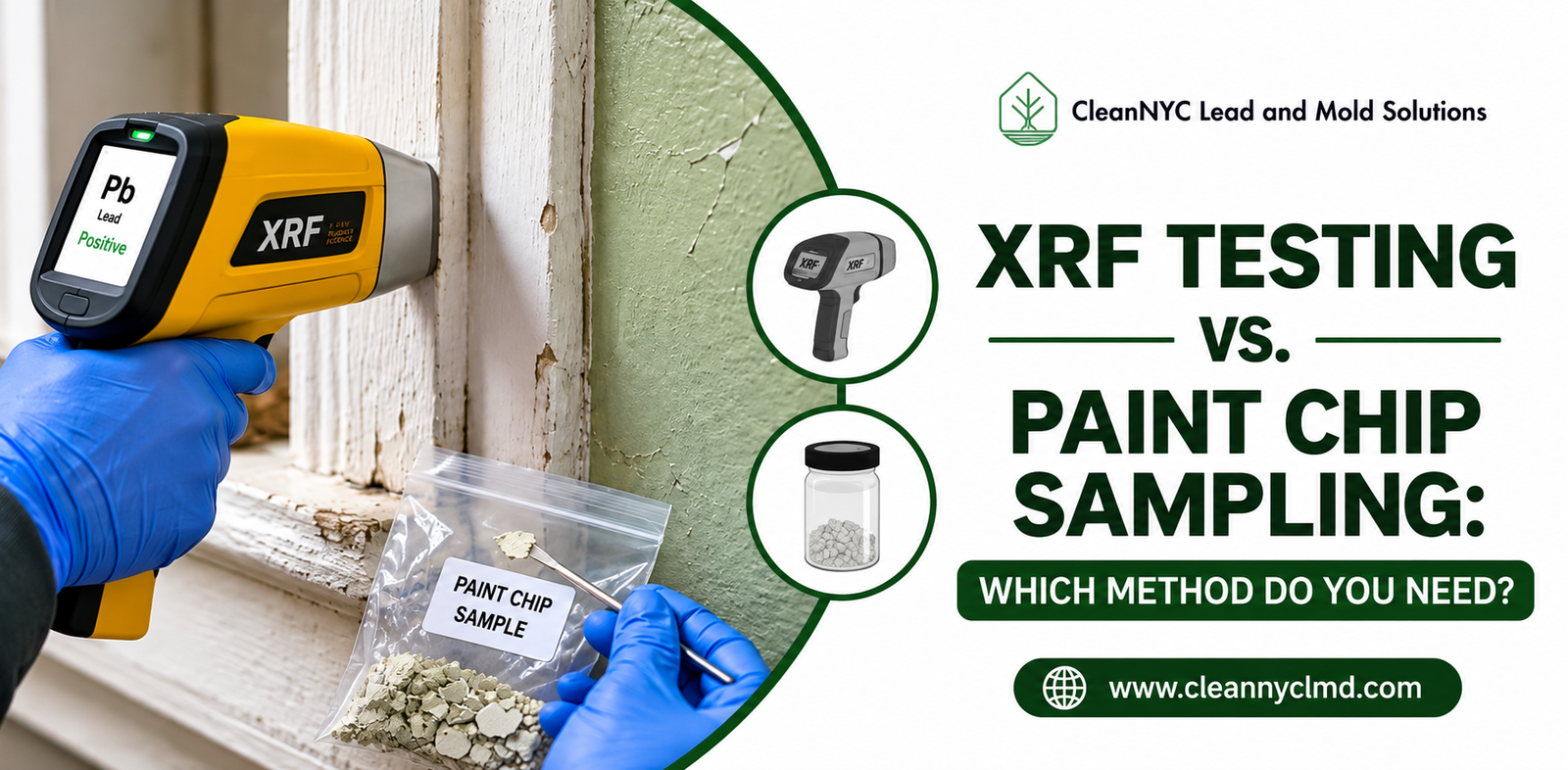
HPD only grants exemptions for units tested with an XRF machine that has an approved Performance Characteristic Sheet (PCS) at the 0.5 mg/cm² action level. The tester must be an EPA-certified lead inspector or risk assessor. In-house staff and DIY kits don’t qualify.
A certified local firm such as CleanNYC Lead and Mold Solutions can run the testing, but check any firm’s EPA certification before you sign.
Step 3: Test every surface in scope
That means apartments and common areas such as hallways, lobbies, and amenity spaces. Local Law 111 added common areas to the testing requirement, so skipping them leaves a gap in your application.
Step 4: Abate any positive surfaces
If testing finds lead-based paint and you want an exemption anyway, you have two paths. You can permanently remove or replace the paint, or you can encapsulate it. HPD notes that not every surface may be encapsulated.
Abatement must come from EPA-certified firms and workers, and Local Law 1 requires dust sampling after the work. Keep every clearance record.
Step 5: Gather your documents
HPD cut the number of required uploads in December 2025. A Lead-Free application now needs two uploads, down from five. A Lead-Safe application needs five, down from thirteen. HPD says the documentation requirements themselves did not change. Confirm the current list in the portal before you file.
Step 6: File through LEOP
File your application through HPD’s Lead Exemption Online Portal (LEOP) at leadexemption.nyc.gov. Applications based on testing at the old 1.0 mg/cm² level have not been accepted since March 1, 2022.
Step 7: Keep your records for ten years
HPD requires owners to keep records of notices, investigations, and repairs for at least ten years. Treat your exemption file the same way, even though HPD has approved it.
Local Law 1 Lead Paint Exemption Types: Lead-Free vs. Lead-Safe
| Lead-Free | Lead-Safe | |
|---|---|---|
| When it applies | All tested surfaces test negative, or positive surfaces were permanently removed or replaced | Some lead-based paint remains but is encapsulated or otherwise controlled |
| Typical paperwork | Lighter (two uploads in LEOP) | Heavier (five uploads in LEOP) |
| Best for | Buildings that tested clean or got full abatement | Owners who chose encapsulation where allowed |
Lead-Free is the simpler route when the testing supports it.
Already Have an Older Local Law 1 Lead Paint Exemption?
Exemptions HPD granted at the old 1.0 mg/cm² standard stay active until the tenant moves out. A lease renewal is not turnover, so it doesn’t end the exemption and you don’t report it.
When turnover does happen, the exemption stops being valid as of that date. You must notify HPD with an Affidavit of Turnover, either through LEOP or by mail. The unit can then qualify for a new exemption if you retest at the 0.5 level.
Common Mistakes That Cost Owners Time (and Money)
- Using the wrong standard. Testing at the old threshold can’t support a new exemption. Only 0.5 mg/cm² testing counts now.
- Hiring an uncertified tester. The inspector or risk assessor must hold EPA certification, and the XRF machine needs an approved PCS.
- Skipping common areas. Units alone don’t cover the whole building.
- Confusing lease renewal with turnover. They are different events with different duties.
- Thin records. Missing documentation draws Class C violations. HPD’s January 2026 bulletin lists record-keeping penalties of up to $250 per day (capped at $10,000) for some orders and up to $1,500 per violation for others.
HPD also published a dismissal process for certain record-keeping violations. It requires at least three consecutive years of documentation and a $1,000 fee for each year without sufficient records. That is an expensive way to learn the value of a filing cabinet.
A Simple Decision Path for Owners
- Tested everything and it’s clean? Apply for Lead-Free.
- Found lead and plan to remove it? Abate, document, then apply for Lead-Free.
- Found lead and plan to encapsulate? Confirm the surface qualifies, then consider Lead-Safe.
- Haven’t tested yet? Start there. The deadline passed in August 2025.
This guide is general information, not legal advice. Rules change, so confirm details with HPD or a qualified professional.
Local Law 1 Lead Paint Exemption: FAQs
Final Takeaway
A Local Law 1 lead paint exemption won’t make lead paint disappear, but it does make your compliance load lighter. Test with a certified professional and abate where needed. Then file through LEOP and keep your records for a decade.
If your testing is still outstanding, CleanNYC Lead and Mold Solutions can walk you through XRF testing and the exemption process. Book an appointment before an audit notice arrives.