You Got an HPD Lead Violation Notice
A tenant reports peeling paint near a window in a pre-1960 walk-up in Sunset Park. Three weeks later, an envelope from HPD shows up. Inside: a Notice of Violation, Order 616, marked Class C — immediately hazardous.
Most landlords open that letter and feel two things at once. Dread. And confusion about what actually happens next. An HPD lead violation is not a warning letter. It is a legal clock that starts the moment the notice is served, and how you respond in the first few days often decides whether this costs you a weekend or a five-figure penalty.
Here is the good news buried in the bad news: HPD’s process is entirely predictable. It is not designed to trap you — it is designed to make you prove, on paper, that the hazard is actually gone. Once you know the sequence, “I got a violation notice” stops being a crisis and starts being a checklist.
Here is the exact sequence HPD expects, in the order it actually happens — not the vague “act fast” advice most guides hand you.
What an HPD Lead Violation Actually Means
Before touching a paintbrush, it helps to know what you are holding.
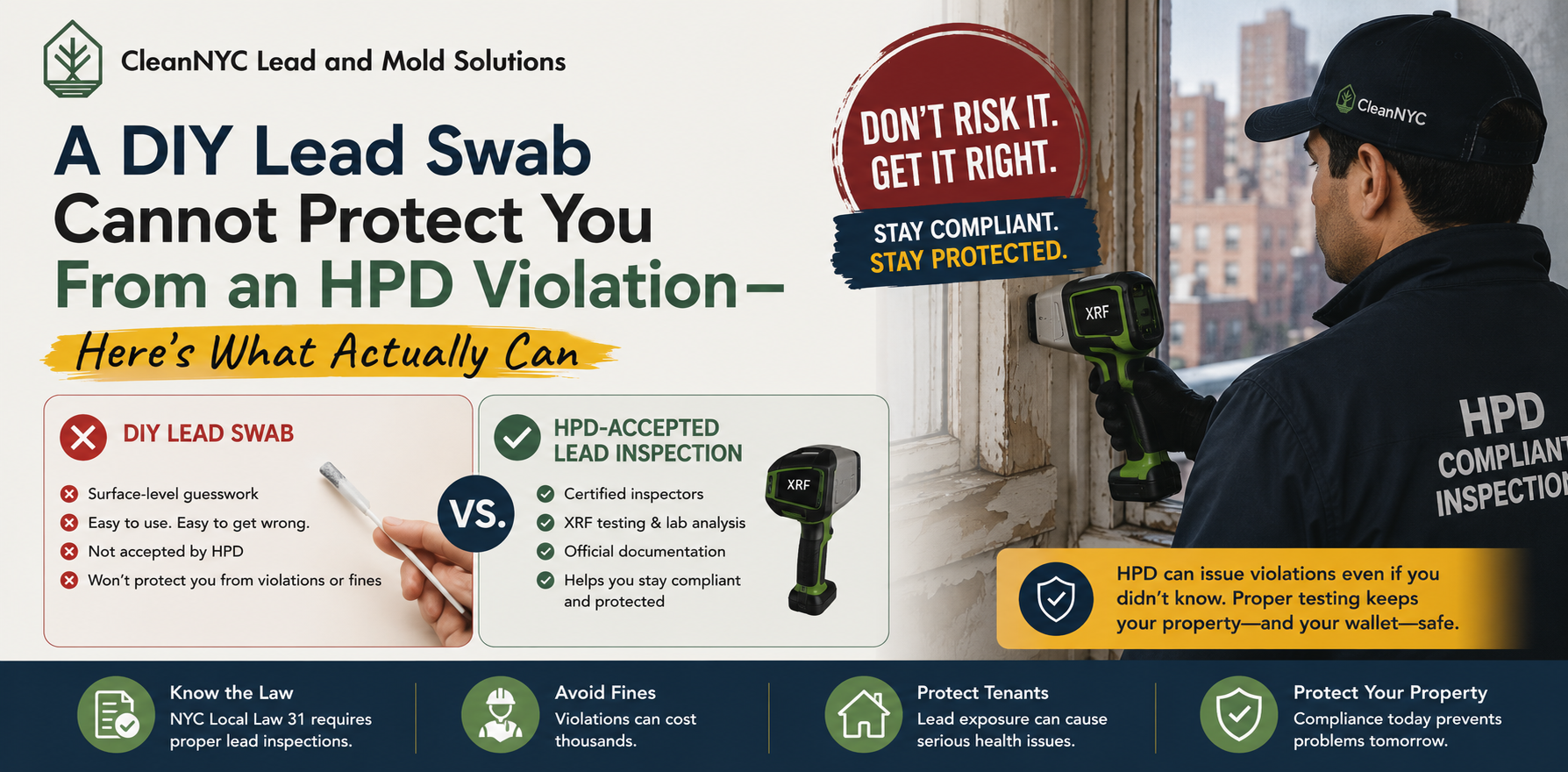
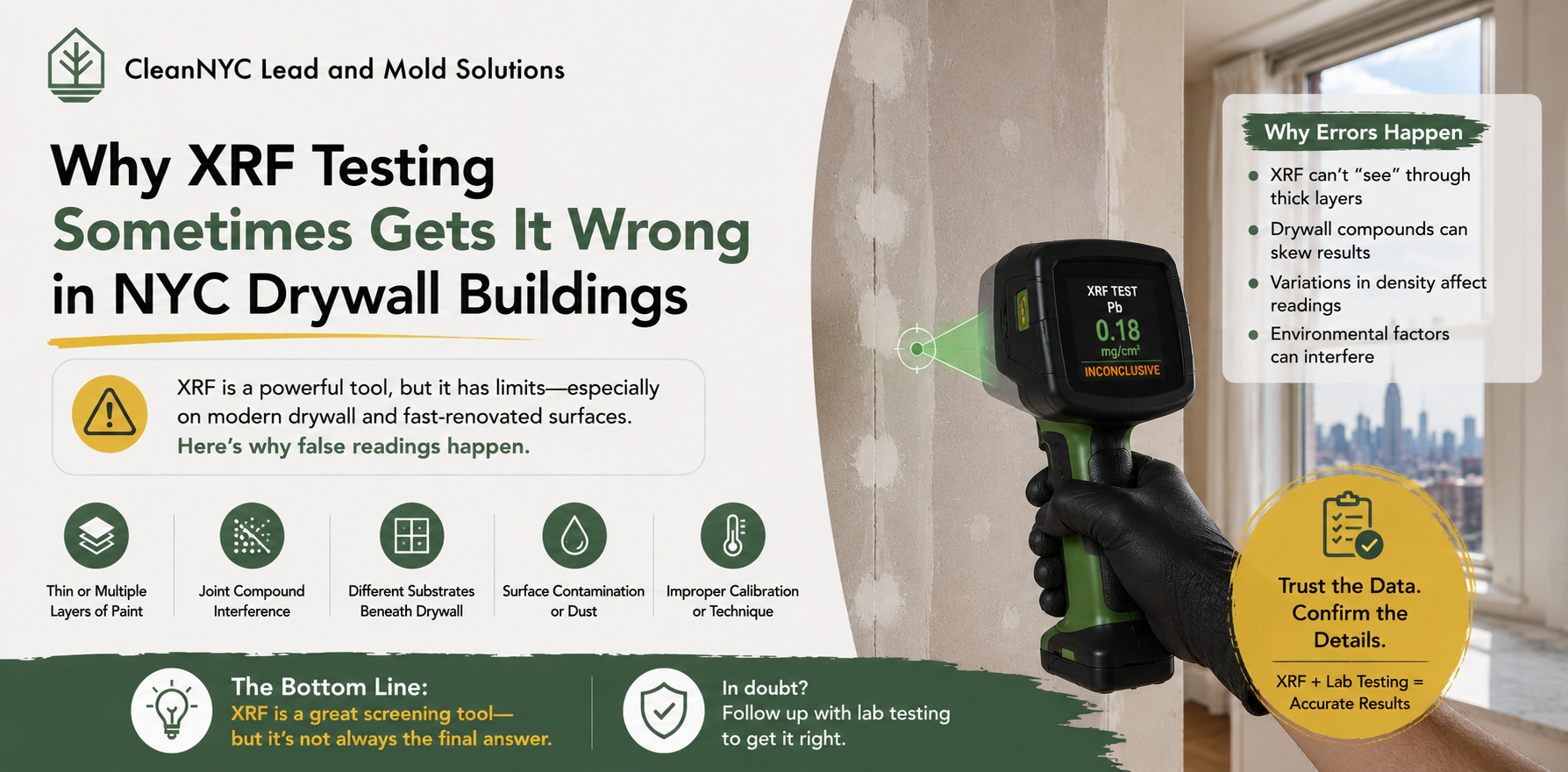
HPD issues a lead-based paint violation under Local Law 1 of 2004 when an inspector finds peeling or deteriorated paint in a pre-1960 building where a child under six resides, or when the building’s annual notice and investigation records fall short. Inspectors test suspect surfaces with an XRF machine — the same non-destructive method used in professional XRF Testing — and the result determines which order lands on your notice:
- Order 616 — presumed lead-based paint that is peeling or on a deteriorated surface
- Order 617 — paint that tested positive for lead (0.6 mg/cm² or higher) and is peeling
- Order 624 — paint that tested inconclusive at 0.5 mg/cm², or tested positive on a metal or ceramic component
All three sit in HPD’s Class C tier — “immediately hazardous,” the same severity bracket as mold and pest infestations. That classification is what sets your clock: HPD’s civil penalty schedule gives owners 21 days from the date of service to correct a Class C lead-based paint hazard before penalties apply in Housing Court. Separate lead-recordkeeping violations run on their own, shorter timelines.
The Exact Sequence to Clear an HPD Lead Violation
This is the part most guides skip. HPD does not just want the paint fixed. It wants a specific paper trail behind the fix.
1. Read the Notice of Violation Carefully
Every notice lists the violation order number, the correction deadline, and the Certification of Correction form printed on the back. Note the deadline first. It is not negotiable without a formal postponement request.
2. Hire an EPA-Certified Firm — Not a Handyman
Federal law requires that any firm disturbing painted surfaces in pre-1978 housing be a Lead-Safe Certified firm under the EPA’s Renovation, Repair and Painting Rule. HPD rejects certifications outright when the work was not performed by a properly licensed EPA-certified contractor using safe work practices.
3. Complete the Repair With Safe Work Practices
Containment, wet methods, and proper cleanup are not optional extras. They are the difference between a violation that clears and one that gets reopened. A rushed, uncontained repair can leave lead dust behind and fail the very next step.
4. Get Clearance Testing
Once the repair is done, a dust wipe clearance test confirms the space is safe for re-occupancy — the same Dust Wipe Clearance Testing used after any abatement job. Samples go to a New York State ELAP-certified laboratory, and you will need signed documentation from the person who took the sample.
5. Assemble the Certification Package
HPD requires all of the following before it will even schedule a reinspection:
- The completed Certification of Correction form
- A sworn statement from the EPA-licensed firm’s authorized agent
- A copy of that firm’s EPA certification
- Lab-certified dust wipe clearance results
- A Certificate of Training and affidavit from the dust wipe sampler
6. Submit to HPD’s Lead-Based Paint Inspection Program
Everything is mailed to HPD’s Lead-Based Paint Inspection Program office in Brooklyn. Only an owner, managing agent, or the party listed on the property registration can certify the correction — not a random relative, and not the building super.
7. Pass Reinspection
HPD reinspects before officially clearing the violation. If documentation is missing or the work does not hold up, the clock does not reset in your favor.
If your building’s XRF testing, HPD filing, or documentation package needs professional handling from the start, that is the exact gap CleanNYC Lead and Mold Solutions exists to close. Most owners lose time here, not on the physical repair itself.
What Happens If You Miss the Deadline
This is where the math gets uncomfortable, and it is not hypothetical. It is HPD’s own published penalty schedule.
Class C lead-based paint hazard violations carry a civil penalty of $250 per day, up to a maximum of $10,000, if HPD pursues the case in Housing Court. Separate recordkeeping violations under Orders 618, 619, and 620 carry their own penalties, ranging up to $1,000, $1,500, or $5,000 per violation, and a false certification adds its own civil — and potentially criminal — exposure.
If the hazard stays uncorrected, HPD does not wait around. The Emergency Repair Program sends a city-hired contractor to do the work and bills the property owner, typically at a rate the owner does not get to negotiate.
Why Your Records Matter Long After the Violation Clears
Clearing the violation feels like the finish line. It is not quite.
HPD selects buildings for compliance audits through its Building Lead Index, and separately demands records whenever DOHMH issues a Commissioner’s Order to Abate for a child with an elevated blood lead level. In both cases, HPD sends a Record Production Order, and owners are required to keep annual notices, investigation records, and remediation documentation for at least ten years.
Think of it less like paying a parking ticket and more like keeping your car’s maintenance receipts. Nobody wants the folder. Everybody is relieved they kept it the one time it actually gets checked. A cleared violation with no surviving paperwork can look, on a future audit, indistinguishable from a violation that was never fixed at all.
Turnover Violations: The One Landlords Forget
If a child under six moved into the unit after August 2, 2004, and the window or door friction surfaces were not abated at turnover, HPD issues a separate set of violations — Orders 621, 622, 623, and 625. These require proof that friction surfaces are free of lead-based paint, not just that visible peeling has been fixed. It is a distinct compliance track from the standard 616/617/624 process, and owners frequently miss it because they assume fixing the paint covers everything.
Can You Contest or Postpone It?
Two legitimate options exist, and both have hard limits.
Contestation works only if the building was built in 1960 or later and the paint tested lead-free. Order 616 and inconclusive Order 624 violations qualify, with documentation required.
Postponement buys time, not an exemption. Owners can request up to two postponements for a genuine technical difficulty, an inability to obtain materials or labor, or an inability to access the unit. It is not a way to stall indefinitely.
Overdue Violations Are Not a Dead End
If the correction deadline has already passed, you cannot certify correction through the normal process — but you are not stuck. Check HPDONLINE under the “Overdue Lead-Based Paint Violations” tab for building-specific next steps, and consider requesting a Dismissal Request inspection if HPD has not yet physically reinspected the unit.
The Business Case for Moving Fast
Here is how an experienced property owner actually thinks about this. $250 a day does not sound catastrophic until it is multiplied across a building-wide audit, a missed turnover violation, and the legal fees of contesting a case that is not winnable. Compliance is boring. Boring is cheap. A contested Housing Court case is not.
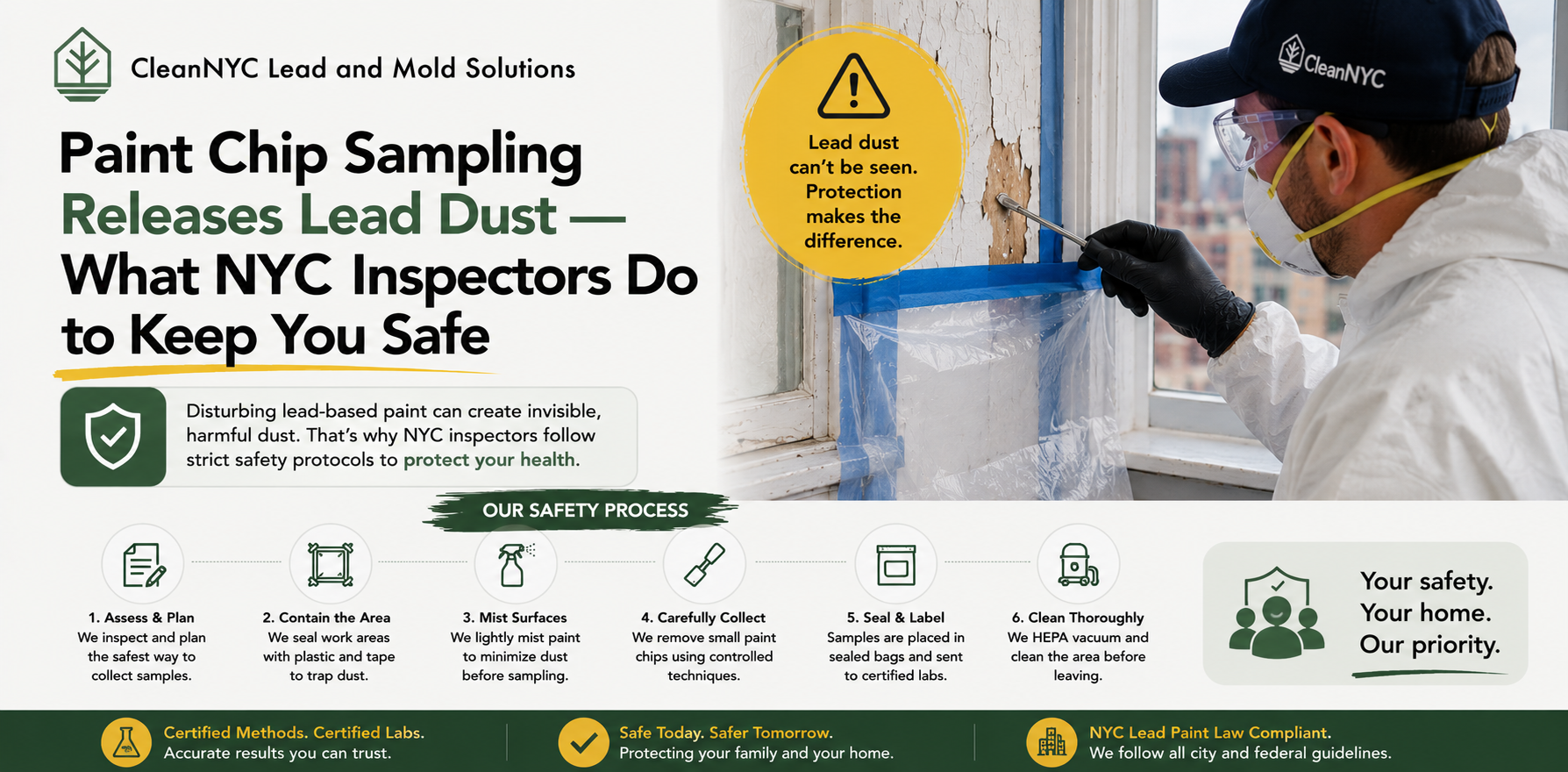
The buildings that clear an HPD lead violation fastest treat testing and documentation as one workflow, not two separate headaches handled by two vendors months apart. If you are weighing whether your situation calls for Paint Chip Sampling alongside the XRF results, whether your building’s Water Testing is overdue at the same time, or whether a Lead Exemption filing makes more sense than a straight correction, that is worth sorting out before the clock runs out. You can review completed work on Our Projects, or start with Why Test before your next HPD audit lands.
Frequently Asked Questions
How long do I have to correct an HPD lead violation?
Class C lead-based paint hazard violations must be corrected within 21 days from the date of service before civil penalties apply in Housing Court, per HPD’s published penalty schedule.
What is the fine for an uncorrected HPD lead violation?
$250 per day, up to a maximum of $10,000, for Class C lead-based paint hazard violations. Recordkeeping violations under separate orders carry their own penalties, up to $1,000–$5,000 depending on the order.
Can I correct an HPD lead violation myself?
No. Federal law requires an EPA Lead-Safe Certified firm to perform any work disturbing painted surfaces in pre-1978 housing, and HPD rejects certifications submitted without one.
What documents do I need to certify correction?
A completed Certification of Correction form, a sworn statement from the EPA-licensed firm, a copy of that firm’s EPA certification, lab-certified dust wipe clearance results, and an affidavit from the person who took the dust sample.
What if my correction deadline already passed?
You cannot certify correction the standard way, but HPDONLINE’s “Overdue Lead-Based Paint Violations” tool shows building-specific next steps, and a Dismissal Request inspection may apply if HPD has not reinspected yet.
Is a turnover violation the same as a standard lead violation?
No. Turnover violations (Orders 621, 622, 623, 625) apply specifically to window and door friction surfaces when a child under six moved in after August 2004, and require separate documentation from a standard peeling-paint correction.
Can I contest an HPD lead violation?
Only under specific conditions — the building must have been built in 1960 or later with documented negative lead test results. Presumed-lead violations on older buildings generally are not contestable.
Sources
- NYC Department of Housing Preservation and Development — Lead-Based Paint
- NYC HPD — Lead-Based Paint Violations: How to Correct and Certify Corrections
- NYC HPD — Penalties and Fees
- U.S. EPA — Lead Renovation, Repair and Painting Program
About the Author
This article was prepared by the CleanNYC Lead and Mold Solutions editorial team, drawing on published HPD and EPA compliance guidance and the firm’s ongoing work performing XRF testing, dust wipe clearance testing, and HPD filings for NYC property owners. CleanNYC is an NYC-based, EPA-certified and licensed lead and mold testing provider.