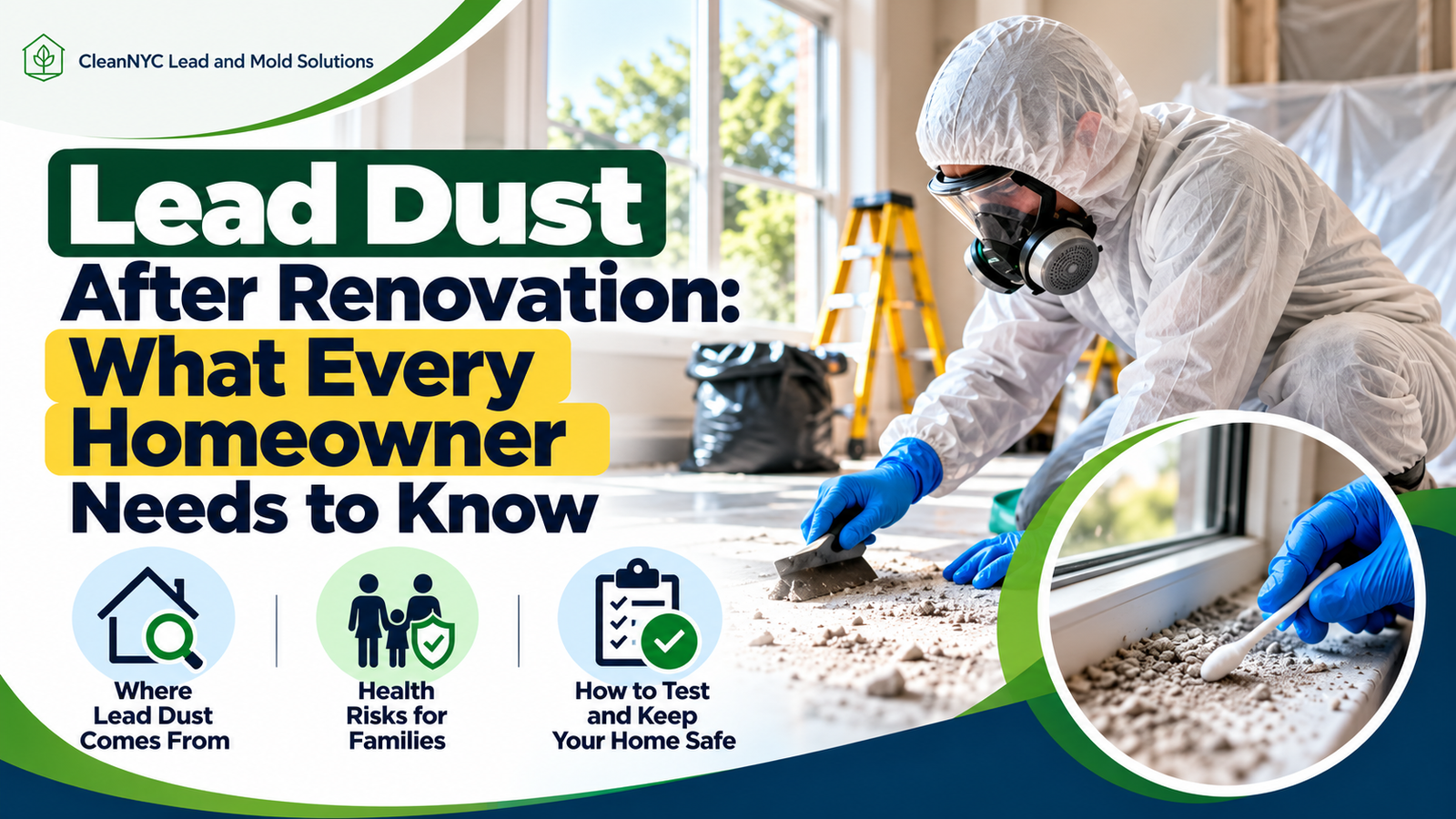
The contractor packed up. The floors look spotless. The paint looks fresh. So is it safe to move back in?
Not necessarily. Lead dust is invisible, and a visual check can’t catch it. That is exactly why dust wipe clearance testing exists.
Here’s the short version. Dust wipe clearance testing is a lab-backed check that proves lead dust is gone after paint work. In NYC, it is often required, not optional. This guide explains what it is, when you need it, and what happens if a sample fails.
What Is Dust Wipe Clearance Testing?
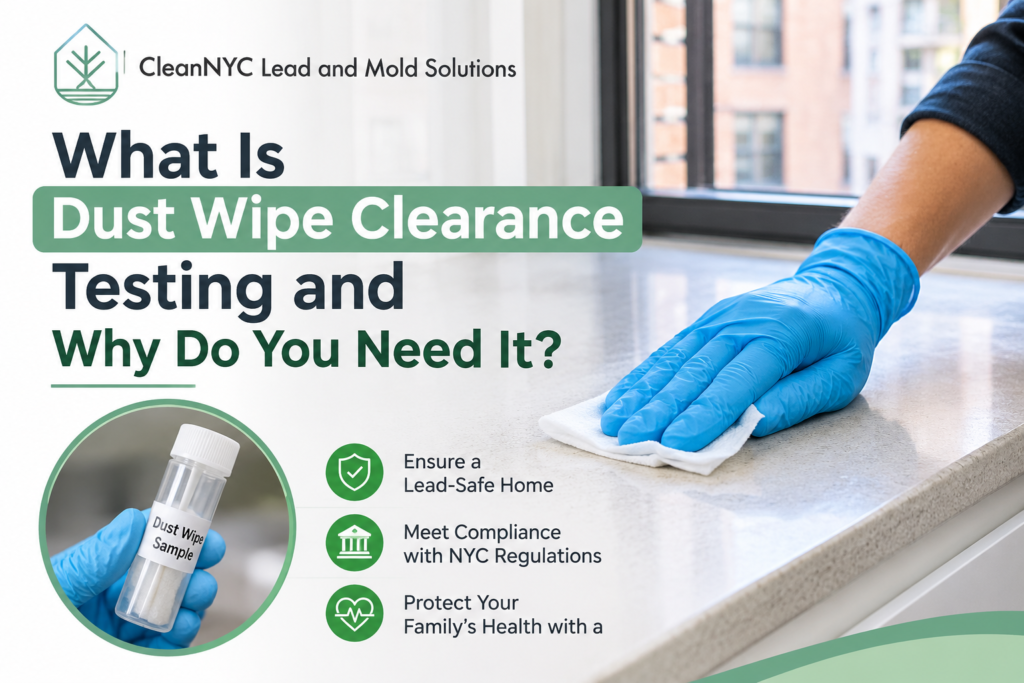
Dust wipe clearance testing measures how much lead dust remains on a surface after renovation, repair, or abatement work. A certified professional wipes a measured area with a special wipe. A lab then analyzes the wipe and reports the lead in micrograms per square foot (µg/ft²).
Think of it as the final exam for the cleanup. The work crew cleans first. Then the test shows whether the cleaning worked.
CleanNYC offers dust wipe clearance testing for NYC owners, managers, and homeowners who need that proof on paper.
Why Does Lead Dust Matter So Much?
Sanding, scraping, and demolition turn old paint into fine dust. That dust settles on floors, window sills, and window troughs. Young children crawl on those surfaces and put their hands in their mouths. As a result, even a small amount of leftover dust can be a risk.
Lead exposure harms brain development in young children, and the effects can be permanent. Our own Why Test page explains how older buildings raise that risk. For a homeowner’s view of the problem, read our guide to lead dust after renovation.
When Does NYC Require Dust Wipe Clearance Testing?
Local Law 1 of 2004 drives most NYC requirements. In general, you need clearance testing in these situations:
| Situation | Clearance testing needed? |
|---|---|
| Repair or renovation disturbing more than 2 square feet of paint in a pre-1960 building where a child under 6 lives | Yes |
| Abatement or correction work done to meet turnover requirements | Yes |
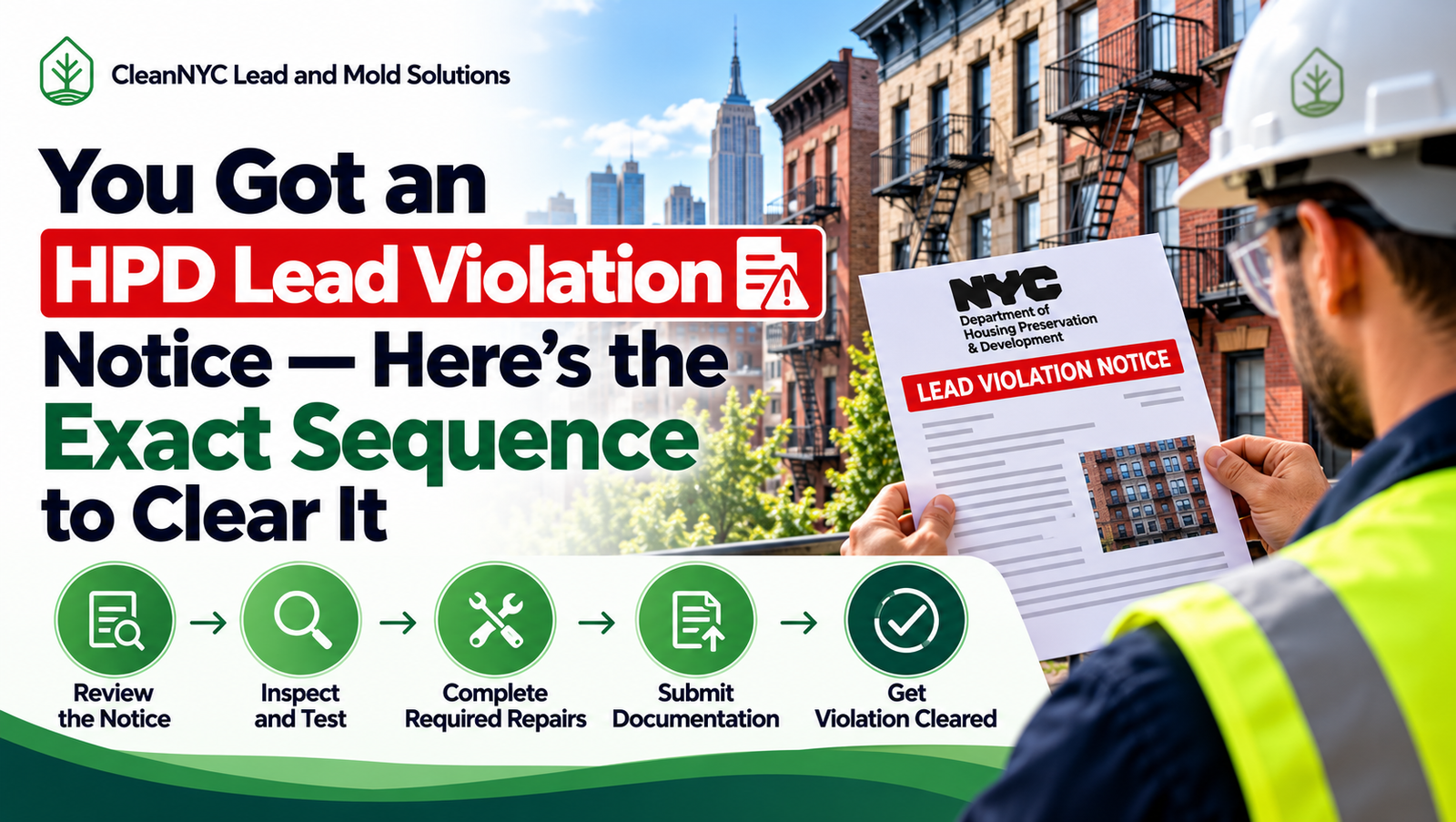
| Correcting an HPD lead violation | Yes |
| Vacant unit between tenants with no turnover work performed | Generally no |
NYC’s Department of Health and HPD both publish these rules. See the NYC Health Department’s lead dust standards .
Rules differ by building type and project, so confirm your own case before work starts.
Who Is Allowed to Perform the Test?
The tester matters as much as the test. For turnover work, HPD says a third-party company must perform clearance testing, independent of the contractor who did the work. That separation keeps the result honest.
For NYC Health Department filings, the firm must hold EPA approval for lead-based paint activities. It must also use an EPA-certified lead inspector or risk assessor to collect the samples.
Choose your tester before the work begins. That way, scheduling is easy once cleanup ends.
What Are the Pass Levels in NYC?
NYC has used strict dust standards since June 1, 2021, under Local Law 66 of 2019. The limits are:
| Surface | Maximum lead dust |
|---|---|
| Floors | 5 µg/ft² |
| Window sills | 40 µg/ft² |
| Window wells/troughs | 100 µg/ft² |
Federal rules have since caught up. EPA’s updated dust-lead action levels took effect on January 12, 2026, and they use the same numbers. You can read the details in EPA’s published supplement.
How Does the Testing Process Work?
The process is straightforward when you plan for it:
- Finish the work. The contractor completes the paint work and the final cleanup.
- Wait for the right moment. Samples should come after cleaning is done. NYCHA, for example, collects them at least one hour after an abatement cleaning.
- Collect the wipes. The inspector wipes floors, window sills, and troughs using a measured template.
- Send samples to a lab. An EPA-recognized lab analyzes each wipe.
- Review the report. Results show each surface against the limits above.
- Share the results. Owners must give tenants a copy of the clearance results after post-work cleanup.
What Happens If a Sample Fails?
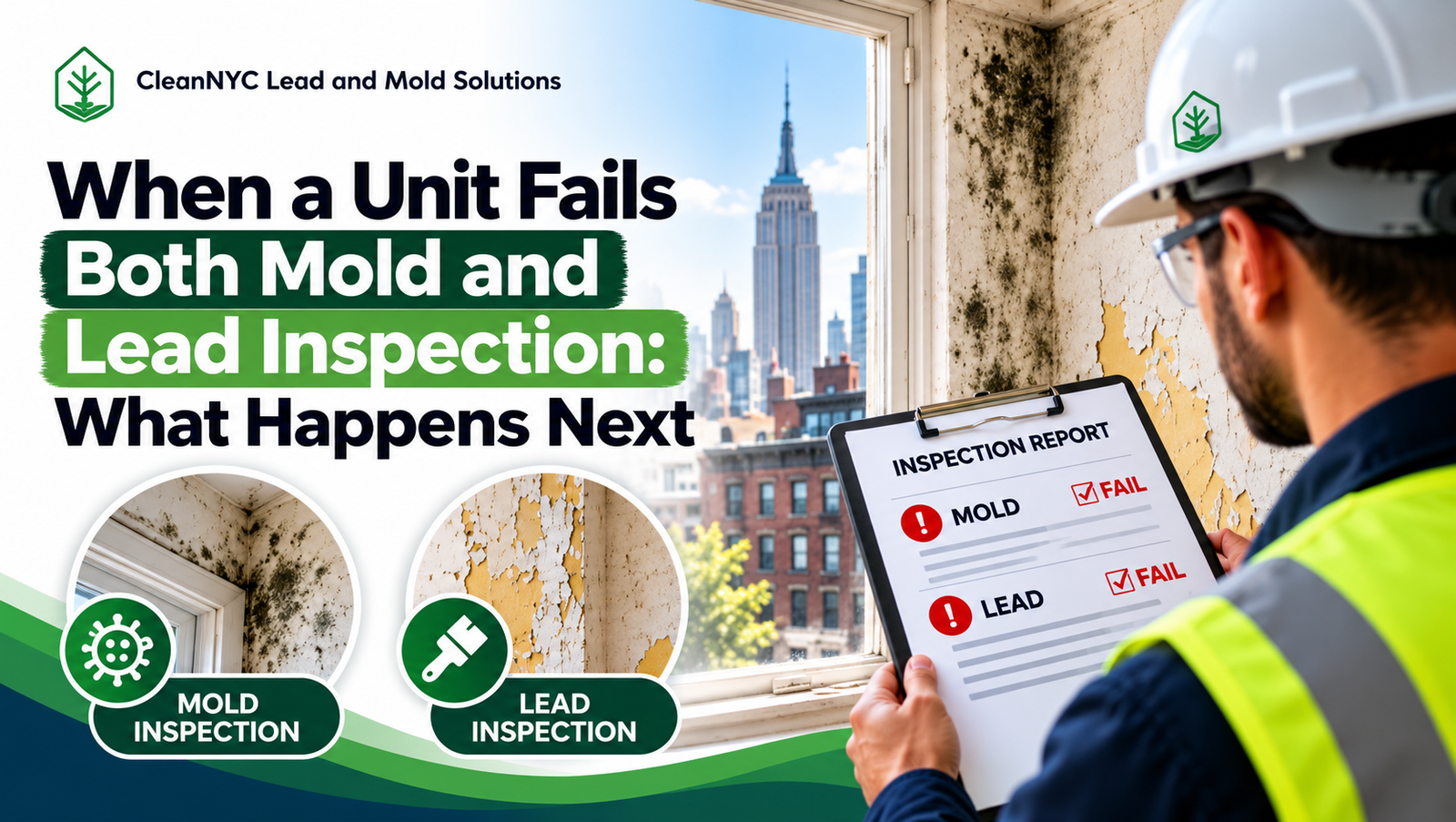
A failed sample isn’t a disaster. It means the area needs more cleaning. The failed areas get recleaned and tested again until they pass.
Because of this, it helps to keep your contractor on call until you get passing results. Delays often come from waiting to book a second round.
How Does Clearance Testing Fit With Other Lead Services?
Clearance testing is the last step in a bigger compliance chain:
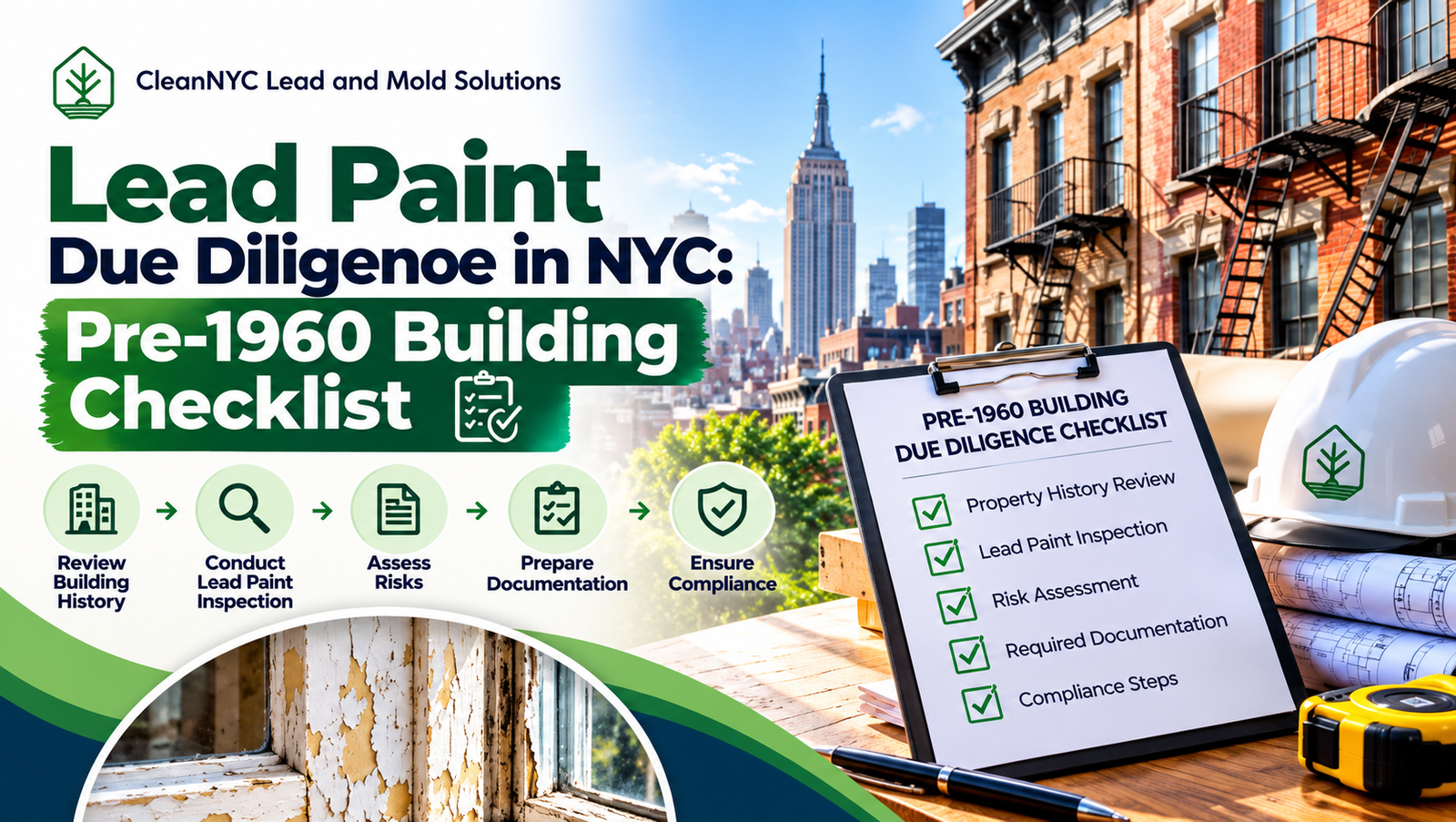
- Find the lead. XRF testing shows which surfaces contain lead-based paint, without damaging them.
- Confirm borderline results. Paint chip sampling sends small samples to a lab when XRF readings are unclear.
- Fix the hazards. A separate contractor handles repairs or abatement.
- Prove it’s clean. Dust wipe clearance testing confirms the space is safe.
- File the paperwork. HPD filings and lead exemptions keep you audit-ready.
If you want to cut future obligations, read our step-by-step guide to the Local Law 1 lead paint exemption. For budgeting, see our lead paint inspection cost guide.
Tips to Pass on the First Try
- Hire a contractor who follows safe work practices. Good containment and cleanup reduce failed samples.
- Keep the area closed until testing ends. Foot traffic can spread dust again.
- Book the tester early. Don’t wait until the last day of the job.
- Keep every record. NYC law requires owners to keep lead paint records for at least 10 years.
- Test before furniture and belongings return. It’s much easier to reclean an empty room.
Frequently Asked Questions
What is dust wipe clearance testing?
It’s a test that measures lead dust on floors, window sills, and troughs after paint work. A lab analyzes each wipe sample and compares the result to legal limits.
Is dust wipe clearance testing required in NYC?
Often, yes. It applies after turnover abatement, after correcting HPD lead violations, and after work that disturbs more than 2 square feet of paint in covered pre-1960 housing with a young child.
What are the NYC pass levels for lead dust?
Floors must test at 5 µg/ft² or lower. Window sills must test at 40 µg/ft² or lower. Window troughs must test at 100 µg/ft² or lower.
Can my contractor test their own work?
For turnover work, no. HPD requires an independent third-party company for clearance testing.
What if my space fails clearance testing?
The failed areas get recleaned and retested. You repeat the process until every sample passes.
Is clearance testing the same as an XRF inspection?
No. XRF testing finds lead in paint. Clearance testing checks for lead dust left behind after work. You can read more on our XRF testing page.
Final Thoughts
A clean-looking room isn’t proof of a safe room. Dust wipe clearance testing gives you that proof, protects the people who live there, and keeps your records ready for HPD. Plan the test before the work starts, and use an independent, certified tester.
Ready to book? Contact CleanNYC Lead and Mold Solutions to schedule dust wipe clearance testing and get your results documented.