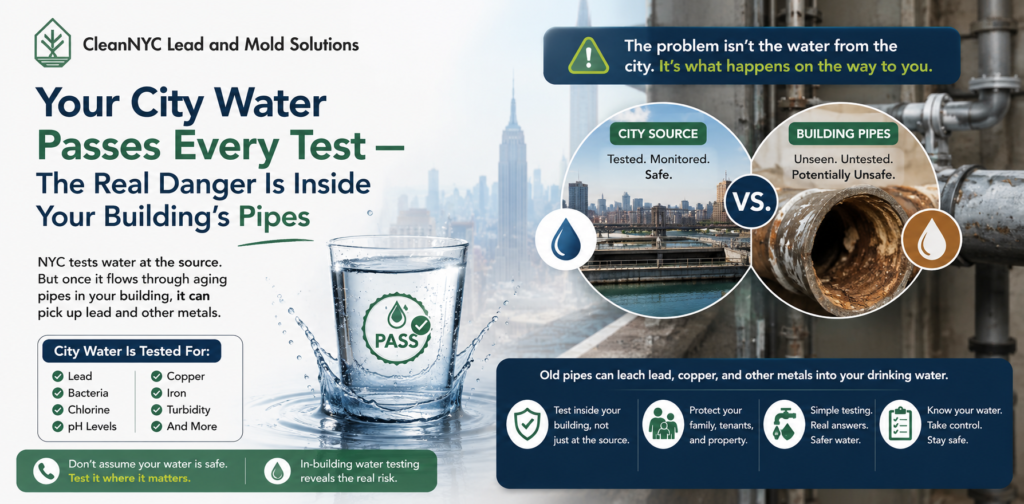
Your city’s annual water report says the drinking water is safe. The utility passes every regulatory requirement. So, your water must be safe too—right?
Not necessarily.
Many property owners are surprised to learn that municipal water can leave a treatment facility in excellent condition and still become contaminated before it reaches the tap. In fact, some of the most significant water quality concerns originate inside private buildings, not at the city water plant.
Aging plumbing systems, corroded pipes, stagnant water, and outdated fixtures can introduce contaminants long after water enters a home, apartment, school, or commercial property.
That is why professional water testing remains important even when your city consistently meets federal and local standards.
Quick Answer
Even if municipal water meets all safety requirements, contaminants can enter water through aging plumbing, lead-containing materials, corrosion, and stagnant water inside buildings. Professional water testing helps identify risks that city testing cannot detect within private plumbing systems.
Why City Water Reports Don’t Tell the Whole Story
Public water suppliers conduct extensive monitoring before water enters the distribution system. The U.S. Environmental Protection Agency’s Safe Drinking Water Act program establishes national standards, and local utilities routinely test for contaminants, bacteria, disinfectant levels, and other indicators.
However, utility responsibility generally ends at the water main or service connection.
Once water enters a private property, the condition of the building’s plumbing becomes the owner’s responsibility. Our team at CleanNYC Lead and Mold Solutions regularly works with property owners to evaluate this hidden layer of risk.
This means contaminants may develop inside:
- Lead service lines
- Older copper plumbing systems
- Corroded galvanized pipes
- Brass fixtures and fittings
- Building storage tanks
- Low-use plumbing branches
- Aging apartment building infrastructure
As a result, water that leaves the municipal system in compliance may not have the same quality when it comes out of the faucet.
The Hidden Dangers Inside Building Plumbing
1. Lead Can Enter Water Through Older Plumbing Materials
One of the most concerning issues identified during drinking water testing is lead.
Many older residential and commercial buildings still contain lead pipes, lead solder, or plumbing fixtures manufactured before modern restrictions were adopted.
As water sits inside these materials, small amounts of lead can dissolve into the water supply.
According to the CDC’s Childhood Lead Poisoning Prevention Program, there is no known safe blood lead level in children. Even low levels of exposure may affect developing brains and nervous systems.
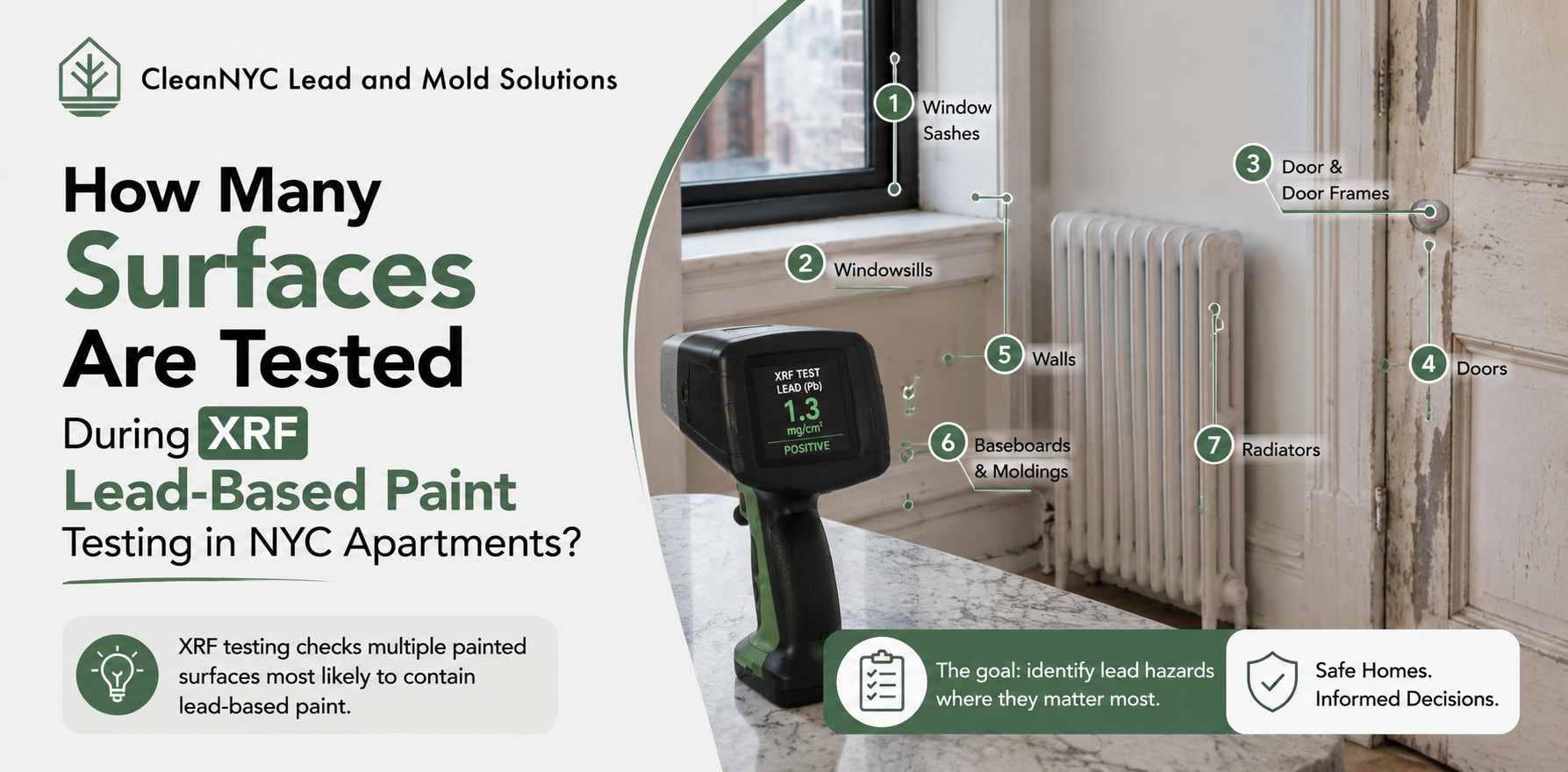
Because lead is invisible, odorless, and tasteless, laboratory analysis is often the only reliable way to determine whether contamination exists. If your building has also never been evaluated for painted surfaces, our XRF testing service can identify whether lead paint is contributing an additional source of exposure alongside your plumbing.
2. Corrosion Can Change Water Quality
Plumbing systems naturally deteriorate over time.
Corrosion may release metals such as:
- Iron
- Copper
- Lead
- Zinc
- Nickel
Signs of corrosion may include:
- Brown or yellow water
- Metallic taste
- Blue-green staining
- Reduced water pressure
- Frequent plumbing leaks
Routine water quality testing can help identify corrosion-related problems before they create larger health or maintenance concerns. If corrosion raises questions about whether painted surfaces are also part of the picture, our paint chip sampling service can help confirm whether paint is contributing to the issue.
3. Stagnant Water Can Promote Bacterial Growth
Water that remains unused inside pipes for long periods can create conditions that support bacterial growth.
This commonly occurs in:
- Vacant apartments
- Seasonal properties
- Schools during extended breaks
- Office buildings with low occupancy
- Unused sections of large plumbing systems
Certain bacteria, including Legionella, may multiply under these conditions. According to CDC guidance on Legionella in building water systems, buildings with complex plumbing are encouraged to maintain an active water management program. For this reason, comprehensive water contamination testing is often recommended after prolonged building closures or extended vacancies.
Does Building Age Affect Water Safety?
In many cases, yes.
Older buildings frequently present a greater risk because plumbing materials and construction standards have changed significantly over the decades.
Buildings Constructed Before 1986
Many buildings constructed before 1986 may contain lead-based plumbing components because federal regulations governing lead content were less restrictive.
Buildings Constructed Before 2014
Even some newer buildings may contain fixtures with measurable lead content. Federal standards defining “lead-free” plumbing became significantly stricter in 2014.
For this reason, building age alone should not determine whether testing is necessary.
Signs Your Property May Need Water Testing
Contaminants often produce no obvious symptoms. Nevertheless, certain warning signs should prompt further evaluation.
Consider professional water testing if you notice:
- Discolored or cloudy water
- Unusual taste or odor
- Recurring plumbing repairs
- Water sitting unused for extended periods
- Recent plumbing renovations
- Children or pregnant occupants in the building
- Older plumbing infrastructure
- Persistent staining around fixtures
Even when none of these signs are present, periodic testing can provide valuable peace of mind. If any of these signs follow a recent plumbing or renovation project, our dust wipe clearance testing service can also confirm that the work did not leave behind additional contamination.
What Does Professional Water Testing Typically Include?
The specific testing package depends on building characteristics, occupancy, and local concerns.
Metals
- Lead
- Copper
- Iron
- Arsenic
- Manganese
Microbiological Indicators
- Total coliform bacteria
- E. coli
- Legionella
Water Chemistry
- pH
- Hardness
- Alkalinity
- Corrosivity
Additional Parameters
- Nitrates
- Volatile organic compounds (VOCs)
- Chlorine residual
- Sediment-related contaminants
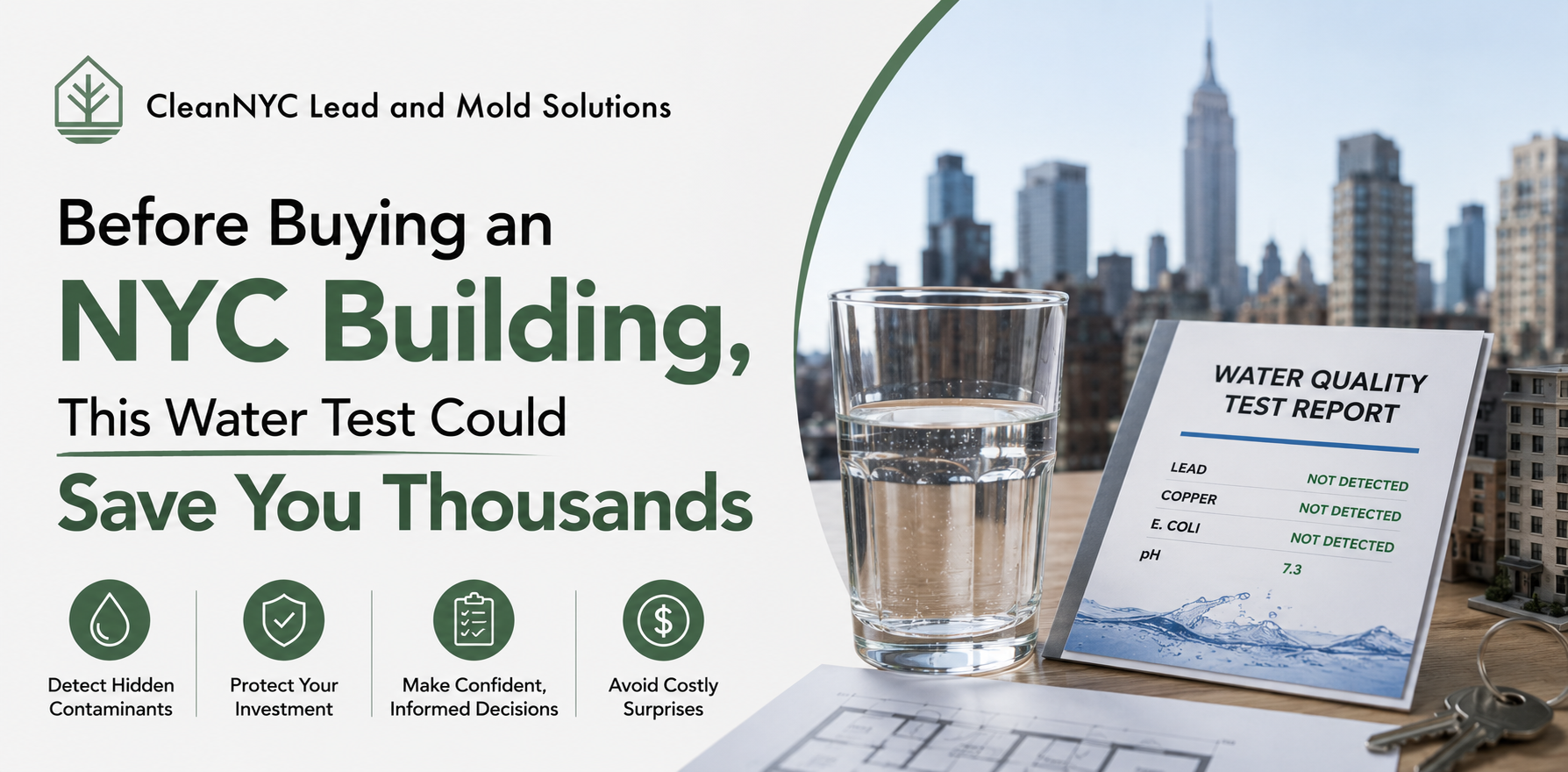
Comprehensive water quality testing allows property owners to make informed decisions regarding maintenance, filtration, and plumbing upgrades. You can browse our past project case studies to see how testing packages have been tailored for different NYC properties.
Why First-Draw Sampling Matters
Many contaminants associated with building plumbing are detected using first-draw samples.
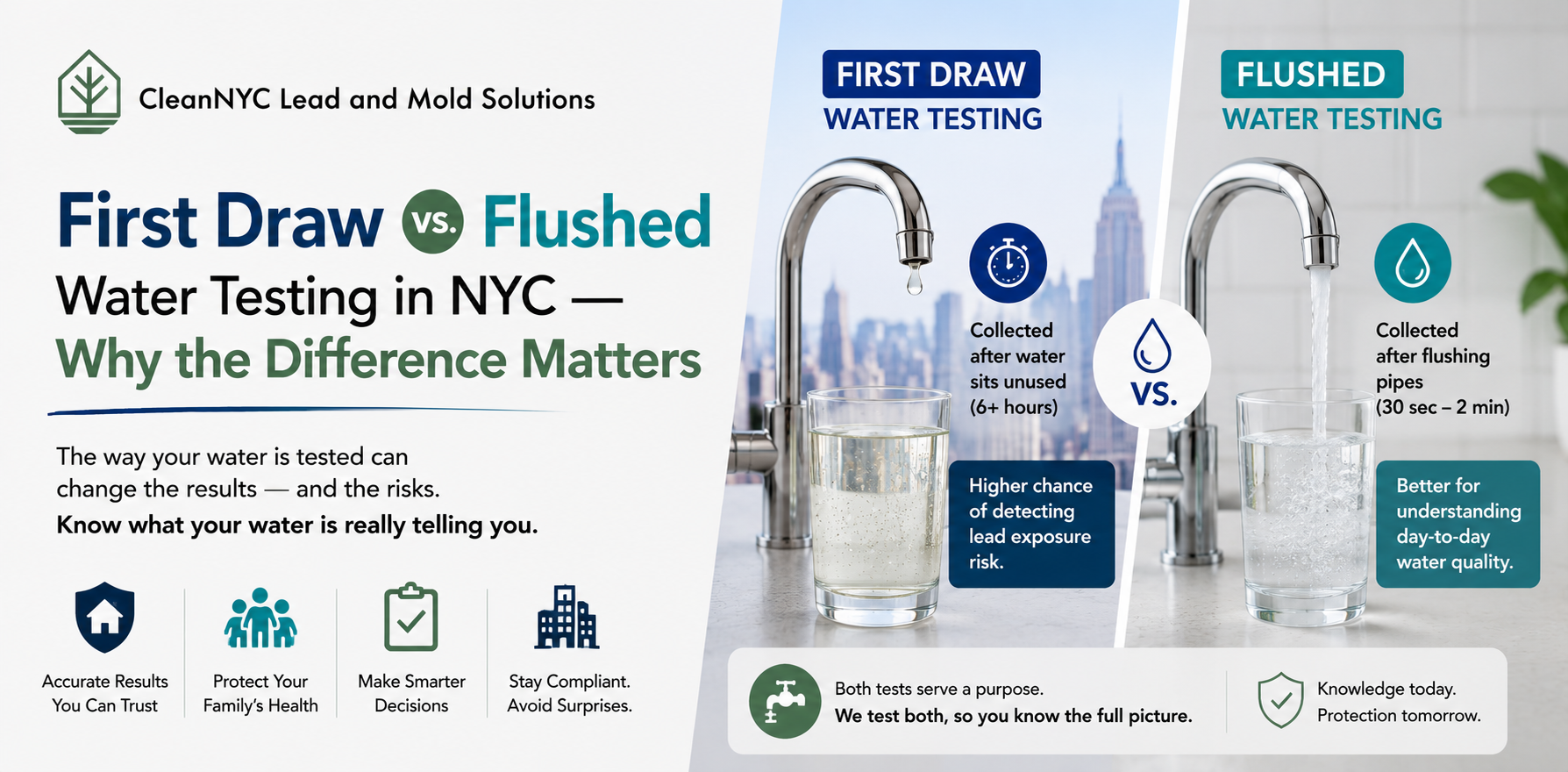
A first-draw sample is collected after water has remained stagnant in plumbing—typically for six to eight hours.
Comparing first-draw samples with flushed samples can help determine whether contaminants originate from municipal water or from the building’s internal plumbing system.
This distinction is critical because corrective actions differ depending on the contamination source. For landlords managing compliance paperwork, our HPD filing service can help keep water testing records organized alongside other required documentation.
Protecting Occupants Starts With Information
Safe municipal water is only one part of the equation.
The condition of the plumbing inside a building plays an equally important role in determining water safety. Visit our Why Test page to learn more about the science behind these inspections and why they matter for occupant safety.
Regular drinking water testing helps property owners:
- Identify hidden contamination issues
- Prioritize plumbing repairs
- Evaluate filtration effectiveness
- Reduce potential exposure risks
- Support healthier indoor environments
For homeowners, landlords, property managers, schools, and businesses, understanding what is happening inside building pipes is an important step toward protecting occupants.
The water leaving the treatment plant may be safe—but the only way to know what is coming out of your tap is through professional water testing.
Frequently Asked Questions
About the Author
This article was prepared by an environmental compliance and water safety professional experienced in evaluating residential, multifamily, and commercial properties. The information presented is based on current regulatory guidance, industry standards, and field experience related to drinking water systems, contamination assessment, and building plumbing infrastructure. The goal is to provide accurate, practical information that helps property owners make informed decisions regarding water safety, brought to you by CleanNYC Lead and Mold Solutions.