If you own residential rental property in New York, you’ve probably heard whispers about a new lead paint certification deadline. It lands on October 1, and why lead testing matters is more important than ever. The rumors are true — but the details matter more than the date itself. This new requirement doesn’t come from New York City’s usual playbook of local laws. It comes from Albany, and it changes the compliance picture for thousands of landlords across the state.
Here’s the problem: half the property owners talking about this deadline are picturing the wrong law. Some think it replaces NYC’s existing lead rules. Others assume it doesn’t touch them at all. Neither assumption is safe. This guide breaks down exactly what the October 1 deadline covers. It explains who it applies to, and what it means if you own buildings in — or near — New York City.
What Is the October 1 Lead Paint Certification Deadline?
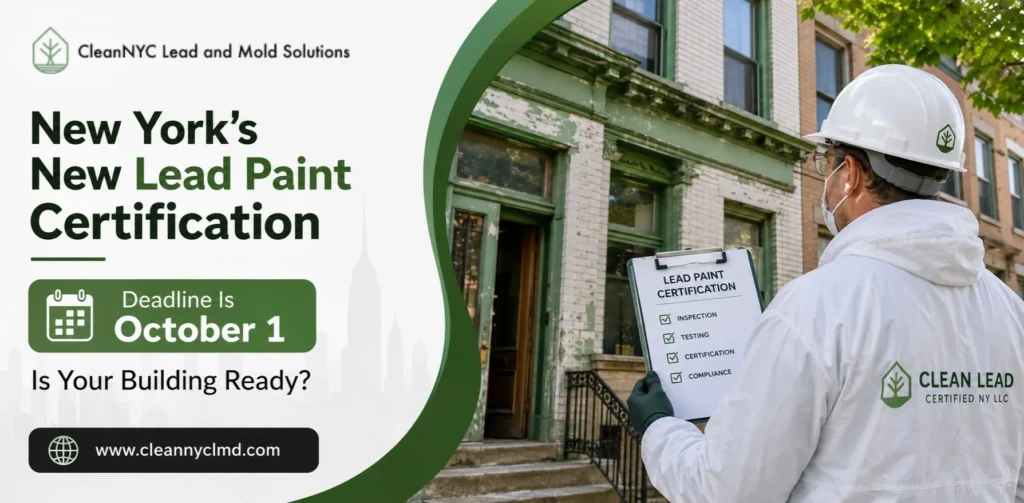
The October 1 date comes from New York State’s Lead Rental Registry, created under Public Health Law Section 1377. Governor Hochul signed the underlying law in 2023. The requirement took effect statewide on November 3, 2025. The obligation to inspect covered buildings began May 3, 2026. Property registration closed May 1, 2026. The first round of inspection certifications is due by October 1, 2026.
Under the program, owners must inspect each covered rental property and document it as free of lead-based paint hazards. Only then can they receive a Lead Safety Certificate. Owners must renew that certificate every three years. Miss the window, and regulators treat the property as non-compliant. That brings civil penalties and, eventually, ties the property to fire safety and maintenance inspections under the Uniform Fire Prevention and Building Code.
Does the Lead Paint Certification Deadline Apply to NYC Buildings?
This is the part most blog posts get wrong, so let’s be precise. The state’s Lead Rental Registry explicitly excludes cities with a population of one million or more. New York City is the only city in the state that meets that threshold. That means buildings inside the five boroughs aren’t part of this particular registry.
The registry instead targets 25 designated “communities of concern” outside NYC. These include places like Albany, Buffalo, Rochester, Syracuse, Yonkers-adjacent Mount Vernon, New Rochelle, Newburgh, Poughkeepsie, and Elmira, among others. If you own a multifamily building built before 1980 in one of those areas, October 1 is a real, enforceable deadline. If your portfolio is strictly Manhattan, Brooklyn, Queens, the Bronx, or Staten Island, the state registry itself doesn’t apply to you.
That said, “not covered by this law” is not the same as “off the hook.” NYC landlords still answer to their own dense web of local requirements, and several of those deadlines are just as unforgiving. We’ll walk through those next.
Who Actually Has to Comply — And Where
The state registry covers residential dwellings that meet all of the following:
- Built before 1980
- Two or more units
- Currently rented, or classified as eligible for rental
- Located in one of the 25 state-designated communities of concern
- Situated outside a city with a population of one million or more
According to the New York State Department of Health, roughly 74% of children with elevated blood lead levels statewide live in these communities of concern. That’s precisely why lawmakers built a dedicated registry around them, rather than folding the requirement into existing statewide rules. Owners in scope needed to register their properties on the Lead Safe NY platform by May 1, 2026. They now face the October 1 certification deadline for the first inspection cycle.
What Happens If You Miss the Lead Paint Certification Deadline
Property owners who miss their inspection and certification window face real consequences, not just a warning letter. Under Public Health Law Section 1377, failure to file a valid certification can result in civil penalties. If an inspection turns up a hazard, owners must fix it and pass a follow-up inspection to get the property certified.
Longer term, the law directs the Department of State to fold this certification into the Uniform Fire Prevention and Building Code. That means a missed lead inspection could eventually complicate a certificate of occupancy or certificate of compliance. That’s a much bigger problem than a fine, especially for owners planning to sell, refinance, or bring in new tenants.
NYC Landlords: Your Own Deadlines Don’t Wait Either
Just because the state registry stops at the city line doesn’t mean NYC building owners get a pass on lead compliance. New York City runs its own, older, and arguably stricter set of rules:
- Local Law 1 requires annual lead paint inspections in any unit where a child under six resides or regularly spends time.
- Local Law 31 already required XRF testing in every apartment of pre-1960 buildings. That deadline passed on August 9, 2025, and HPD is now actively auditing buildings that never completed it.
- Local Law 111 extended that same XRF testing obligation to common areas like hallways, stairwells, and elevators.
- Local Law 123 pushes up remediation timelines for door and window friction surfaces in units with a child under six. It sets a hard deadline of July 2027 for children already in place as of January 1, 2025.
In other words, a five-borough landlord who assumes “the October 1 law doesn’t apply to me” and stops there is missing the bigger picture. HPD’s enforcement posture in 2026 has shifted from education to active auditing. Buildings without documented XRF results or current HPD filings are the ones drawing violations. This is exactly the kind of gap that brings in teams at CleanNYC Lead and Mold Solutions — buildings that assumed compliance instead of documenting it.
How to Get Your Building Ready for Lead Paint Certification
Whether you’re inside the state registry, inside NYC’s own rules, or both, the preparation steps look similar:
- Confirm your building’s status. Check your construction date and unit count. If you’re outside NYC, also confirm whether your address falls inside a designated community of concern on the Lead Safe NY portal.
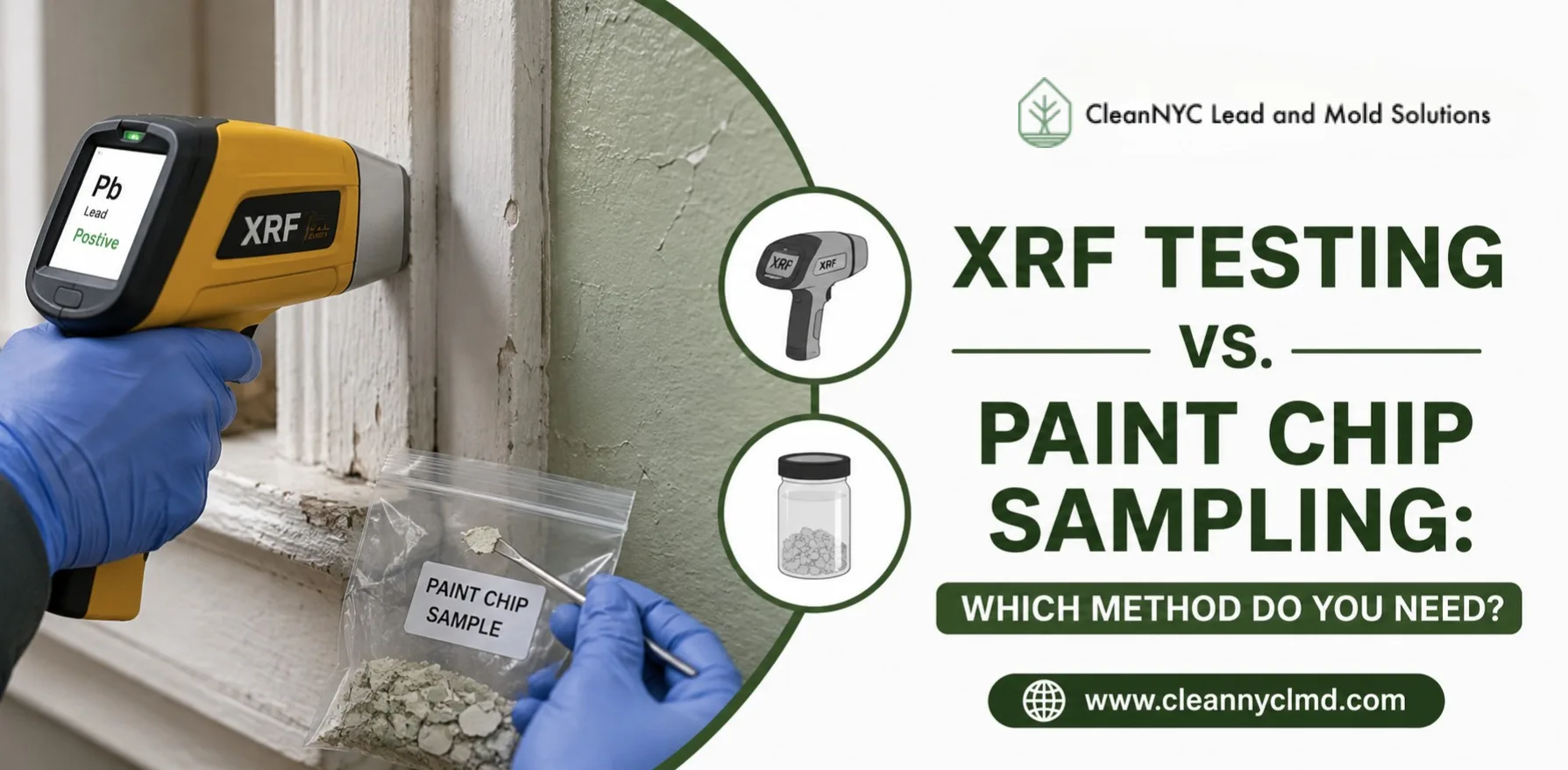
- Schedule certified testing early. XRF testing and paint chip sampling both require a certified inspector, and appointment slots tighten as deadlines approach.
- Don’t forget common areas. Owners often overlook hallways, stairwells, and building entrances, yet both the state program and NYC’s Local Law 111 explicitly cover them.
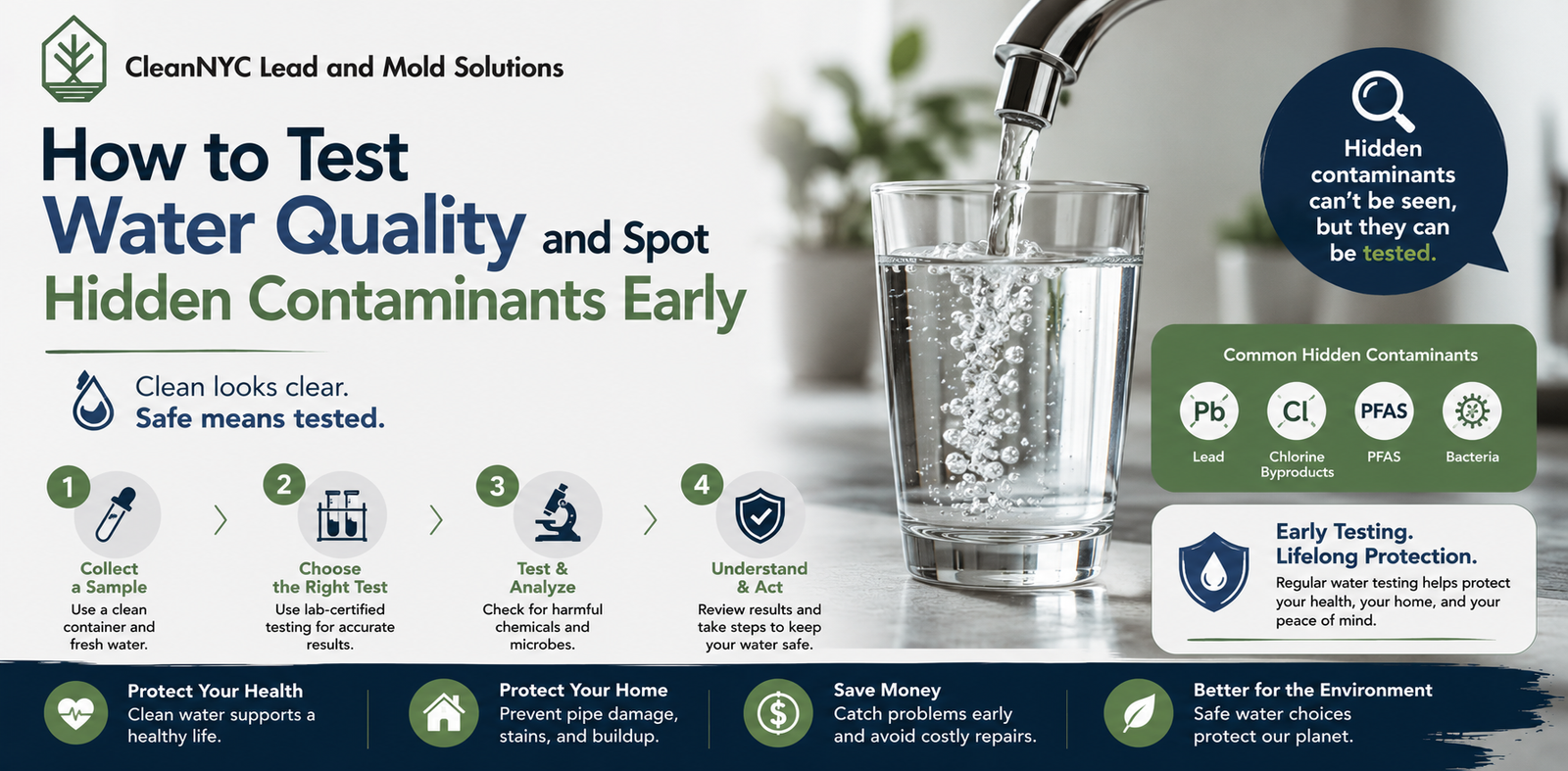
- Test your water alongside your paint. Many older buildings with lead paint risk also carry lead service lines. Pairing paint inspections with water testing gives you a complete hazard picture in one visit.
- Keep documentation on file for at least ten years. Both the state and city programs lean heavily on paperwork. A completed inspection with no report to show for it won’t protect you in an audit.
- File for exemptions where you qualify. If every surface tests below the action level, you can typically file for a lead-free exemption. That lets you skip repeating full inspections every cycle.
Why the Lead Paint Certification Deadline Is a Business Decision, Not Just a Compliance Checkbox
Lead compliance touches more than a single filing deadline. Buildings with clean, current lead documentation close sales faster and face fewer tenant disputes. They also avoid the kind of surprise violation that can freeze a refinance mid-process. Owners who treat certification as a recurring line item — the same as insurance renewal or a boiler inspection — spend less over time. Owners who scramble every time a deadline makes headlines pay more. Whether you manage two buildings in Rochester or twenty in the Bronx, the math favors getting ahead of the inspection cycle. Reacting to it costs more. A quick look at your building portfolio against these requirements now is far cheaper than an HPD violation later.
There’s also a timing argument worth making plainly: certified inspectors book up fast once a deadline is a few weeks out. Rush scheduling tends to cost more than planned scheduling. Owners who wait until late September to think about the October 1 certification cycle usually pay a premium for speed. The same goes for owners who wait until an HPD notice arrives to think about Local Law 31. Building the inspection into your annual maintenance calendar, rather than your crisis-response calendar, is the difference between a routine expense and an emergency one.
Frequently Asked Questions About the Lead Paint Certification Deadline
The Bottom Line on the Lead Paint Certification Deadline
The October 1 deadline is real, but it’s a state program built for 25 specific communities outside New York City. It’s not a blanket rule for the five boroughs. If your buildings sit in one of those communities of concern, treat this deadline the way you’d treat any filing with real penalties attached. If you’re an NYC owner, stop asking whether the state law applies to you. Instead, ask whether your Local Law 1, 31, 111, and 123 paperwork is actually current. Either way, the fastest way to know where you stand is a certified inspection — not a guess.
About the Author
The content team at CleanNYC Lead and Mold Solutions prepared this article. The team performs certified lead paint and environmental inspections for residential and commercial buildings across New York City. The team works directly with property owners and managers to interpret evolving city and state lead paint regulations and keep buildings audit-ready.