You just got a tenant complaint about a musty smell near the bathroom vent. Do you scrape it, paint over it, and move on, or do you call in a certified inspector? For NYC landlords, that decision isn’t only about tenant comfort. It’s about whether you’re standing on the right side of an HPD violation that can start in the hundreds of dollars and climb fast. Knowing when mold testing NYC rules make testing mandatory, and when it’s simply smart risk management, can save you a fine, a lawsuit, and a very awkward conversation with your insurance carrier.
This guide breaks down exactly when mold testing is required under NYC law, when it’s optional but worth doing anyway, and how to choose the right partner when you need it done right the first time.
Whether you manage a single brownstone in Brooklyn, a co-op in Manhattan, or a multi-unit building in Queens, the same core rules apply across all five boroughs. What changes is the risk profile: older buildings with a history of leaks, basement units, and pre-war plumbing tend to need mold inspection and testing far more often than newer construction.
What Mold Testing Actually Checks For
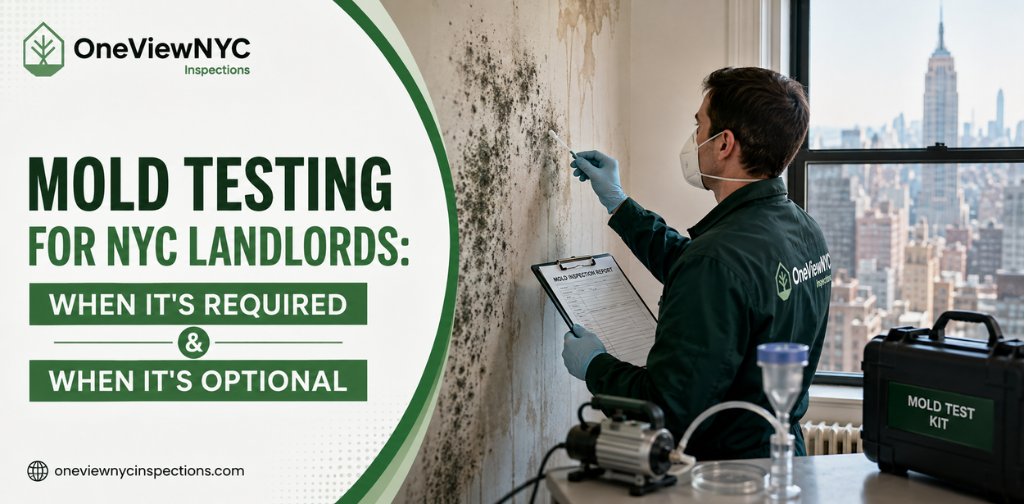
Mold testing NYC services typically involve two things: sampling and lab analysis. A certified technician collects air samples, surface swabs, or both, then sends them to an accredited laboratory. The lab compares indoor spore counts and species against outdoor baseline levels to determine whether mold growth is actively occurring indoors and how severe it is.
This is different from simply looking at a wall and calling it “mold” or “not mold.” Visual identification alone can’t tell you the species, the concentration, or whether hidden growth exists behind drywall or under flooring. According to the CDC, exposure to damp, moldy environments can trigger a range of respiratory and allergic reactions, which is part of why documented results matter more than a quick visual check.
Signs Landlords Should Watch For Between Inspections
You don’t need to wait for a tenant complaint to catch a mold problem early. A few warning signs are worth checking on routine walkthroughs:
- Persistent musty odors near bathrooms, kitchens, or basement units
- Discoloration or bubbling on walls, ceilings, or baseboards
- Condensation on windows or pipes that doesn’t clear after ventilation
- A history of leaks, even ones that were “already fixed”
- Tenant reports of allergy symptoms that improve when they’re away from the unit
Catching any of these early and scheduling a mold inspection before a formal complaint lands with HPD puts you in control of the timeline instead of reacting to one set by the city.
When Mold Testing Is Legally Required in NYC
Local Law 55 and the Indoor Allergen Hazards Rule
Local Law 55 of 2018 requires owners of buildings with three or more apartments to keep units free of mold and pest-related allergen hazards. Landlords must investigate tenant complaints within a reasonable time and use approved work practices to fix both the visible mold and the underlying moisture source. The NYC Department of Housing Preservation and Development enforces this law and does not require lab testing for every complaint, but it does require documented, professional remediation once mold is confirmed.
Local Law 61 and the 10-Square-Foot Threshold
Here’s where testing becomes non-negotiable. For buildings with ten or more units, any mold remediation job covering more than ten square feet requires a state-licensed mold assessor and a separate licensed remediation contractor. The assessor typically performs pre- and post-work testing, and HPD filings and related paperwork must be submitted to the city. Skipping this step isn’t just risky, it’s a direct violation of the law.
Post-Remediation Clearance Testing
Even outside the strict Local Law 61 threshold, clearance testing after remediation is often required to prove the job actually worked. Insurance companies, co-op boards, and buyers frequently ask for a clearance report before releasing funds, closing a sale, or renewing a policy. Without it, you’re relying on someone’s word that the mold is gone.
When Mold Testing Is Optional, But Still a Smart Business Move
Before Buying or Leasing a Building
Pre-purchase due diligence isn’t legally required, but skipping it can turn into a very expensive surprise. Mold hides behind walls, under subfloors, and inside HVAC systems. A pre-purchase test gives you leverage in negotiations and protects you from inheriting someone else’s moisture problem.
After a Water Leak or Storm Damage
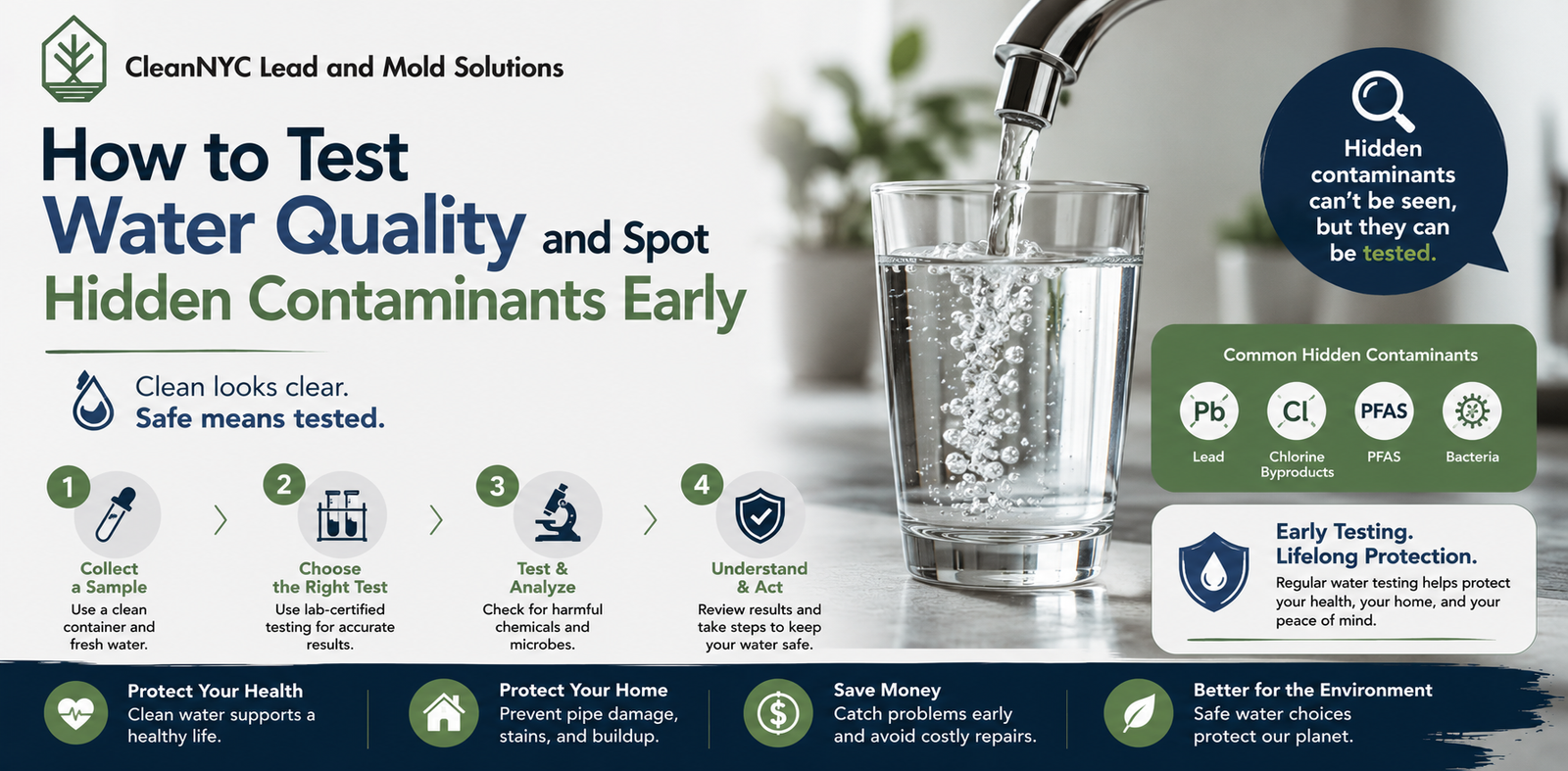
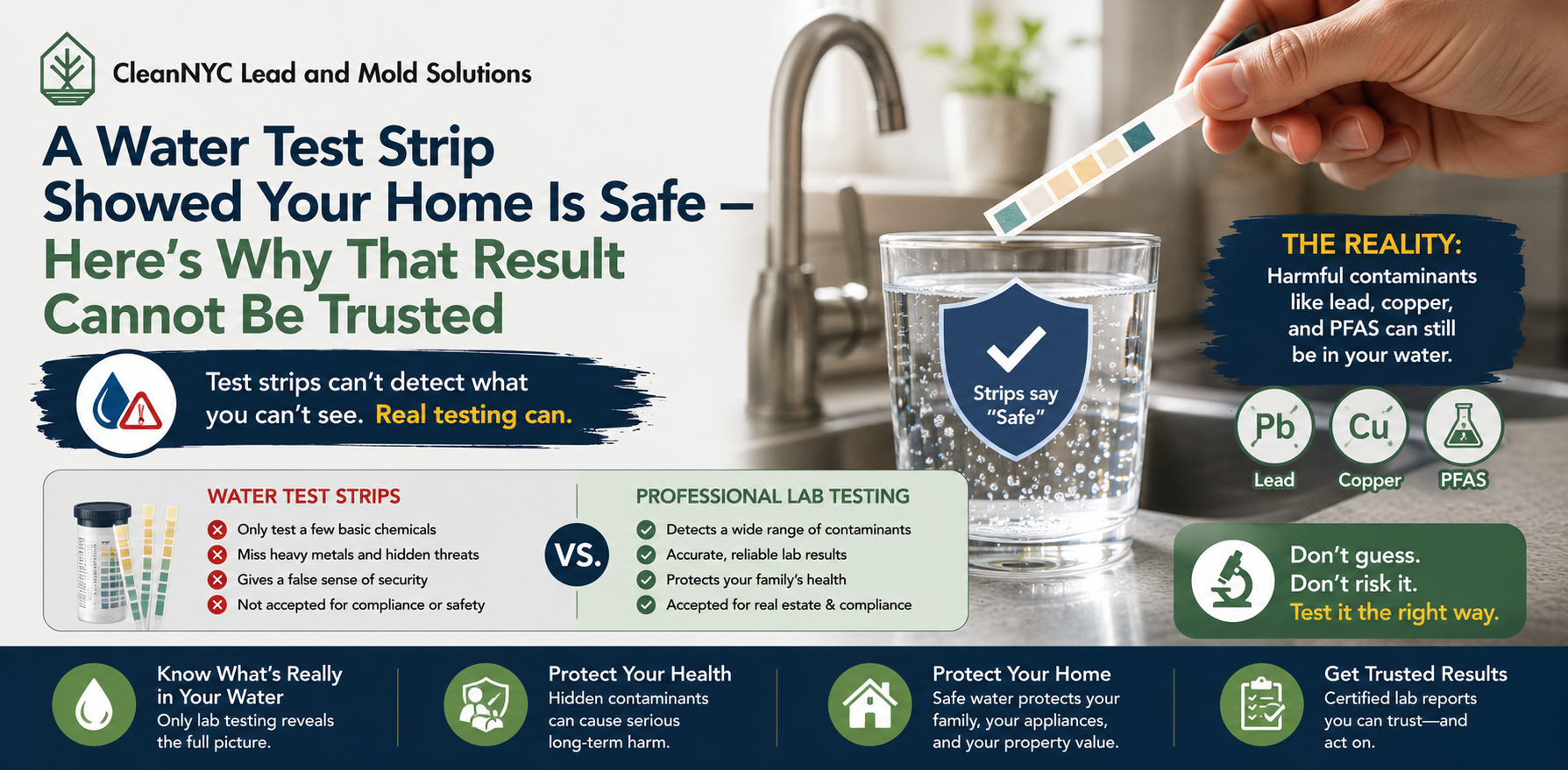
Mold can begin colonizing damp material within 24 to 48 hours, according to EPA guidance. If a pipe burst, a roof leaked, or a basement flooded, testing after cleanup, alongside comprehensive water testing services, confirms the area is genuinely safe rather than just dry to the touch.
When Tenants Report Symptoms but No Visible Mold
Sometimes tenants report respiratory irritation, allergy flare-ups, or a persistent musty odor without any visible growth. Testing in these cases isn’t required by law, but it protects landlords from habitability disputes down the road and gives everyone documented answers instead of guesswork.
Residential vs. Commercial Mold Testing in NYC
The core testing process is similar for homes and businesses, but the stakes differ. Residential mold testing usually centers on habitability, tenant health, and HPD compliance. Commercial mold testing NYC projects often involve additional considerations, like employee safety obligations, lease clauses that assign remediation responsibility between landlord and tenant, and business interruption if a space needs to close during remediation.
Property managers overseeing mixed-use buildings should budget for both. A ground-floor commercial tenant’s moisture problem can just as easily migrate into the residential units above it.
Mold Testing vs. Mold Inspection: Two Different Services
These terms get used interchangeably, but they aren’t the same thing. A mold inspection is a visual and moisture-meter walkthrough of a property, checking for staining, humidity readings, and conditions that could support mold growth. Mold testing goes a step further, collecting physical samples and sending them to a lab for species-level, lab-confirmed results.
Most landlords start with an inspection. If the inspector finds signs of moisture intrusion or visible growth, testing follows to confirm scope and severity before remediation begins.
What Happens During a Professional Mold Test
A typical visit involves a walkthrough to identify problem areas, followed by air sampling (indoor and outdoor comparison points), surface swabs of suspicious areas, and sometimes a moisture meter reading of walls and subfloors. Samples go to an accredited lab, and most landlords receive a written report within three to five business days, detailing species found, concentration levels, and remediation recommendations if needed.
Cost, Timeline, and Landlord ROI
Pricing depends on the size of the unit, the number of samples collected, and whether air, surface, or both types of testing are needed. Rather than guessing at a number, ask any prospective inspector for a written quote based on your specific property before booking.
What matters more than the sticker price is the return. A documented mold test costs far less than an HPD violation, a rent abatement claim, or a tenant lawsuit over a habitability dispute. It’s a small line item that protects a much larger asset, which is exactly why environmental testing matters as a standing part of routine property management rather than a one-time fire drill.
How Proactive Testing Helps Landlords Avoid HPD Violations
HPD classifies mold violations by severity, with larger and more hazardous conditions carrying shorter correction windows and steeper penalties. Landlords who test proactively, rather than waiting for a 311 complaint, tend to catch problems while they’re still small enough to fall into the lowest violation class, or avoid a violation altogether by fixing the moisture source before HPD ever gets involved.
Proper documentation also matters if a dispute ever reaches Housing Court. A dated, lab-backed report showing the property was tested and remediated correctly is far stronger evidence than a verbal assurance that “it was handled.”
Keep copies of every inspection report, remediation invoice, and clearance test for at least as long as the city requires records to be retained. If a tenant later disputes whether a unit was ever properly fixed, that paper trail is what separates a quick resolution from a drawn-out Housing Court case.
Choosing a Certified Mold Testing Partner in NYC
Not every inspector is created equal. Look for firms with EPA-certified staff, New York State-licensed mold assessors, and a track record of clear, actionable reporting rather than vague summaries. Firms like CleanNYC Lead and Mold Solutions pair certified inspection teams with detailed lab-backed reporting, which matters most when you need documentation that will hold up with HPD, an insurer, or a buyer’s attorney.
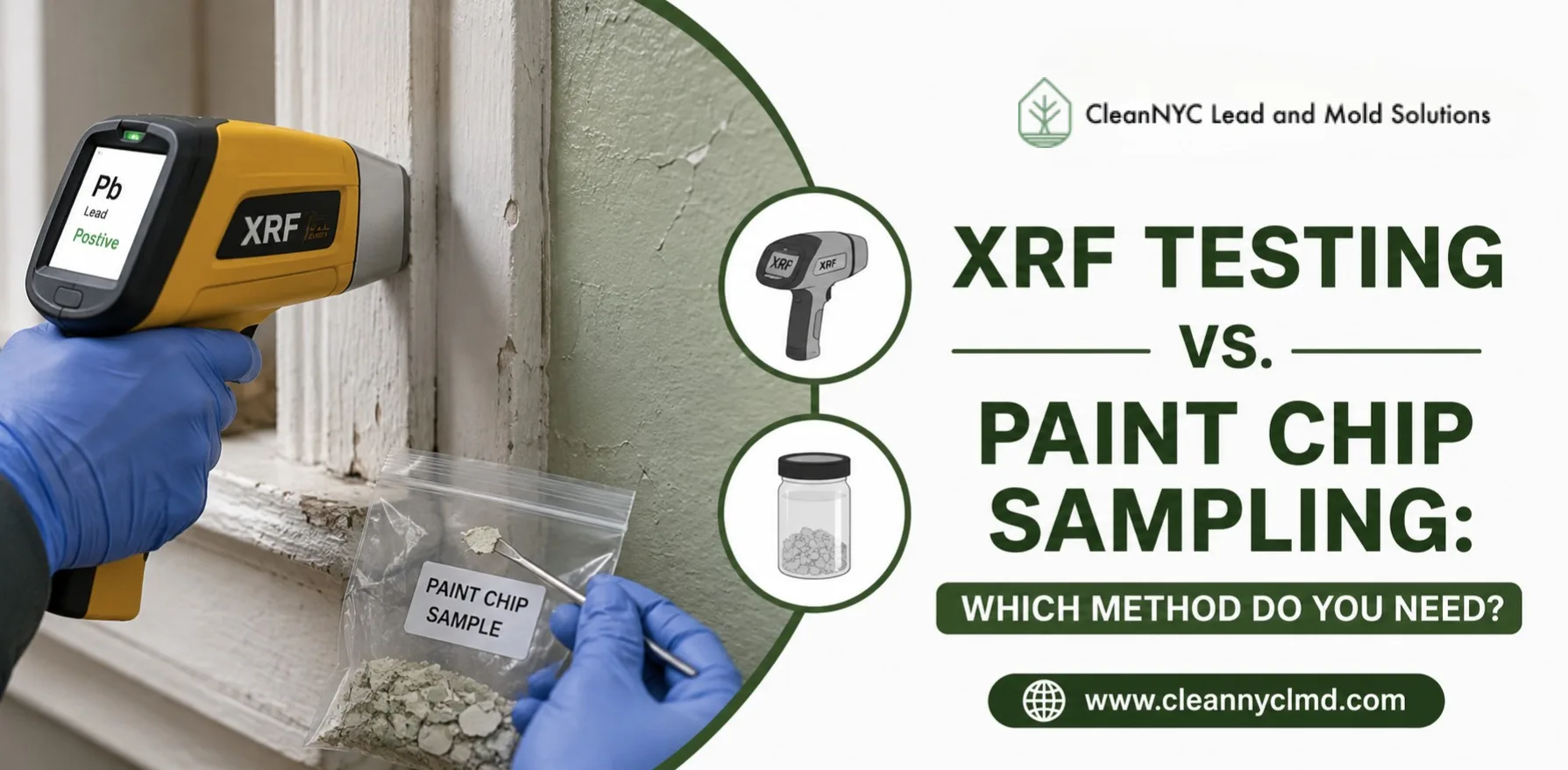
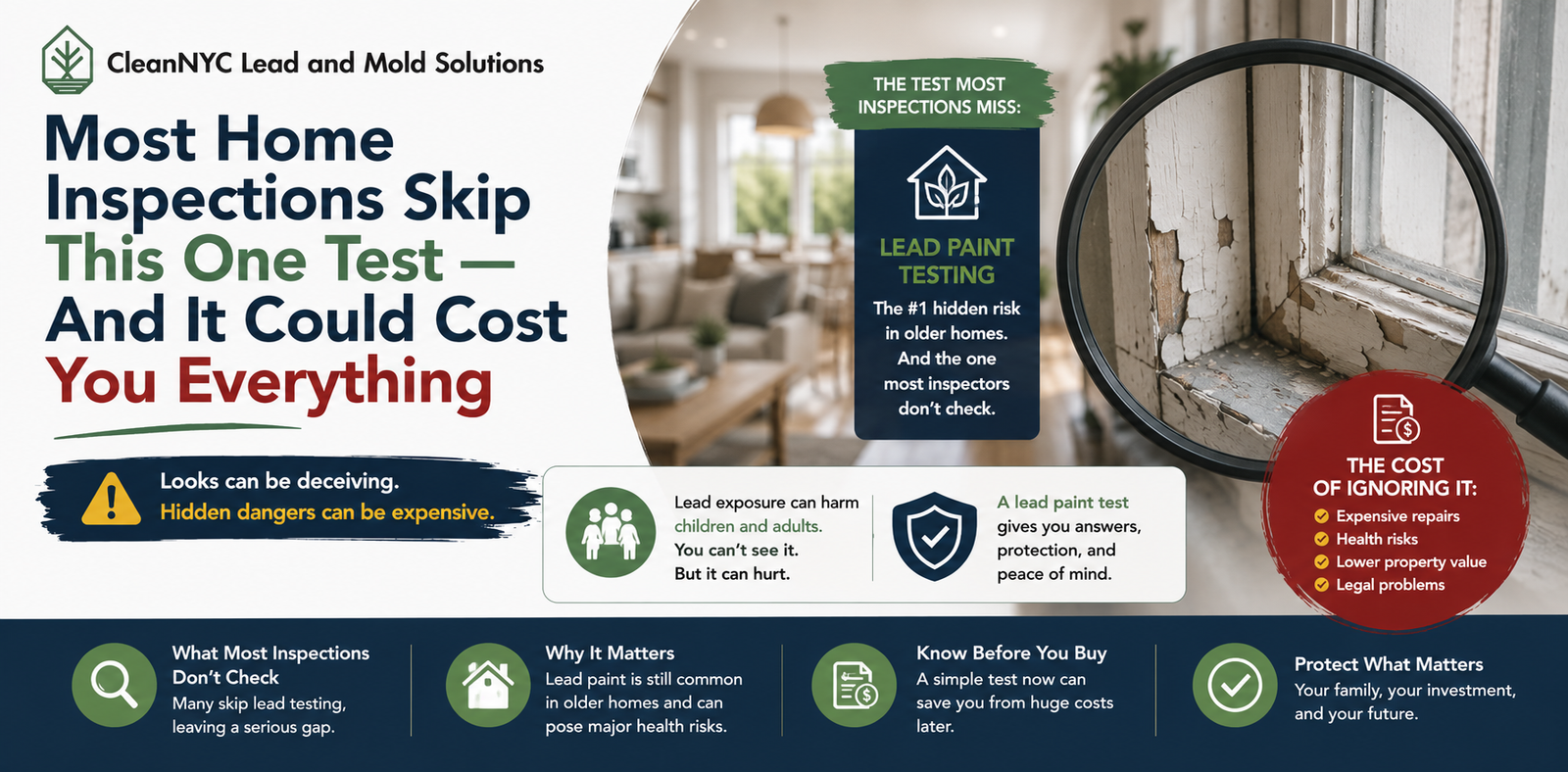
Many older NYC buildings face lead paint risk alongside moisture and mold issues, so it’s worth asking whether your inspector can also handle related compliance work, such as XRF lead testing, dust wipe clearance testing, or paint chip sampling, in the same visit. Bundling reduces disruption for tenants and keeps your compliance paperwork consistent across services. You can review examples of completed inspection work across the five boroughs to get a sense of how a project typically unfolds from first call to final report.
If you’re weighing whether your property needs mold testing NYC compliance work right now, the safest move is a professional inspection first. It tells you, in writing, exactly where you stand.
Frequently Asked Questions
The Bottom Line
Mold testing sits at the intersection of legal compliance and basic property protection. Some situations leave no choice, like remediation jobs over the Local Law 61 threshold. Others are optional but still worth the modest cost, especially after water damage or before a sale. Either way, a documented, lab-backed report from a provider like CleanNYC Lead and Mold Solutions is the cheapest insurance policy a landlord can buy against fines, disputes, and unhappy tenants.
About the Author
This article was prepared by the CleanNYC content team in consultation with our EPA-certified inspection staff, drawing on current NYC Housing Preservation and Development regulations and federal EPA and CDC guidance on indoor mold and moisture. Our team performs lead and mold inspections across all five boroughs and stays current on Local Law 55, Local Law 61, and related compliance requirements so landlords don’t have to track the fine print themselves.