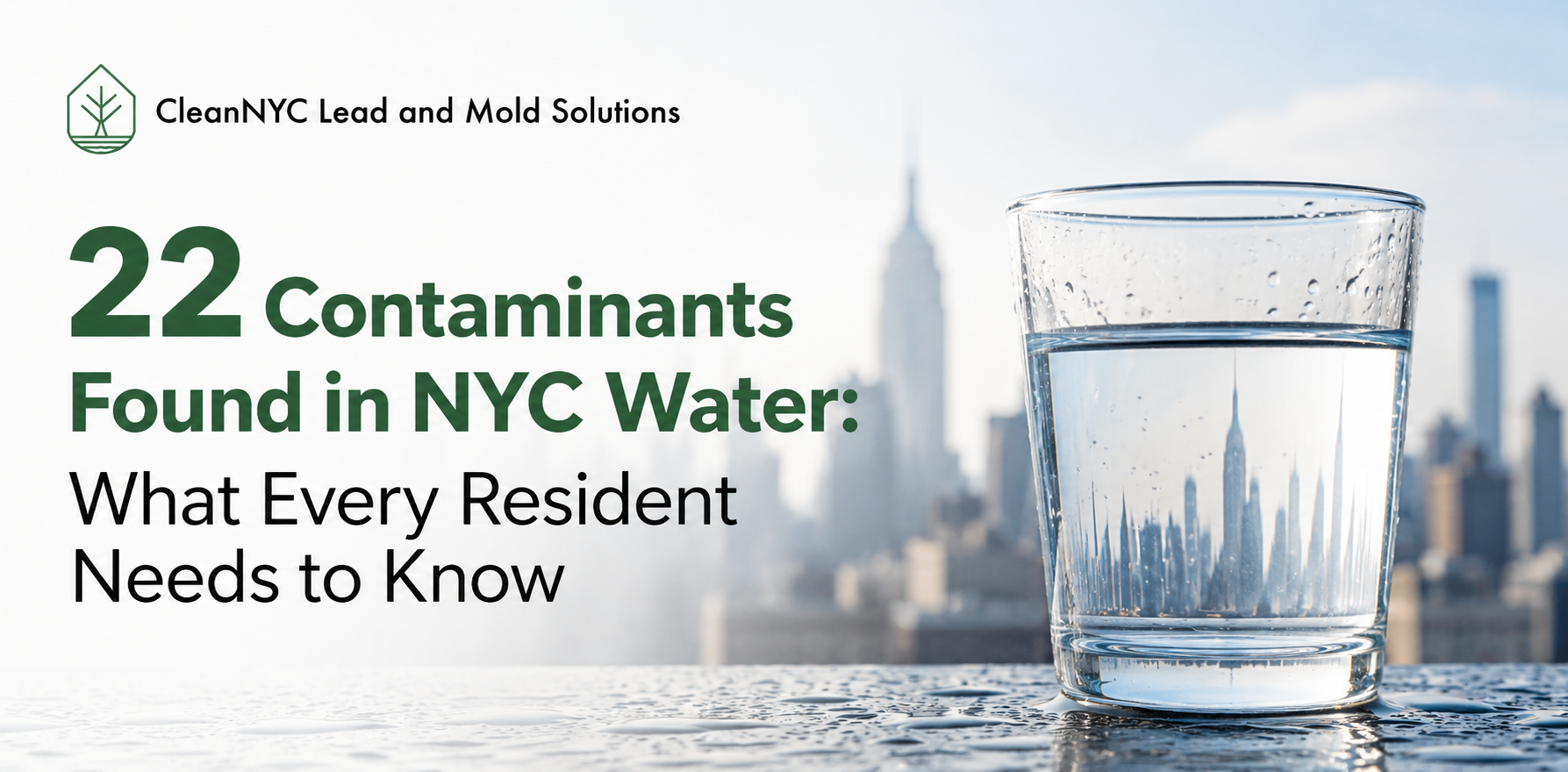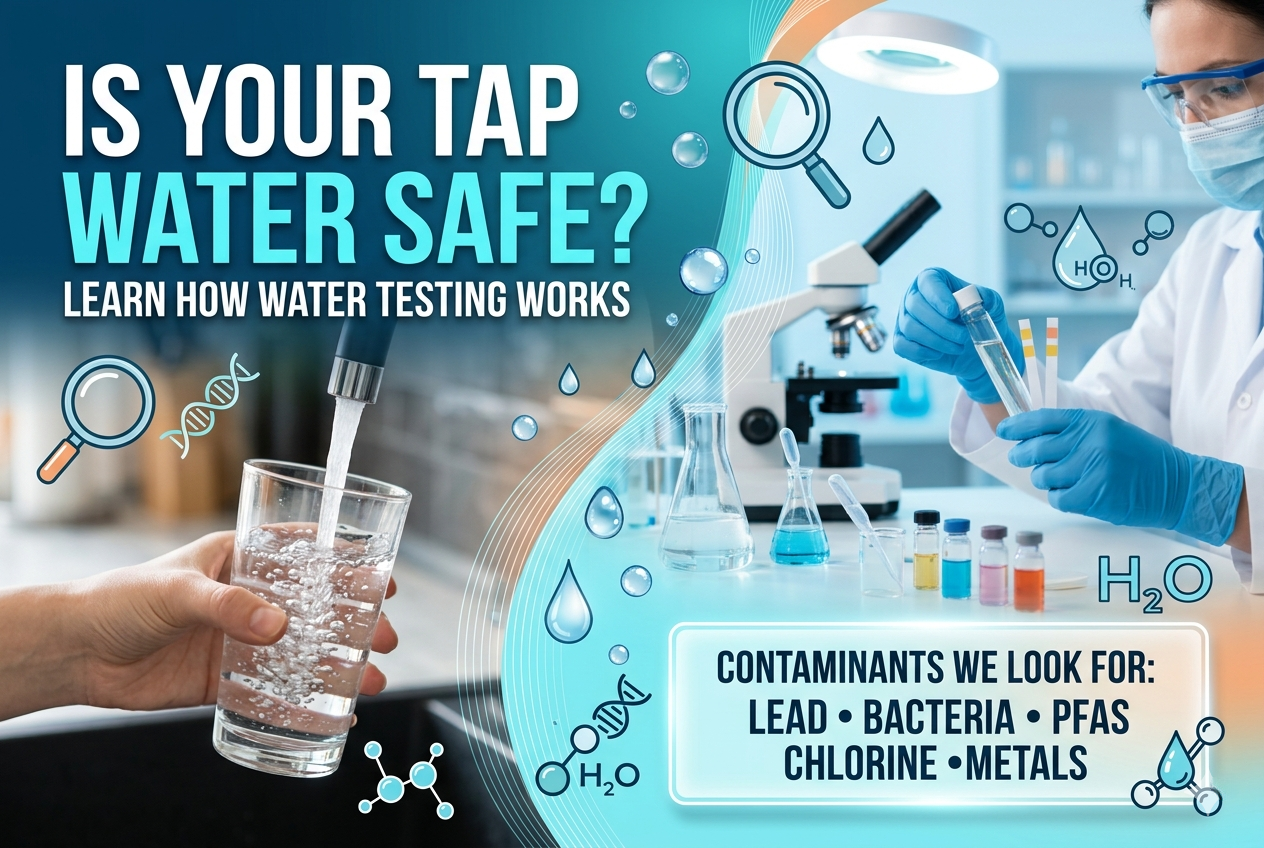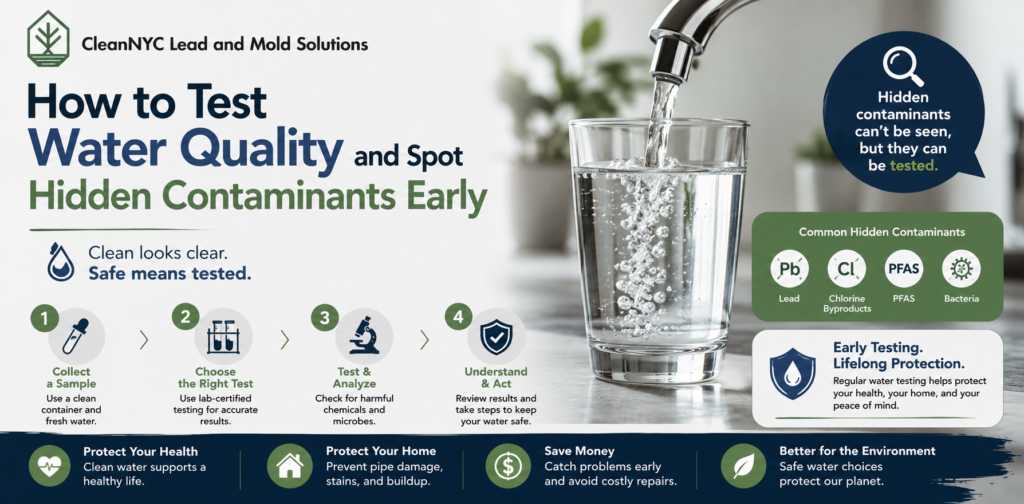
A glass of crystal-clear water may look perfectly safe—but appearances can be misleading.
Many harmful contaminants, including lead, bacteria, PFAS (“forever chemicals”), arsenic, and nitrates, are invisible, odorless, and tasteless. Without proper water testing, these hidden contaminants can go unnoticed for months or even years.
According to the U.S. Environmental Protection Agency (EPA), contaminants can enter drinking water through aging plumbing, natural deposits, agricultural runoff, industrial activities, and deteriorating infrastructure. Even homes supplied by municipal water systems can experience water quality changes after water travels through old service lines and household pipes.
If you’ve ever wondered whether your tap water is truly safe, this guide will show you how to test water quality, understand laboratory reports, recognize warning signs, and choose the right testing method for your home.
Whether you’re a homeowner, landlord, buyer, or renter, learning about drinking water testing is one of the smartest steps you can take to protect your family’s health.
Key Takeaways
- Clear water is not always safe to drink.
- Professional water testing detects contaminants that home test strips often miss.
- Lead, bacteria, PFAS, nitrates, and heavy metals cannot usually be identified by taste, smell, or appearance.
- Older homes and private wells benefit from routine water quality testing.
- Laboratory analysis provides the most reliable results for informed decision-making.
Quick Answer
The most dependable way to test your water quality is through certified laboratory water testing. While home test kits can screen for pH, chlorine, hardness, or a few basic indicators, comprehensive water contamination testing identifies harmful contaminants such as lead, bacteria, arsenic, PFAS, nitrates, and heavy metals that simple home tests may not accurately detect. Experts generally recommend testing household water annually or whenever noticeable changes occur.
Table of Contents
- Why Water Quality Matters in 2026
- Hidden Contaminants You Can’t See
- Signs Your Water Should Be Tested
- How to Test Water Quality at Home
- DIY Water Testing vs Professional Laboratory Testing
- Common Drinking Water Contaminants
- Understanding Water Test Reports
- Common Water Testing Mistakes
- How Often Should You Test Your Water?
- Frequently Asked Questions
- About the Author
Why Water Quality Matters More Than Ever
Water is essential for drinking, cooking, bathing, preparing baby formula, washing fruits and vegetables, and countless daily activities.
Yet many homeowners assume that if their water looks clean, it must be safe.
Unfortunately, that assumption isn’t always correct.
The Centers for Disease Control and Prevention (CDC) notes that contaminated drinking water can expose households to bacteria, parasites, viruses, and chemical contaminants capable of causing both short-term illness and long-term health concerns.
Water quality can also change over time because of:
- Aging plumbing systems
- Corroded lead service lines
- Industrial pollution
- Agricultural runoff
- Flooding
- Construction near water sources
- Private well contamination
- Seasonal environmental changes
Routine drinking water testing helps identify these problems before they become expensive repairs or potential health risks — the same reasoning behind why our team recommends regular testing for every older property; see our Why Test page for more on the importance of staying ahead of hidden hazards.
Why Clear Water Can Still Contain Hidden Contaminants
One of the biggest myths about household water is that appearance tells the whole story.
In reality, many of the most concerning contaminants are completely invisible.
| What You Notice | Possible Hidden Contaminant |
|---|---|
| Crystal-clear water | Lead |
| No unusual taste | PFAS |
| No odor | Arsenic |
| No discoloration | Nitrates |
| Fresh-looking water | Harmful bacteria |
Because these contaminants cannot be detected by sight or smell, water quality testing relies on scientific laboratory analysis rather than visual inspection.
Simply put, your eyes cannot measure what’s dissolved in your water.
Signs Your Water Should Be Tested
Even if your water appears normal, certain situations deserve immediate attention.
Consider scheduling water testing if:
- Your home was built before modern plumbing standards.
- You rely on a private well.
- Your family notices a change in taste or odor.
- Water appears cloudy or discolored.
- Plumbing repairs were recently completed.
- Nearby flooding occurred.
- Local officials issue a drinking water advisory.
- You’re purchasing or selling a home.
- Children or pregnant family members live in the home.
- Water hasn’t been tested within the past year.
Testing provides peace of mind and creates a baseline for monitoring future changes.
Common Hidden Contaminants Found During Water Testing
Professional laboratory analysis looks for far more than basic water characteristics.
Here are some of the most common contaminants.
Lead
Lead remains one of the most serious concerns in older homes.
It commonly enters drinking water through aging pipes, lead service lines, plumbing fixtures, and solder.
Children are especially vulnerable because even low levels of exposure may affect growth and brain development.
Laboratory testing measures lead in drinking water at concentrations far below what consumer testing devices can reliably detect. If your building is older, lead paint is often a related concern in the same units — our XRF testing service can identify hidden lead hazards in painted surfaces as well.
Bacteria
Microbial contamination often develops after heavy rainfall, flooding, septic system failures, or well contamination.
Laboratories commonly test for:
- Total Coliform
- E. coli
- Other bacterial indicators
Finding bacteria early helps homeowners address contamination before it becomes a larger problem.
PFAS (“Forever Chemicals”)
PFAS are synthetic chemicals used in manufacturing, firefighting foam, food packaging, and stain-resistant materials.
Because they break down very slowly, they can remain in groundwater and drinking water for years.
Growing awareness has made PFAS testing an important part of many comprehensive water contamination testing programs.
Nitrates
Nitrates frequently affect rural properties supplied by private wells.
Agricultural fertilizer, animal waste, and environmental runoff are common sources.
Infants are particularly sensitive to elevated nitrate levels, making routine testing especially important for families using well water.
Heavy Metals
Professional laboratories may also analyze for:
- Arsenic
- Copper
- Mercury
- Chromium
- Nickel
- Cadmium
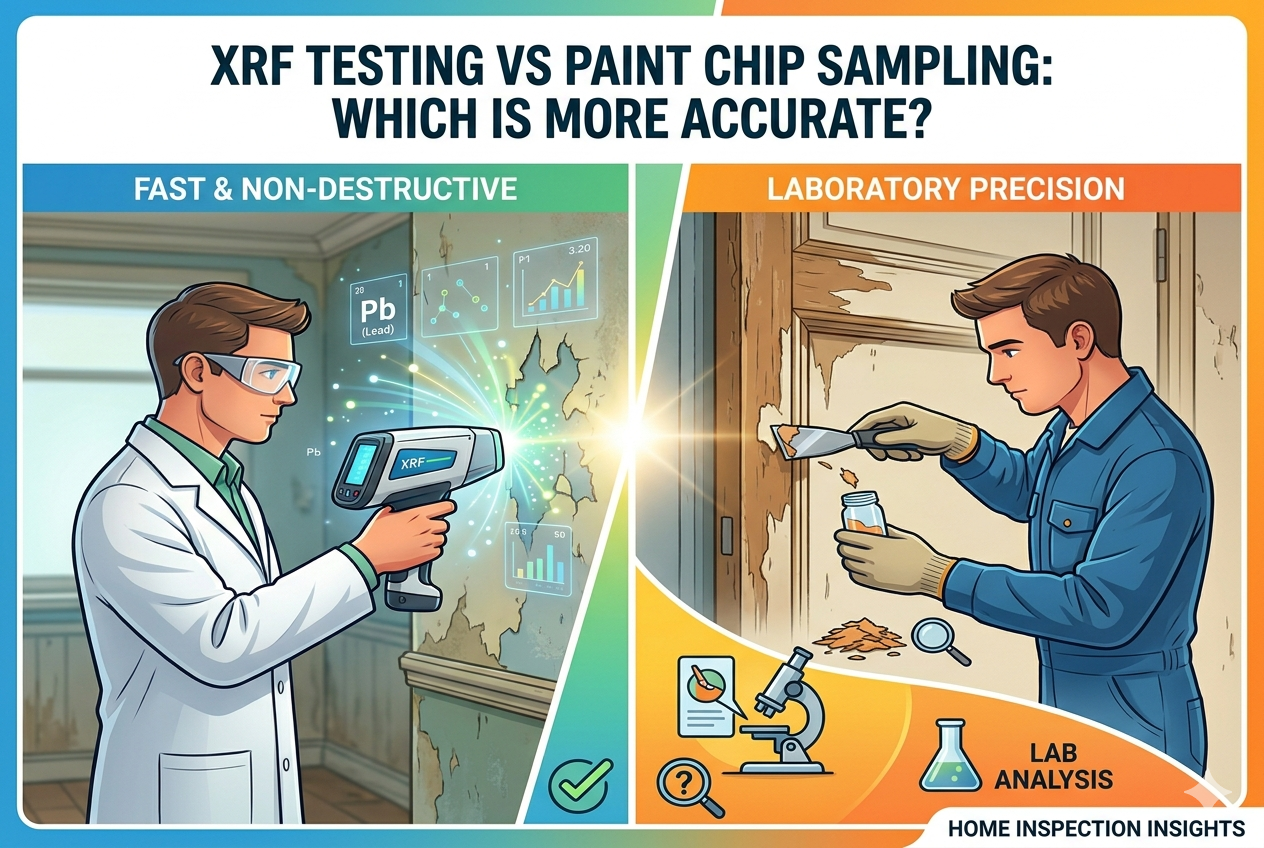
These contaminants rarely change the taste or appearance of water, making laboratory analysis essential. Property owners investigating heavy metal sources in older buildings sometimes also request paint chip sampling to rule out lead-based paint as a contributing factor.
How to Test Water Quality at Home
Homeowners have several options when checking their water.
Each method serves a different purpose.
1. Water Test Strips
Test strips offer a quick screening for:
- pH
- Chlorine
- Hardness
- Iron
- Alkalinity
- Limited nitrate detection
Advantages
- Affordable
- Fast results
- Beginner-friendly
- Useful for routine monitoring
Limitations
They cannot accurately identify many contaminants such as lead, PFAS, bacteria, or heavy metals.
2. Digital Water Meters
Digital meters measure:
- Total Dissolved Solids (TDS)
- Conductivity
- Temperature
While useful for tracking changes, they cannot determine which contaminants are present.
For example, low TDS does not guarantee water is free from harmful substances.
3. Mail-In Laboratory Kits
Many homeowners choose mail-in testing kits that allow certified laboratories to analyze water samples.
These kits provide more detailed information than instant home tests because sophisticated laboratory equipment performs the analysis.
Careful sample collection is essential to ensure accurate results.
DIY Water Testing vs Professional Laboratory Testing
| Feature | DIY Home Test | Professional Laboratory Testing |
|---|---|---|
| Results Time | Minutes | Several days |
| Ease of Use | Very Easy | Sample collection required |
| Detects Lead | Limited | Highly Accurate |
| Detects PFAS | No | Yes (selected panels) |
| Detects Bacteria | Limited | Comprehensive |
| Heavy Metal Analysis | Limited | Yes |
| Certified Report | No | Yes |
| Suitable for Real Estate or Compliance | No | Yes |
| Overall Reliability | Basic Screening | Comprehensive Analysis |
Bottom Line: Home testing tools are useful for routine monitoring, but certified laboratory water quality testing offers a much clearer picture of your drinking water and helps identify contaminants that consumer kits may overlook.
How to Understand Your Water Test Results
Receiving your laboratory report is only the first step. Understanding what the results mean helps you make informed decisions about your home’s water.
A professional water testing report typically includes:
- The contaminants that were analyzed
- Measured concentration of each contaminant
- Laboratory detection limits
- Applicable health or regulatory reference values
- Sample collection information
- Quality assurance and laboratory certification details
Rather than focusing on a single number, review the report as a whole. Certified laboratories provide context that helps determine whether additional testing, plumbing improvements, or water treatment should be considered. For NYC rental properties, these records may also factor into HPD filing and broader compliance documentation.
Contaminants That May Require Immediate Attention
Depending on your results, follow-up action may be appropriate if testing identifies:
- Elevated lead levels
- Total coliform or E. coli
- High nitrate concentrations
- Arsenic or mercury
- PFAS compounds
- Excess copper from plumbing corrosion
- Other contaminants above recommended health guidelines
If elevated levels are found, consult a qualified water professional before choosing a treatment system. The right solution depends on the source of the contamination—not just the laboratory result.
Common Water Testing Mistakes Homeowners Make
Many homeowners unknowingly reduce the accuracy of their results by making avoidable mistakes.
Waiting Until a Problem Appears
Many contaminants do not cause noticeable taste, odor, or color changes. Routine drinking water testing is far more effective than waiting for visible warning signs.
Relying Only on Test Strips
Home test strips are helpful for basic screening, but they cannot replace comprehensive laboratory water quality testing for contaminants like lead, PFAS, or bacteria.
Collecting Samples Incorrectly
Improper sample collection, contaminated containers, or delays in shipping can affect laboratory accuracy. Always follow collection instructions carefully.
Ignoring Older Plumbing
Even when the municipal water supply meets quality standards, aging household pipes and fixtures can introduce contaminants before water reaches your tap. If a plumbing repair also disturbs old painted surfaces nearby, a follow-up dust wipe clearance testing can confirm the area remains safe before the space is reoccupied.
Skipping Follow-Up Testing
If contamination is discovered, retesting after corrective action confirms whether the issue has been resolved.
Checklist: When Should You Test Your Water Immediately?
You should arrange water testing as soon as possible if any of these situations apply:
- Your home was built before the late 1980s.
- You rely on a private well.
- Flooding recently affected your property.
- Plumbing pipes or fixtures were replaced.
- Your water has changed in taste, odor, or color.
- Someone in your household has unexplained gastrointestinal symptoms.
- You’re buying or selling a home.
- Your area has reported water quality concerns.
- It’s been more than one year since your last comprehensive test.
Treat this checklist as a proactive maintenance tool rather than waiting for a problem to become obvious.
Expert Tips for Maintaining Safe Drinking Water
Testing is only one part of protecting your household. These practical habits can help maintain better water quality over time.
Test Your Water Regularly
Annual water testing creates a baseline and helps detect changes before they become significant. Private wells may require additional testing after heavy rainfall, flooding, or nearby construction.
Understand Your Plumbing System
Lead service lines, aging solder, and older brass fixtures can affect water quality inside the home. Knowing the age of your plumbing helps explain laboratory findings.
Flush Water After Long Periods of Non-Use
If water has remained in your pipes overnight or while you’re away, let the cold water run briefly before using it for drinking or cooking. This can help reduce exposure to contaminants that may have accumulated in household plumbing.
Maintain Water Treatment Equipment
Replace filters according to the manufacturer’s recommendations. An expired filter may no longer perform as intended.
Stay Informed About Local Water Advisories
Municipal utilities occasionally issue notices regarding maintenance work or temporary water quality concerns. Reviewing these updates helps you respond appropriately if conditions change.
Keep Your Test Reports
Saving previous laboratory reports allows you to compare results over time and identify trends that may require attention.
Why Professional Water Testing Offers Greater Confidence
Home screening tools provide useful preliminary information, but certified laboratory analysis delivers a much more complete picture.
Professional water contamination testing can:
- Detect contaminants at very low concentrations
- Identify a wider range of chemical and biological substances
- Provide documented laboratory results
- Reduce the risk of user error
- Support real estate transactions and property assessments
- Help determine the most appropriate treatment options
For homeowners seeking dependable answers rather than basic screening, laboratory water testing remains the most reliable choice. Our certified team applies the same detail-driven approach to every inspection — you can learn more about who we are on our team page, or review examples of completed inspections on our Our Projects page.
Final Thoughts
Clean-looking water is not always clean water. Many of the contaminants that matter most—including lead, bacteria, PFAS, nitrates, and heavy metals—cannot be seen, smelled, or tasted.
Routine water testing replaces uncertainty with reliable information. Whether your water comes from a municipal supply or a private well, regular water quality testing helps identify hidden concerns before they become costly problems.
Combining routine testing with proper plumbing maintenance, informed interpretation of laboratory reports, and timely follow-up creates a proactive approach to protecting your household. Investing in drinking water testing today can provide long-term confidence in one of your home’s most essential resources.
Frequently Asked Questions
About the Author
This article was prepared by an environmental testing content specialist with experience researching residential water quality, environmental hazards, and laboratory testing practices. Every guide is developed using information from recognized public health agencies, industry standards, and current scientific research to provide practical, trustworthy, and easy-to-understand guidance. The goal is to help homeowners make informed decisions based on reliable evidence and established best practices, in line with the standards followed by CleanNYC Lead and Mold Solutions.