A property manager calls three inspectors about a pre-1960 walk-up in Queens. Each one recommends a different method for a different reason. One inspector wants to bring an XRF testing device and scan every room in an afternoon. Another wants to cut small paint samples and mail them to a lab. The third asks why nobody mentioned Local Law 31 yet. If you own or manage property in New York City, this is a normal Tuesday. Choosing between XRF testing and paint chip sampling isn’t just a technical decision. It’s a timeline decision, a documentation decision, and, if you get it wrong, a fines decision. Here’s what actually separates the two methods, and how to pick the one that fits your building.
How XRF Testing Works in NYC
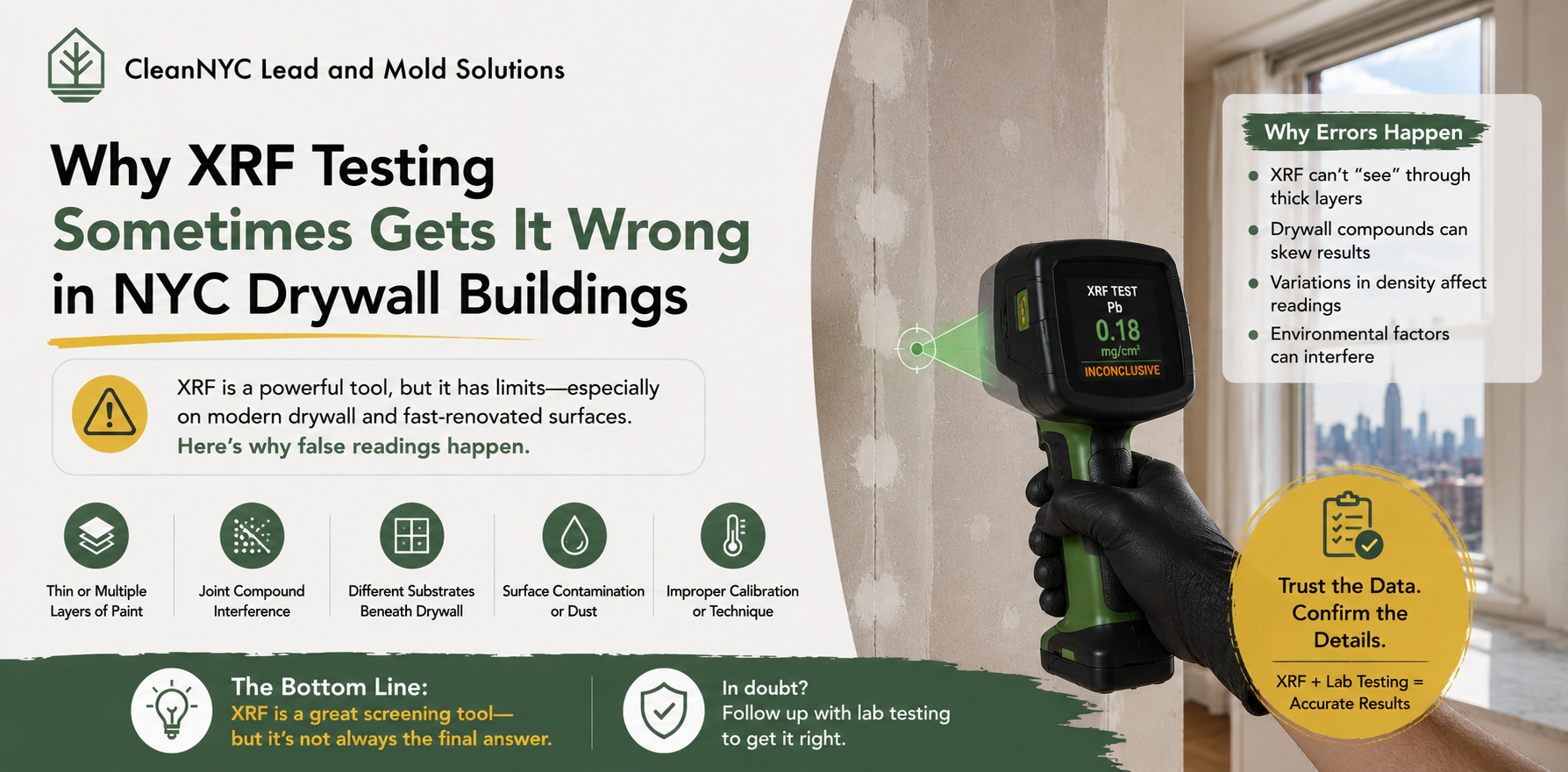
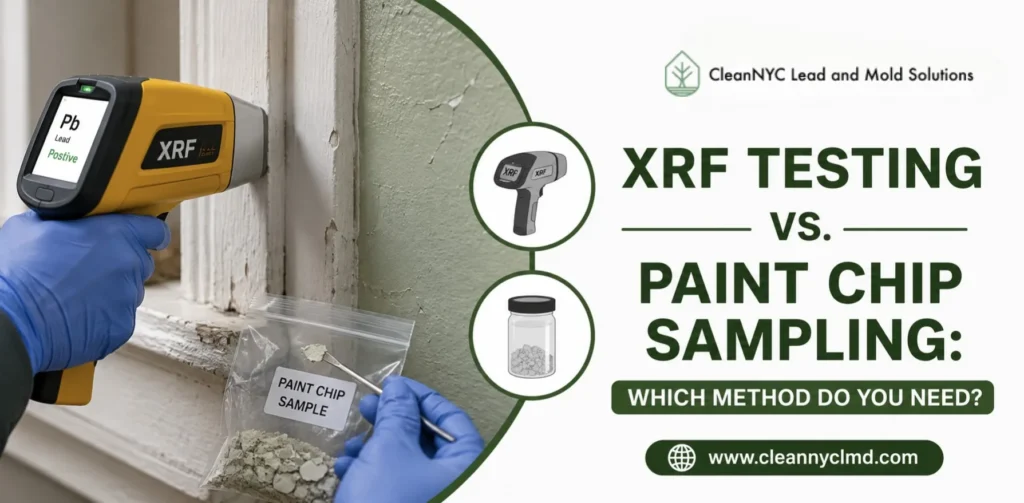
XRF stands for X-ray fluorescence. A certified inspector points a handheld device at a painted surface. It reads the lead content in seconds, without cutting into the wall. No lab, no shipping, no waiting.
The visit itself covers everything: the inspector’s time, the equipment, the on-site readings, and a same-day or next-day report. Larger jobs — multiple units, common areas, rush turnaround — simply take more time on-site, since XRF scales with the number of components tested rather than the number of samples sent out.
That’s the core advantage over a lab-dependent method. Everything happens in one visit, with no shipping and no waiting on a lab queue.
How Paint Chip Sampling Works
Paint chip sampling works differently. An inspector removes a small piece of paint from a surface, usually a square inch or two. That sample then ships to an EPA-recognized laboratory for analysis.
Every component gets its own sample. A single apartment can easily need five, ten, or more samples to cover windows, trim, doors, and walls. Each one goes through its own chain-of-custody paperwork and lab processing before it comes back with a result.
Turnaround is the trade-off most people forget to plan for. Lab results generally take a few business days, sometimes longer without rush service. If you’re on a compliance deadline, that wait is time your building spends exposed to risk.
Why XRF Is Usually Faster for Multi-Unit Buildings
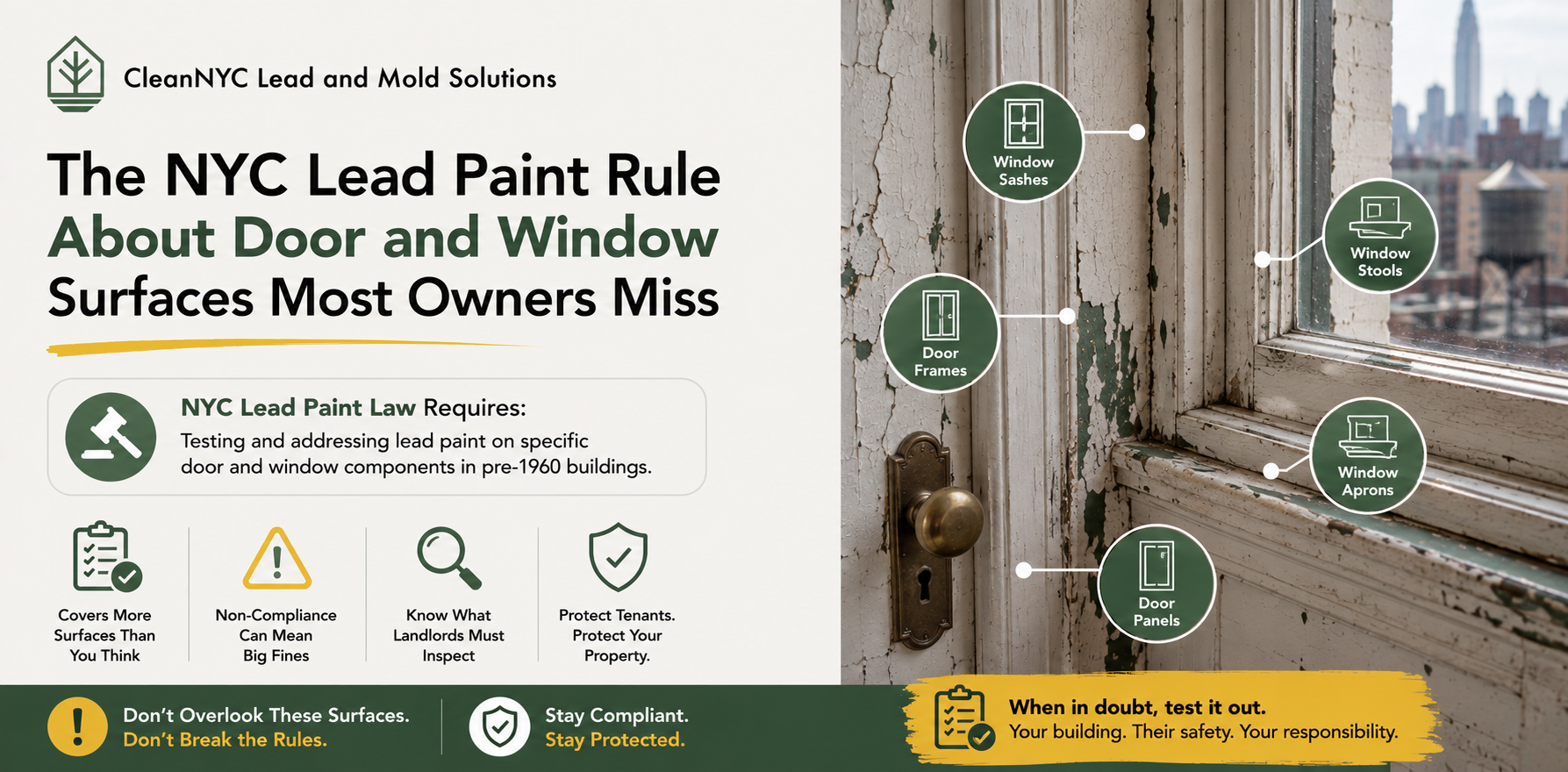
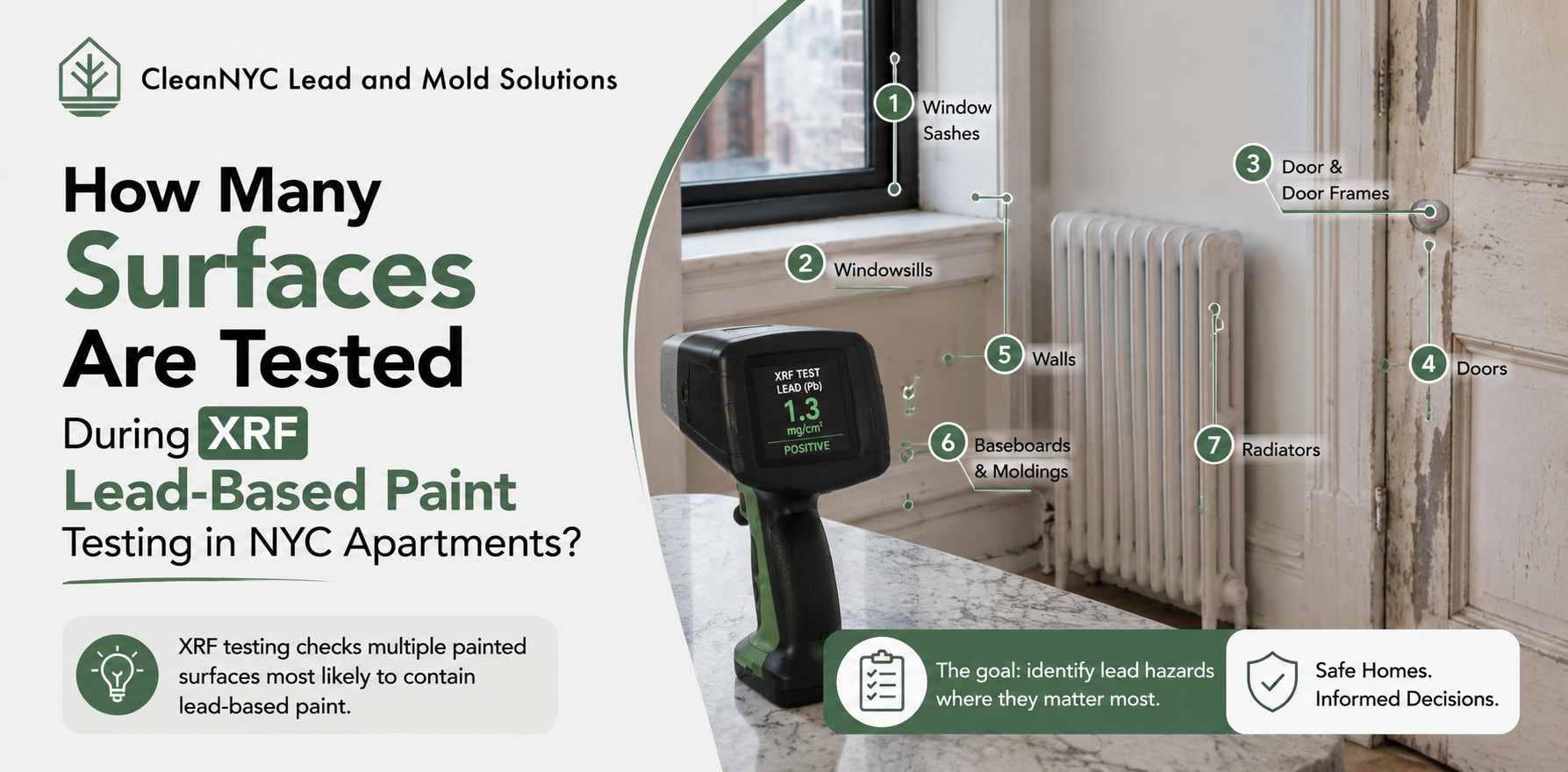
The math changes fast once a building has more than a handful of units. XRF scales with visit time, not sample count. An inspector can cover dozens of painted components — window frames, baseboards, radiators, doors — in the time it takes to collect and label just a fraction of that many paint chips.
Paint chip sampling, on the other hand, scales linearly. Every additional component you want confirmed is another sample, another lab submission, another few days of waiting. For a five-story building with twenty units, that math rarely favors chips.
This is why our professional XRF testing service is the default recommendation for landlords. It fits full-building inspections, pre-renovation assessments, and portfolio-wide compliance sweeps. Speed and non-destructive scanning aren’t just convenient — they scale better across a large property. Explore CleanNYC’s full range of lead and mold compliance services to see how testing fits into a broader building compliance plan.
When Paint Chip Sampling Is Worth Using
None of this means paint chip sampling is obsolete. It has a real job, and sometimes it’s the right one.
Laboratory analysis is more precise for confirming a borderline XRF reading. This matters most on multi-layered surfaces where results sit close to the action level. It’s also the format some legal proceedings, insurance disputes, or HPD violation contests specifically ask for. A laboratory certificate carries a different kind of documentation weight than a device readout.
If your XRF results come back inconclusive, paint chip sampling can help. The same applies when a tenant, buyer, or attorney wants lab-grade confirmation on a specific component — our certified paint chip sampling service fills that gap. Think of it less as a competitor to XRF. It’s more of a backup for the handful of situations where a device reading isn’t the final word.
Which Method Satisfies Local Law 31 Requirements?
Here’s the part every NYC property owner needs to know before choosing either method. Local Law 31 specifically requires XRF testing performed by an EPA-certified inspector or risk assessor. It doesn’t accept a swab kit, and it doesn’t rely on paint chip sampling as the primary compliance method.
Under Local Law 31, owners of buildings constructed before 1960 must have all dwelling units and common areas tested. The same applies to buildings built between 1960 and 1978 with known lead-based paint. Records need to be kept for at least ten years and produced to HPD on request. Skip it, and you’re looking at a Class C hazardous violation with civil penalties. You can review the full requirements directly on NYC HPD’s lead-based paint compliance page.
Paint chip sampling still has a role in this world. It mainly confirms a specific surface after an inconclusive XRF reading, or supports documentation tied to violations and exemption applications. For the Local Law 31 testing your building is legally required to complete, XRF is the method the law is written around. If your property has open violations tied to lead findings, our HPD filing and lead exemption service handles the paperwork. Testing comes first.
A Quick Comparison, Side by Side
If you’re trying to decide, here’s the short version:
- XRF testing: a single inspection visit, results the same day, non-destructive, satisfies Local Law 31.
- Paint chip sampling: collected per component, results in a few business days, more invasive, best used for confirmation.
- For whole-building compliance: XRF almost always wins on turnaround and simplicity.
- For confirming one questionable surface: paint chip sampling is the right, proportionate tool.
At CleanNYC Lead and Mold Solutions, we walk property owners through this exact comparison before recommending a scope of work. The right answer genuinely depends on the building, not a one-size-fits-all script.
How Property Owners Actually Make This Decision
In practice, most owners aren’t choosing in a vacuum. A few patterns show up again and again:
Landlords facing an August compliance deadline or a tenant turnover almost always start with XRF, because speed protects them from missing a legal window. Buyers doing pre-purchase due diligence on a single pre-1978 brownstone sometimes prefer paint chip sampling on a handful of suspect surfaces, since the transaction timeline already has a few days of slack built in. Property managers juggling a portfolio lean on XRF for the annual sweep and reserve paint chip sampling for the rare dispute or violation contest that needs lab documentation.
None of these are wrong answers. They’re just different risk tolerances applied to the same underlying question: how fast do you need certainty, and how much documentation weight does that certainty need to carry?