Mold and Lead Inspection
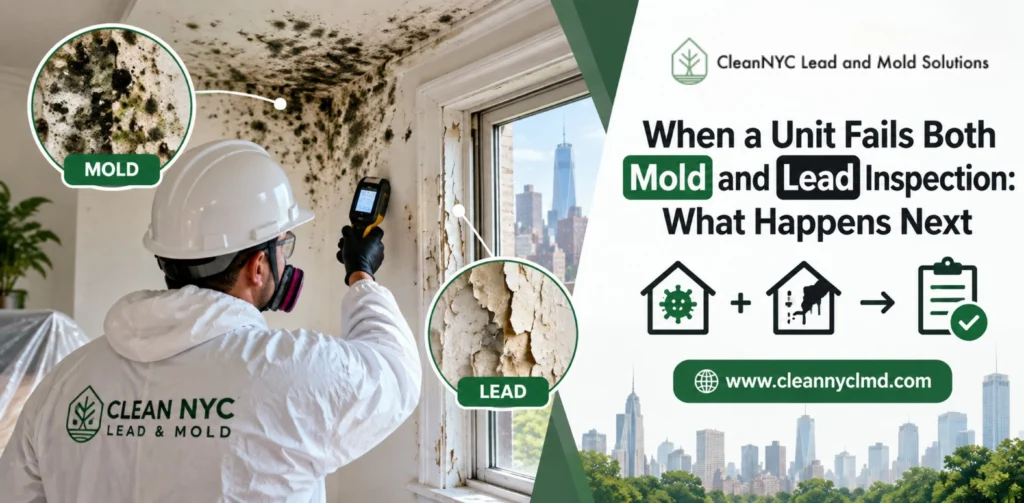
A failed mold and lead inspection often starts the same way. Two reports land on your desk in the same week. One says the paint tested positive for lead. The other says active mold is growing behind the bathroom wall. Same unit, two failures, one very stressful Tuesday.
If this is you right now, take a breath. A failed mold and lead inspection is not rare in New York City’s older housing stock, and it does not mean disaster. It does call for a clear sequence of actions, though, rather than a panicked scramble. This guide covers what happens after a dual failure. It explains why the two problems so often show up together. And it walks through what a property owner should do first, second, and third to get the unit — and the paperwork — back in order.
What Actually Happens When a Mold and Lead Inspection Fails Both Tests
A lead test and a mold inspection measure completely different things. A dual failure is really two separate findings that happened to arrive together.
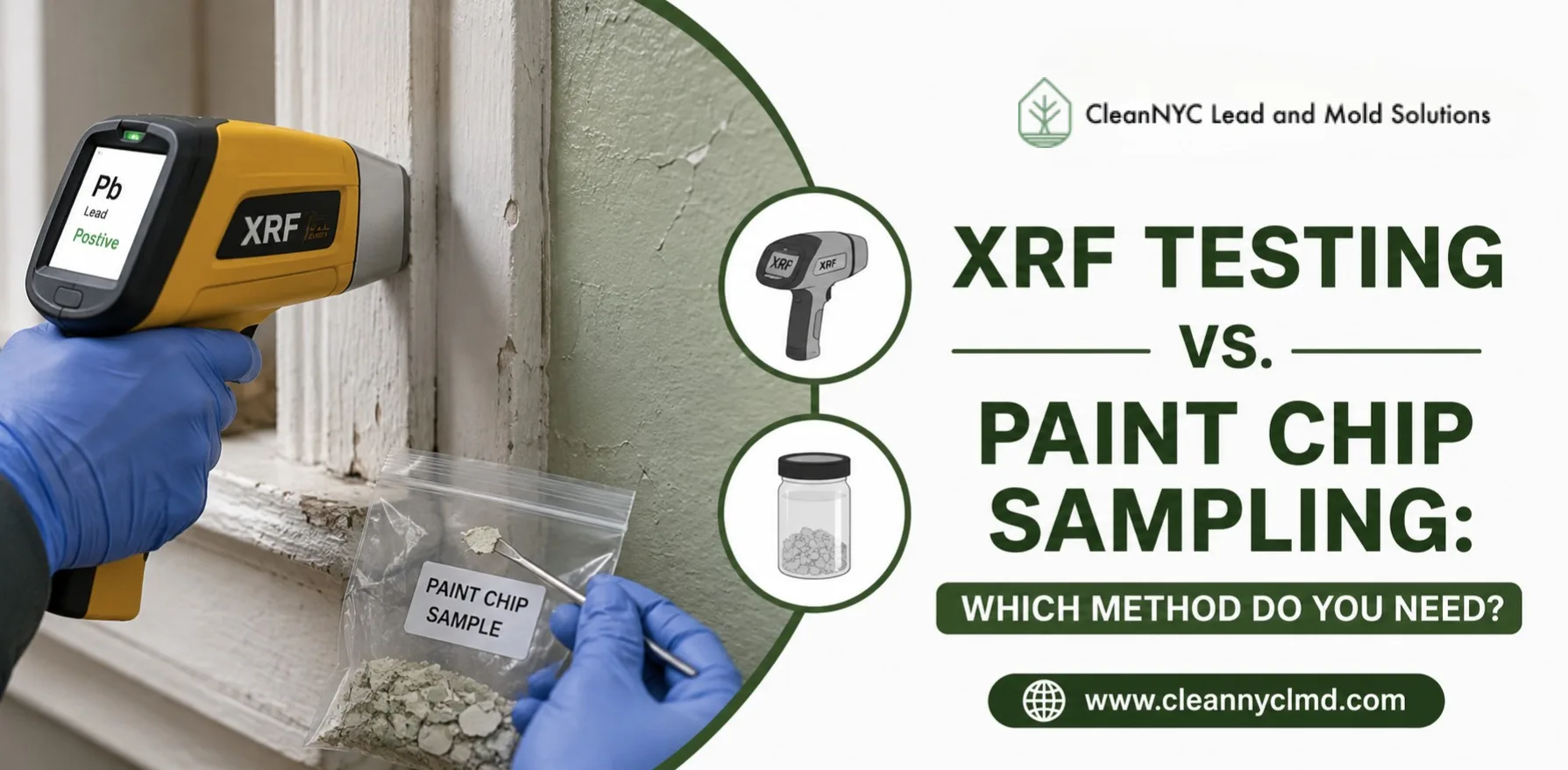
A failed lead inspection usually means an X-ray fluorescence (XRF) reading, or a lab result from paint chip sampling, came back at or above the regulatory threshold for lead content. Local Law 1 sets that threshold in New York City. Any painted surface that tests above it in a covered building counts as a hazard the owner must correct.
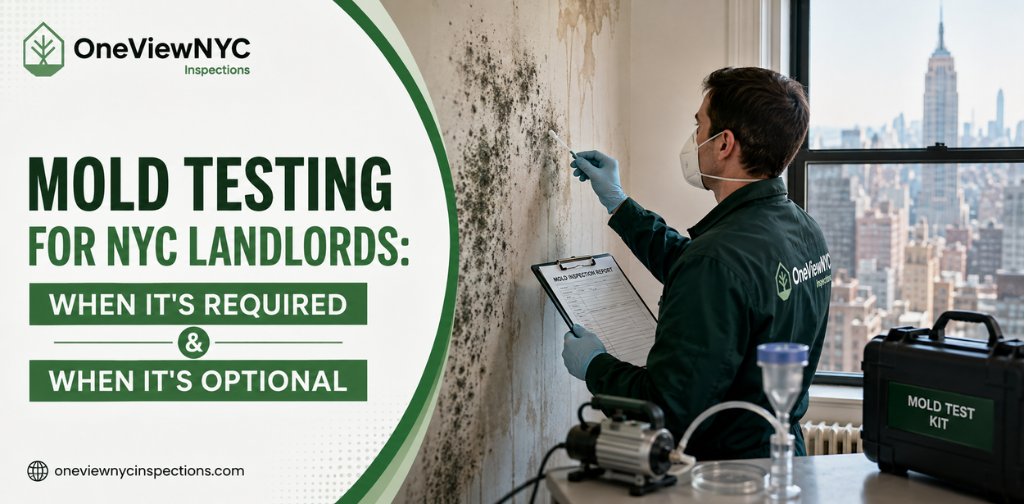
A failed mold inspection means a trained inspector found visible growth, elevated moisture readings, or air and surface sampling results that point to active fungal contamination — not just a musty smell someone complained about. The CDC connects indoor mold exposure to respiratory symptoms and worsened asthma. That’s exactly why inspectors don’t treat visible mold as cosmetic.
When both problems show up in the same report, it’s rarely a coincidence. Usually, one underlying issue — water — has quietly caused damage in more than one direction.
Why Mold and Lead Problems Often Travel Together
Old buildings hide old problems. Pre-1978 housing stock makes up a large share of NYC’s residential buildings. Builders painted these buildings before regulators banned lead-based paint for residential use. That same housing stock also tends to have aging plumbing, deferred maintenance, and window frames that let water in.
Here’s the mechanism in plain terms:
- A slow leak behind a wall or under a window sill keeps a surface damp for days or weeks.
- Moisture causes old paint to bubble, crack, and peel away from the substrate.
- Peeling paint chips and dust become the exact hazard lead testing targets.
- The same dampness that loosened the paint also feeds mold growth in the wall cavity or on the surface itself.
This is why a thorough mold and lead inspection almost always starts by asking where the moisture comes from, not just what’s on the surface. Testing early can catch a dual-failure risk before it ever shows up on a report. A property with a recent leak, a roof issue, or a history of condensation problems is a strong candidate for failing both tests before anyone even opens a test kit.
The Immediate Steps After a Failed Mold and Lead Inspection
Once both reports confirm a problem, the clock starts running for tenant safety and for regulatory compliance. Here’s the order that actually works.
1. Document Everything Before You Touch Anything
Photograph the affected area and keep both inspection reports. Note the date you identified each hazard. NYC’s Department of Housing Preservation and Development can request these records. Local Law 1 requires owners to retain lead-related inspection and remediation records for at least ten years.
2. Restrict Access — Don’t Panic-Clean
Sealing off the area is smart. Grabbing a mop and a bottle of bleach is not. Disturbing lead paint without containment can spread lead dust into areas that previously tested clean. Scrubbing visible mold without proper controls can also aerosolize spores. A trained professional needs to handle both hazards — not a rushed DIY fix.
3. Notify the People Who Live There
Tenants need to know what the inspection found and what happens next, especially households with children under six. This isn’t just good practice. It’s a legal expectation under NYC’s lead laws, and it heads off far bigger disputes down the road.
4. Bring In a Certified Inspector to Confirm Scope
Before remediation starts, you need to know exactly how far the contamination extends. This usually means a follow-up round of XRF testing or paint chip sampling for the lead side, paired with a moisture assessment for the mold side. Guessing at scope is how small jobs turn into expensive redos.
Compliance Obligations Property Owners Can’t Skip
NYC treats lead-based paint hazards as a legal matter, not just a maintenance issue. Under Local Law 1, owners of covered buildings must test for lead, correct any hazard using certified workers and safe work practices, and keep tenants informed throughout.
HPD’s own guidance spells out what happens next. If the department issues a violation and the owner doesn’t complete the repair, HPD sends its own inspector, hires a certified contractor, and bills the owner. HPD also collects dust samples afterward to confirm the unit is clean.
Filing the paperwork correctly through HPD filing channels, on time, keeps a manageable violation from turning into a hazardous one with steeper penalties attached. That step matters for mold too, even though mold doesn’t carry the same city-wide filing structure as lead. NYC’s Housing Maintenance Code still obligates landlords to keep units free of conditions that endanger life or health, and an inspector who documents mold alongside a lead violation isn’t likely to let it slide. A mold and lead inspection report becomes part of the legal record HPD can request years later.
Sequencing the Fix: Which Hazard Comes First?
This is where a lot of property owners struggle, and understandably so. The two fixes seem to pull in opposite directions.
Lead-safe work practices center on minimizing disturbance: contain the area, avoid open-flame or high-friction tools, and clean up thoroughly before anyone re-enters. The EPA’s renovation and repair guidance exists specifically because disturbing old paint the wrong way turns a contained hazard into an airborne one. Mold remediation, on the other hand, often requires opening up the wall or removing damaged material to get at the moisture source. That’s exactly the kind of disturbance lead protocols aim to control.
The practical answer most certified remediation teams follow: address the moisture source first. Then run lead-safe containment around any demolition or paint disturbance the mold work requires. Finish with lead abatement or paint stabilization once the area is dry. Treating this as one coordinated mold and lead inspection and remediation plan — rather than two separate contractors working around each other — is usually what keeps the timeline and the budget from spiraling.
What a Dual Failure Actually Costs a Property Owner
Not in a scary-headline way — in a practical, business-planning way. A dual mold and lead inspection failure typically means:
- More time. Two hazards mean two remediation scopes, plus follow-up testing to confirm you’ve resolved both before tenants can move back in.
- More coordination. Contractors need to work in sequence, not simultaneously, which stretches the project timeline compared to a single-hazard fix.
- More scrutiny. A unit with a documented dual failure tends to draw a closer look on any future inspection, so cutting corners now tends to resurface later.
- More tenant communication. Relocation, temporary access restrictions, and scheduling around a tenant’s work hours all add real logistics on top of the physical repair.
None of this is a reason to delay. It’s a reason to get an accurate scope early, so the timeline you give tenants and the budget you give ownership are both realistic from day one.
Confirming the Unit Is Actually Safe
Remediation doesn’t end when the work looks done. It ends once the unit passes clearance testing. For lead, that typically means dust wipe clearance testing to confirm lead dust levels sit below the regulatory threshold before anyone moves back in. For mold, that means confirming moisture levels are back to normal, with no visible regrowth after a reasonable drying period. Skipping this step is the single most common reason a “fixed” unit fails inspection again a few months later.
Preventing the Double Failure Next Time
The owners who stop seeing dual failures are the ones who stop treating lead and mold as separate checklists. A few habits make the difference:
- Pair routine water testing or moisture checks with your regular lead compliance schedule, especially in units with a history of leaks.
- Address plumbing and roof issues promptly. Most mold problems, and a good share of paint deterioration, trace back to water that sat too long.
- Keep XRF and paint chip records current so a routine turnover inspection doesn’t turn into a surprise.
- Review past project outcomes. Teams that document their completed inspection and remediation projects tend to spot recurring patterns across a portfolio faster than owners managing buildings one at a time.
Working With a Team That Handles Both
Coordinating two contractors, two testing protocols, and two compliance timelines is where most delays happen. CleanNYC Lead and Mold Solutions centers its whole approach on exactly this overlap. This EPA-certified, bonded, and insured team treats every mold and lead inspection as one coordinated project instead of two competing ones. That’s the difference between a unit that passes cleanly next time and one that ends up back on the violation list within the year.
Frequently Asked Questions
Can a Unit Fail a Mold and Lead Inspection for Both Hazards at Once?
Yes, and it happens more often in older buildings with a history of water intrusion. Moisture damages paint and feeds mold growth at the same time, so one leak can trigger both findings in a single visit.
What Happens If My Building Fails Both Inspections in NYC?
You’ll need to document the findings, restrict access to the area, notify tenants, and schedule certified remediation for both hazards. Under Local Law 1, HPD can step in and bill the owner if the owner doesn’t complete lead repairs on time.
Do I Fix the Mold First or the Lead First?
Generally, remediation teams address the moisture source first. They use lead-safe containment throughout any work that disturbs painted surfaces. Treating both as one sequenced project, rather than two separate jobs, keeps the process safer and faster.
How Long Do I Have to Fix a Failed Inspection?
Timelines depend on the violation class and whether a child under six lives in the unit. HPD guidance and Local Law 1 set specific correction windows, and repeated non-compliance can escalate penalties.
Will Tenants Need to Move Out During Remediation?
It depends on the scope of the work and whether crews can safely contain the affected area while tenants are still living there. Larger jobs involving wall removal or extensive lead abatement often require temporary relocation.
Can I Clean Up the Mold Myself to Save Time?
Not when lead paint is also present. Disturbing painted surfaces without lead-safe containment can spread contamination, and improper mold cleanup can aerosolize spores. Trained professionals need to handle both hazards, working from a confirmed test result.
How Do I Know the Unit Is Actually Safe Afterward?
Clearance testing confirms it: dust wipe testing for lead dust levels, and a follow-up moisture check for mold. A visual “it looks clean” is not the same as a passed clearance test.
The Bottom Line
A failed mold and lead inspection is a wake-up call, not a crisis, as long as you handle it in the right order. Document the findings, contain the area, confirm scope, remediate with proper sequencing, and clear both hazards before anyone moves back in. Property owners who treat mold and lead as one connected problem — instead of two separate emergencies — get their units back in service faster. They also keep those units off the violation list for good.
Sources
- Centers for Disease Control and Prevention — Mold: Basic Facts, Health Effects, and Cleanup
- NYC Department of Housing Preservation and Development — Lead-Based Paint
- U.S. EPA — Lead
About the Author
The content team at CleanNYC Lead and Mold Solutions prepared this article, drawing on EPA and NYC HPD regulatory guidance and the company’s field experience. That experience includes XRF testing, paint chip sampling, and mold and lead inspections across New York City residential and commercial properties.