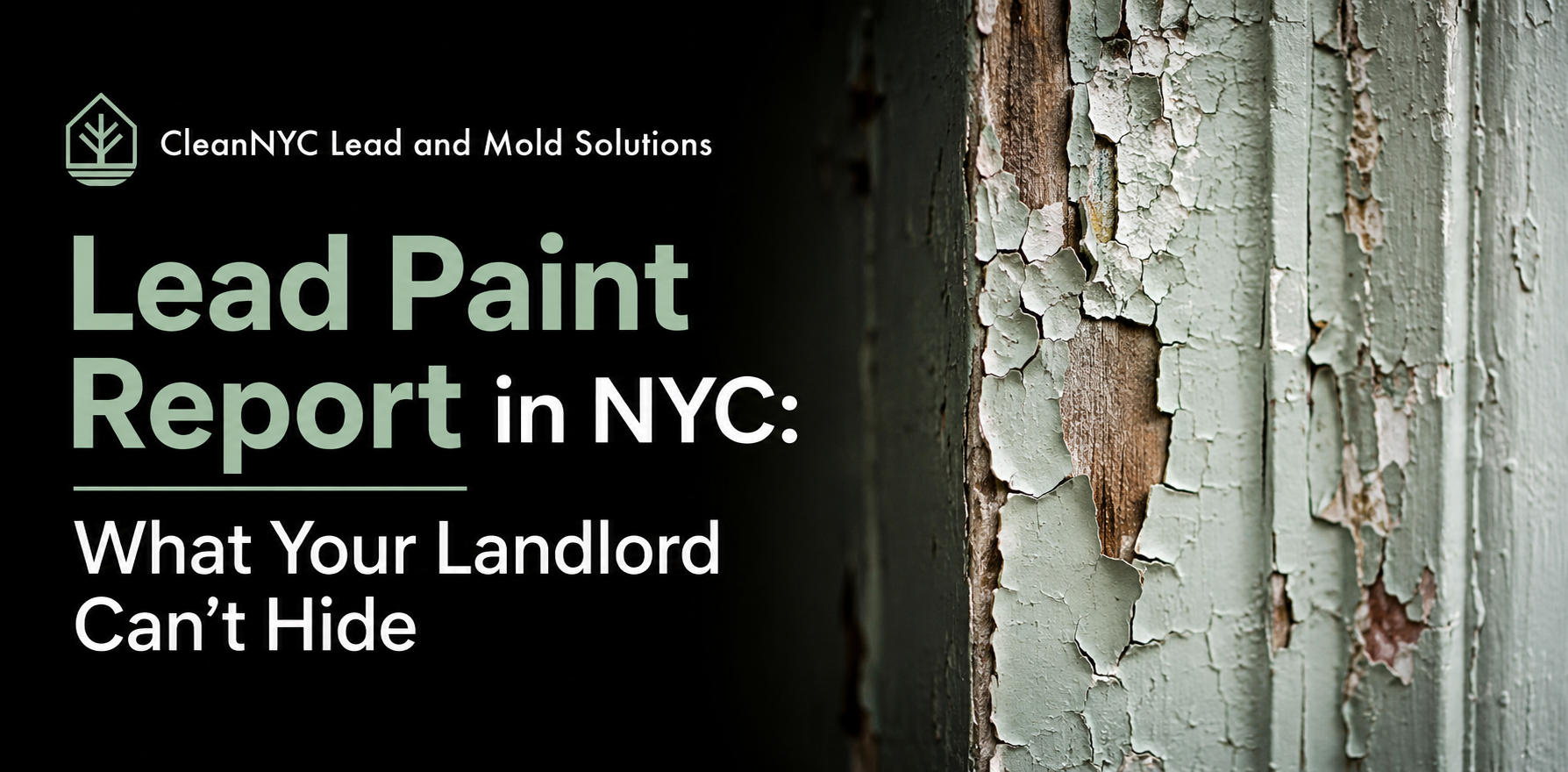
For owners and managers of older New York City buildings, understanding lead hazards is essential to protecting tenants and avoiding violations. Properties built before 1978 may still contain lead-based coatings beneath newer layers of paint, especially on windows, doors, trim, and other high-friction surfaces. A professional lead paint inspection is usually the first step toward understanding whether these hazards exist, and many property owners want to know exactly how that inspection process works before scheduling one.
Many people know that testing is important, but they often ask an understandable question: can collecting paint samples release harmful lead dust?
The answer is yes — but only in limited amounts when proper procedures are followed. Modern inspection protocols are specifically designed to protect residents, workers, and occupants throughout the testing process.
Whether you own a multifamily property, a brownstone, or a rental apartment, knowing how professionals control dust can help you make informed decisions about a lead inspection and overall property safety.
Why Paint Chip Sampling Is Sometimes Necessary
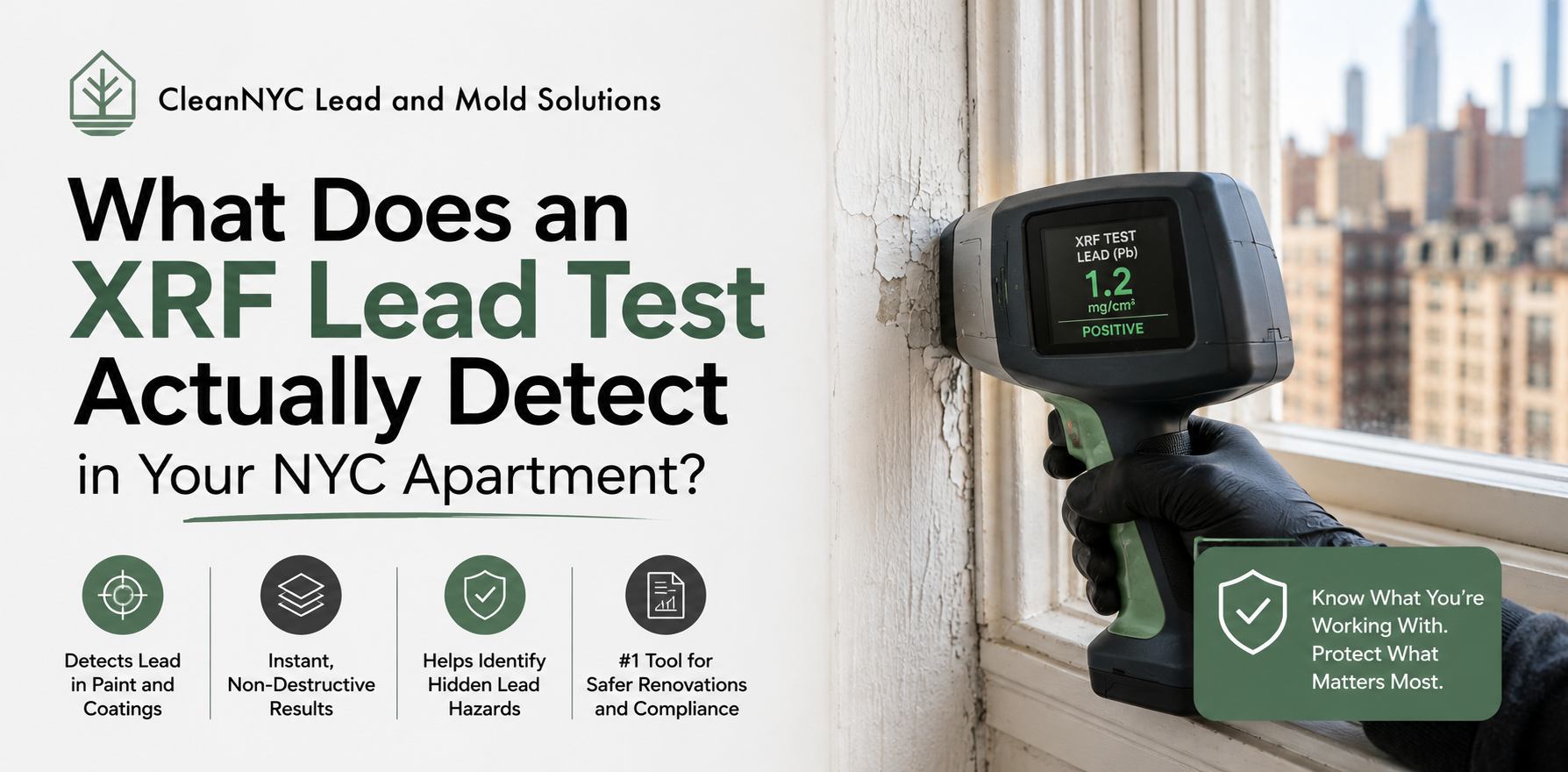
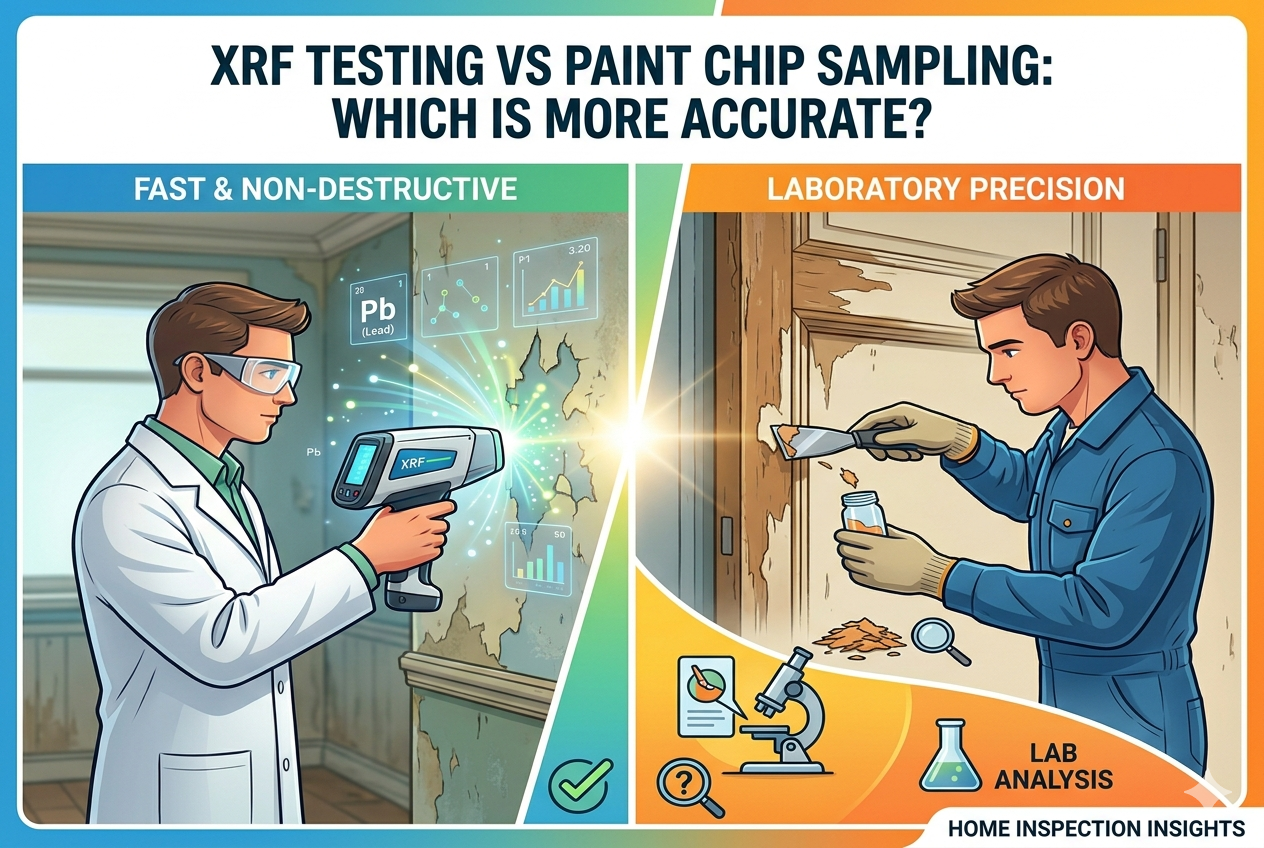
Today, most inspectors begin with X-Ray Fluorescence technology. Our XRF testing service can detect lead beneath painted surfaces without causing visible damage, which makes it the preferred starting point for most properties.
Despite its advantages, XRF testing is not always sufficient.
Additional laboratory analysis may be recommended when:
- Instrument readings are inconclusive
- Unique building materials interfere with results
- Regulatory documentation requires confirmation
- Multiple paint layers produce inconsistent readings
- Renovation or abatement projects require detailed records
- Historical properties contain unusual substrates
As part of a comprehensive lead paint survey, a small sample may be carefully removed and submitted to an accredited laboratory for analysis. If you’d like to see how this fits into a full property evaluation, our paint chip sampling page outlines the process in more detail.
Laboratory testing provides highly accurate information and can support compliance documentation for landlords and property owners.
How Inspectors Reduce Dust During Testing
Professional inspectors understand that disturbing painted surfaces has the potential to release microscopic particles. For this reason, established safety procedures are followed whenever paint chips must be collected.
Preparing the Work Area
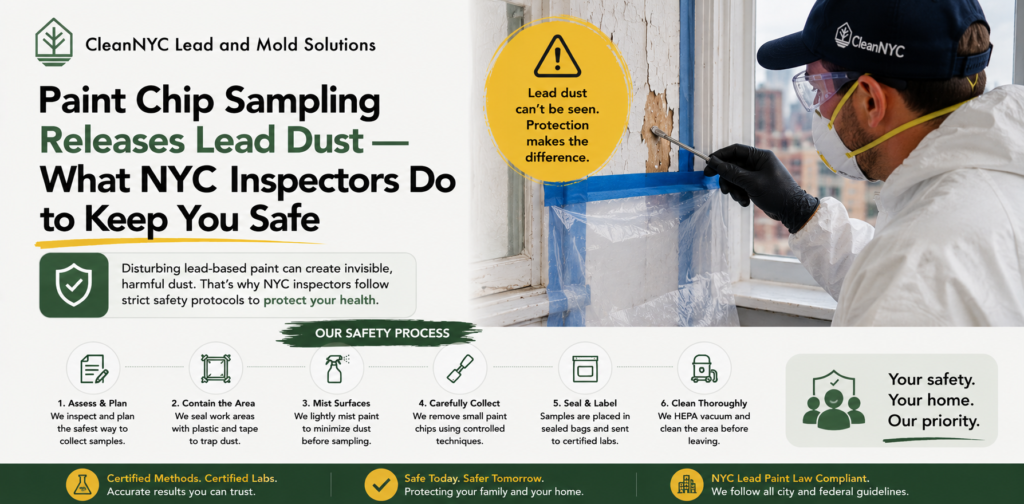
Before sampling begins, inspectors evaluate the surrounding space and establish a controlled work area.
Typical preparation measures include:
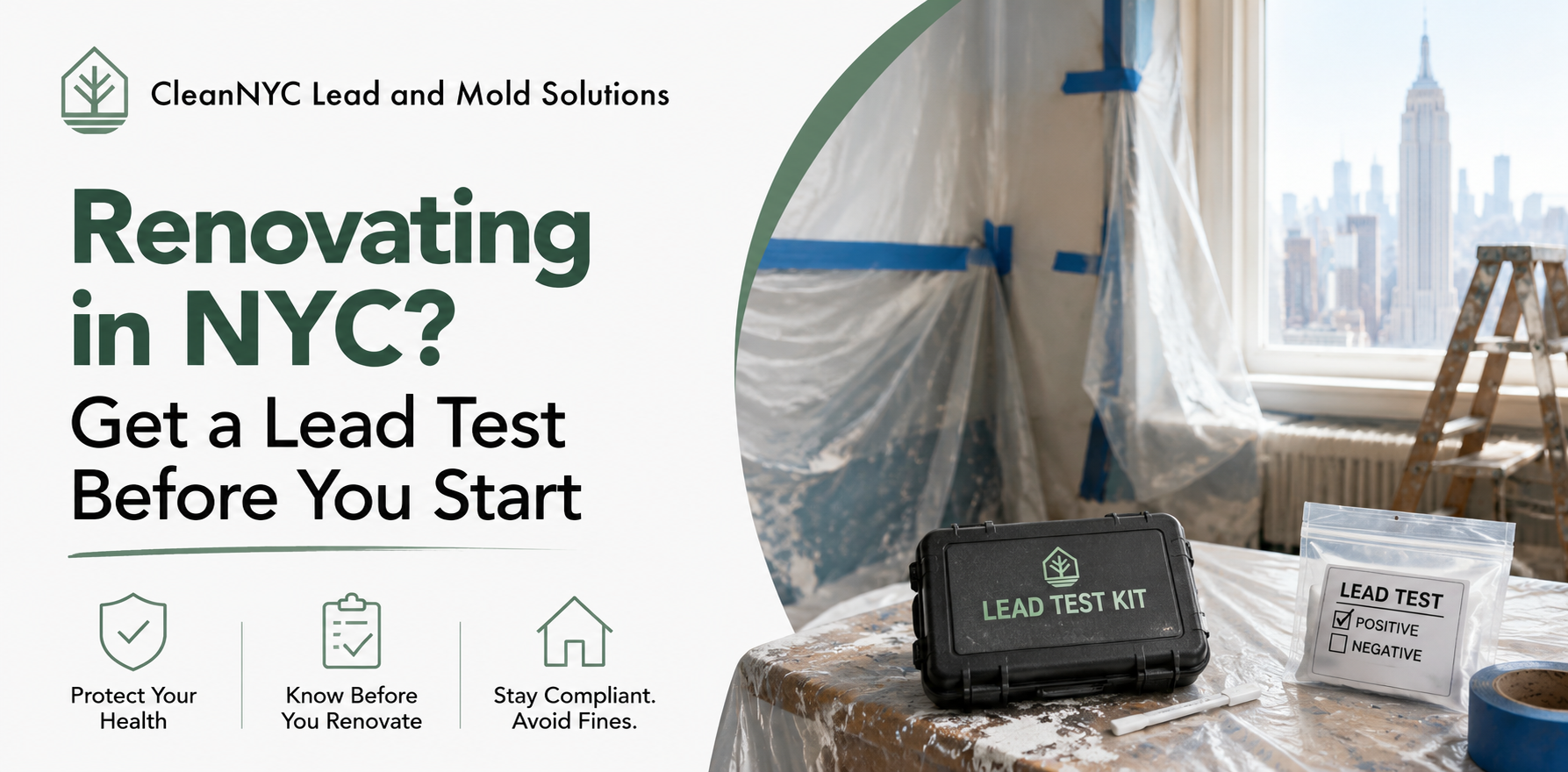
- Placing disposable plastic sheeting beneath sampling locations
- Covering nearby furnishings and personal belongings
- Restricting access to the immediate area
- Temporarily relocating children and pets
- Clearly defining containment zones
These precautions help ensure that any debris remains isolated.
Collecting Only What Is Needed
A qualified inspector removes only the smallest amount of material necessary for laboratory analysis.
Rather than aggressively scraping large sections, professionals score a precise sampling location, remove a representative paint sample, avoid unnecessary disturbance of surrounding surfaces, and capture loose debris immediately. This approach minimizes dust generation while maintaining testing accuracy.
Why Certified Professionals Matter
Attempting to collect paint samples without proper training can create unnecessary hazards.
Common DIY mistakes include excessive scraping or sanding, failing to isolate the area, using standard household vacuums, sweeping debris with dry brooms, and leaving contaminated dust behind.
Lead particles are often invisible and can settle on floors, windowsills, toys, and furniture. Inspectors performing this work are required to be trained and certified under the EPA’s Lead-Based Paint Activities Program, which sets the framework for safe abatement, risk assessment, and inspection practices nationwide. Hiring a certified inspector helps ensure that testing is conducted safely and according to accepted industry practices, and you can learn more about our background and credentials on our company page.
Lead-Safe Work Practices Used by NYC Inspectors
Professionals rely on established lead-safe procedures recognized throughout the industry. These practices typically include limiting paint disturbance, using disposable protective materials, containing debris during collection, performing immediate cleanup, properly packaging and labeling samples, and documenting all testing locations.
This level of care matters most during renovation work. The EPA’s Lead Renovation, Repair and Painting Program requires firms disturbing lead-based paint in pre-1978 housing to be trained and certified in lead-safe work practices before beginning any project. These precautions reduce the likelihood of contamination spreading beyond the testing area.
The Importance of HEPA Cleaning
HEPA filtration plays an important role whenever lead-containing materials are disturbed. Unlike ordinary household vacuums, HEPA-equipped systems are specifically designed to capture extremely fine particles, reducing airborne dust, capturing microscopic contaminants, and minimizing residual contamination after sampling work is complete.
Lead Dust Testing After Paint Sampling
In some situations, inspectors may recommend additional lead dust testing after paint disturbance activities. Our dust wipe clearance testing service collects wipe samples from floors, window sills, window troughs, and other accessible horizontal surfaces, then sends them for laboratory analysis to confirm hazardous dust levels are not present.
Children remain the most vulnerable group during this process. According to the CDC’s Childhood Lead Poisoning Prevention Program, children under six are at greater risk because their developing bodies absorb lead more easily and they frequently put hands and objects into their mouths. Dust sampling is often included during a complete lead hazard assessment, particularly after renovation, repair, or lead abatement activities.
XRF Testing vs. Paint Chip Sampling
Property owners frequently ask which testing method is best.
| Feature | XRF Testing | Paint Chip Sampling |
|---|---|---|
| Surface Damage | None | Minor |
| Dust Generation | None | Minimal when controlled |
| Results | Immediate | Laboratory analysis required |
| Number of Surfaces Tested | Many | Limited samples |
| Best Use | Whole-property screening | Confirmation testing |
Because XRF testing is non-destructive, it remains the preferred starting point for most properties. However, laboratory analysis remains valuable when additional confirmation is necessary, and combining both methods often gives the clearest overall picture of a building’s condition.
Which Buildings Should Be Evaluated for Lead Hazards?
Buildings most likely to contain lead-based paint include properties constructed before 1978, pre-war apartment buildings, brownstones and townhouses, multifamily rental properties, child-occupied facilities, daycare centers, and buildings scheduled for renovation.
Older structures experiencing peeling, chipping, or deteriorating paint should receive prompt attention. Property owners working to stay ahead of Local Law 1 deadlines can review the requirements on our compliance overview page, which breaks down testing timelines and exemption categories.
What Happens After Samples Are Collected?
Once paint samples have been obtained, inspectors follow a documented process: securing and labeling each sample, recording precise sample locations, sending materials to an accredited laboratory, reviewing analytical findings, and preparing a detailed report.
A completed report may contain areas tested, laboratory results, lead concentrations identified, photographic documentation, hazard recommendations, and suggested next steps. Owners who also need to keep their building’s paperwork current can rely on our HPD filing assistance to stay organized and audit-ready. You can also browse examples of finished inspections on our completed project gallery to see how this documentation comes together in practice.
This information assists landlords, buyers, property managers, and homeowners in making informed decisions. For properties where plumbing age is also a concern, pairing a paint inspection with our water testing service can rule out lead exposure from older pipes and fixtures as well.
Final Thoughts
Paint chip sampling can release small amounts of lead dust, but qualified professionals use strict containment and cleanup procedures to keep occupants safe. Through controlled sampling techniques, HEPA filtration, laboratory analysis, and established safety protocols, inspectors significantly reduce potential exposure.
For owners of older NYC properties, scheduling a professional lead paint inspection remains one of the most effective ways to identify hazards, support compliance efforts, and protect building occupants.
Frequently Asked Questions
About the Author
This article was developed by environmental compliance specialists with experience researching lead-based paint regulations, housing safety requirements, inspection methodologies, and property risk management. Content is reviewed using current EPA guidance, HUD recommendations, industry best practices, and New York City compliance standards to provide accurate, practical, and trustworthy information for property owners and residents.