Many New York City property owners understand that lead-based paint can be a concern in older buildings. What often goes unnoticed, however, is that some of the highest-risk areas are not large wall surfaces or ceilings. Instead, they are the doors and windows used every day by tenants. Scheduling professional NYC lead testing is one of the most effective ways to identify these hidden hazards before they create serious health or compliance problems.
These components experience constant movement, friction, and wear. Over time, painted surfaces can rub together, creating dust that may contain lead if older coatings are present beneath newer layers of paint. Because this process is gradual and often invisible to the naked eye, many owners overlook it until an inspection reveals a problem.
Understanding how door and window surfaces fit into NYC’s lead safety requirements can help owners make informed maintenance decisions, reduce potential liability, and create safer living environments for residents.
Why Doors and Windows Deserve Special Attention
Unlike stationary painted surfaces, doors and windows move repeatedly throughout the day. Every opening and closing action creates friction between painted components.
In buildings constructed before 1960—and many built before 1978—older layers of lead-based paint may still exist beneath more recent paint applications. Even if the visible surface appears to be in good condition, the underlying layers can become a concern when friction generates dust.
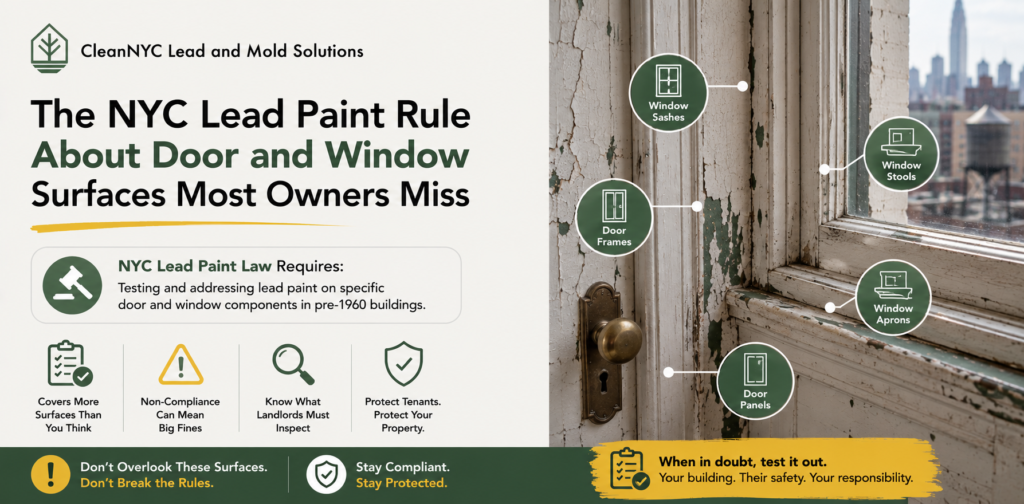
Common locations where this occurs include:
- Window sashes
- Window jambs
- Window troughs
- Door frames
- Door edges
- Painted thresholds
- Sliding window tracks
- Interior trim around windows
These areas are often referred to as friction surfaces because repeated contact causes wear over time.
For property owners, recognizing these locations is an important step in identifying potential hazards before they become larger issues.
The Hidden Problem: Lead Dust, Not Just Peeling Paint
One of the biggest misconceptions about lead-based paint is that it only becomes dangerous when paint is visibly peeling or chipping.
In reality, lead dust is frequently a greater concern.
When painted door and window components rub against one another, microscopic particles can be released. These particles may settle on floors, furniture, windowsills, toys, or other household surfaces.
Because lead dust is often invisible, occupants may not realize it is present.
Young children face the greatest risk because normal hand-to-mouth behavior can increase exposure. According to the CDC’s Childhood Lead Poisoning Prevention program, children are particularly vulnerable because lead exposure may affect learning, development, and overall health. This is one reason NYC housing regulations place significant emphasis on identifying and controlling dust-producing conditions.
A professional lead hazard assessment often focuses heavily on friction surfaces because they can generate dust even when paint deterioration appears minimal. Visit our Why Test page to learn more about the science behind lead inspections and why they matter for residential safety.
Why Window Troughs Frequently Raise Concerns
Among all window-related components, window troughs are often overlooked.
A window trough is the recessed area where dust, dirt, and debris naturally collect. When lead-containing paint is present on nearby surfaces, dust generated through normal window operation may accumulate in this location.
Inspectors frequently pay close attention to window troughs because they can reveal ongoing wear that property owners may not otherwise notice.
In many older residential buildings, window troughs provide valuable clues about the condition of surrounding painted components and whether additional evaluation may be necessary.
Routine cleaning helps reduce dust accumulation, but it does not determine whether lead is present. That requires professional evaluation.
What NYC Property Owners Commonly Miss
Many owners assume that repainting a surface automatically eliminates lead-related concerns.
While repainting can improve appearance and help protect underlying materials, it does not necessarily remove existing lead-based paint. Older layers may remain beneath newer coatings for decades.
This is where a professional lead inspection becomes valuable. Unlike traditional paint chip sampling, which requires scraping or cutting into surfaces, modern inspection methods can evaluate multiple paint layers with minimal disruption.
A lead inspection can help determine:
- Whether lead-based paint is present
- Which building components contain lead
- Areas experiencing significant wear
- Potential sources of dust generation
- Whether maintenance measures have been effective
Without proper evaluation, owners may unknowingly leave high-risk surfaces unaddressed.
When Lead Testing Makes Sense
Not every building requires the same level of evaluation, but certain situations make lead testing particularly important.
Property owners should consider professional assessment when:
The Building Was Constructed Before 1960
According to the NYC HPD Lead-Based Paint page, all residential buildings constructed before 1960 are presumed to contain lead-based paint under New York City law. Older buildings are more likely to contain lead-based paint beneath current finishes.
Paint Shows Signs of Wear
Visible rubbing, cracking, or deterioration around doors and windows may indicate friction-related damage.
Renovation History Is Unclear
If previous repairs or repainting projects were undocumented, testing can provide a clearer understanding of existing conditions.
Children Reside in the Property
Buildings housing young children often require additional attention due to the increased health risks associated with lead exposure.
Compliance Documentation Is Needed
Testing provides objective information that can support maintenance planning and recordkeeping efforts. Our team handles HPD filing requirements to keep your property fully documented and compliant.
Professional lead testing helps owners make decisions based on verified data rather than assumptions.
How Modern XRF Technology Helps
Today’s inspections often rely on X-Ray Fluorescence (XRF) technology.
XRF devices allow certified professionals to detect lead within painted surfaces without causing significant damage to building materials. The technology can evaluate multiple paint layers and provide immediate results.
For doors and windows, XRF testing can help identify:
- Lead-containing components
- Areas requiring closer attention
- Surfaces likely to generate lead dust
- Maintenance priorities
- Components that may require remediation
Because many buildings have been painted numerous times over the years, visual inspections alone rarely provide a complete picture.
The Importance of Lead Contamination Testing
While paint testing identifies whether lead is present, lead contamination testing helps determine whether lead has spread into surrounding environments.
This type of evaluation may include the analysis of dust samples collected from areas where occupants live and interact daily. Our certified dust wipe clearance testing service can confirm safe conditions after renovation work is complete or when contamination concerns are present.
The information gained through contamination testing can help owners understand whether friction surfaces are contributing to environmental lead hazards.
For larger residential properties, this insight often supports more effective maintenance planning and targeted corrective actions.
Detection Before Renovation Work
Renovation projects can disturb hidden lead paint and spread contamination throughout a property. Before starting remodeling work, many contractors and property owners request lead testing to identify hazardous areas first.
The EPA’s Lead Renovation, Repair and Painting (RRP) Program requires that firms performing renovation, repair, and painting projects that disturb lead-based paint in pre-1978 homes be certified and use lead-safe work practices. Without proper testing, construction work can release dangerous lead dust into the air.
If your project also extends to plumbing updates or water supply lines, our water testing services can evaluate those additional exposure risks alongside your lead inspection.
Practical Steps Owners Can Take
Property owners do not need to wait for a violation notice before taking action.
Several proactive measures can help reduce risk:
- Inspect doors and windows regularly.
- Address signs of wear promptly.
- Keep window troughs clean.
- Document maintenance activities.
- Schedule professional evaluations when needed.
- Use qualified professionals for repairs involving suspected lead-based paint.
- Review older building records whenever available.
Small maintenance issues often become more costly when ignored. Early identification helps prevent larger problems and supports safer housing conditions. Browse our past project case studies to see how verified lead inspections have helped property managers across New York City stay compliant and renovation-ready.
Looking Beyond Compliance
Lead safety is not simply about meeting regulatory requirements. It is also about understanding how buildings age and how everyday wear can affect occupants.
Doors and windows are among the most frequently used components in any residential property. Because of their constant movement, they deserve careful attention during routine maintenance and inspections.
Whether through a lead inspection, lead contamination testing, or a comprehensive lead hazard assessment, evaluating these overlooked surfaces can provide valuable information about a property’s overall condition.
For anyone living in or managing an older NYC apartment, professional NYC lead testing offers a fast, reliable, and non-destructive way to better understand potential lead exposure risks in doors, windows, and friction surfaces throughout the building. Our certified team at CleanNYC Lead and Mold Solutions brings deep experience with NYC pre-war buildings, multifamily properties, and Local Law compliance requirements.
Frequently Asked Questions
About the Author
The author specializes in research and educational content related to lead-based paint regulations, environmental compliance, property maintenance, and residential housing safety. Drawing from industry guidance, inspection practices, and evolving regulatory standards, the goal is to provide property owners, managers, and housing professionals with accurate information that supports safer building management and informed decision-making.