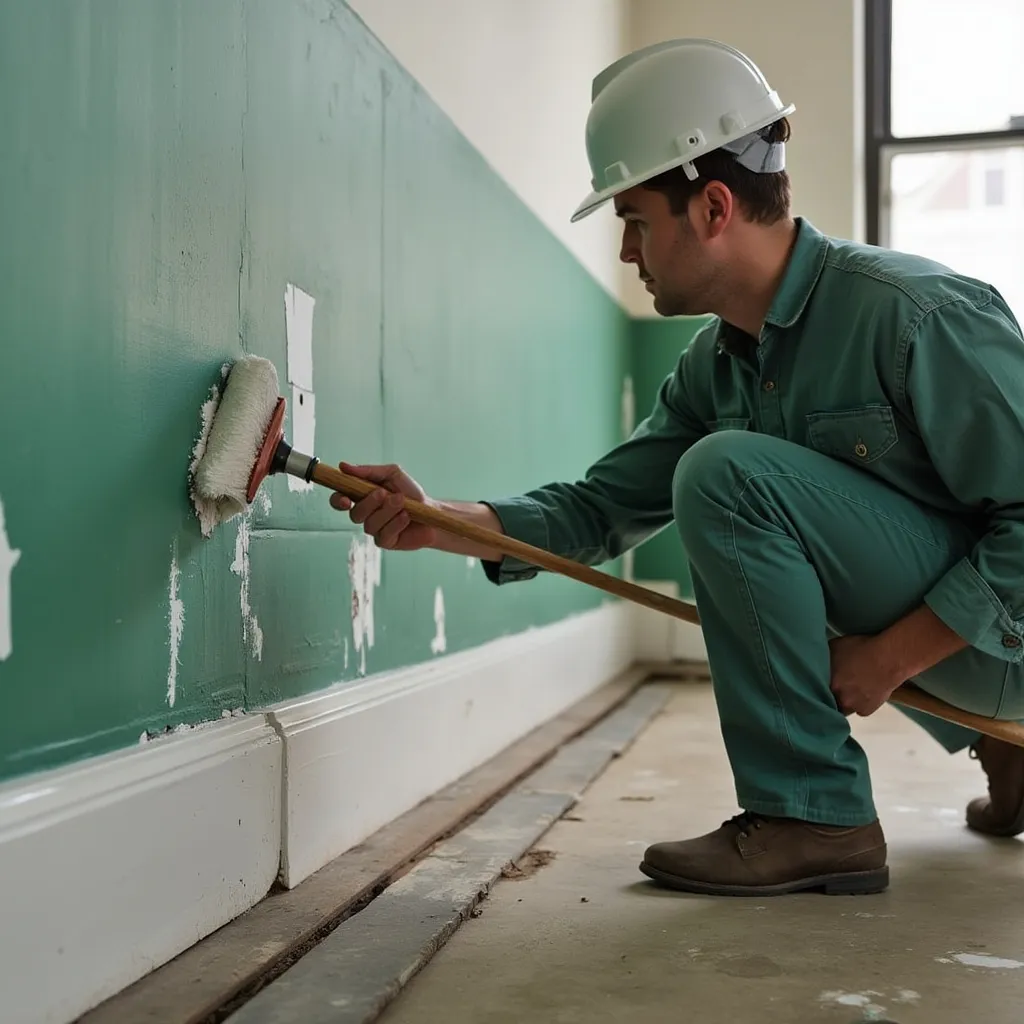
If your NYC property was built before 1978, contains layers of old paint, or is undergoing renovation, lead-based paint may be present. The only way to confirm is through certified professional lead paint testing in NYC. Read on for a full comparison of the two primary detection methods — and exactly what to do next.
New York City has one of the oldest housing stocks in the country. Many buildings constructed before 1978 still contain layers of lead-based paint — and a significant portion of those buildings have never undergone formal lead paint testing. Even where renovations have taken place, disturbed paint surfaces can release hazardous lead dust that puts occupants at serious risk.
According to the U.S. Environmental Protection Agency (EPA), lead-based paint hazards remain one of the most common environmental health risks in older residential buildings. If your building has never undergone a formal lead paint inspection, there is no reliable way to confirm whether surfaces are safe for occupants.
Why Lead-Based Paint Is Still a Concern in NYC
Lead can be present in paint across multiple surfaces inside older buildings:
- Interior walls, trim, and window frames in pre-1978 buildings
- Deteriorating paint on doors, baseboards, and radiators
- Multiple layers of old paint in renovated units
- Exterior painted surfaces and common area walls
NYC’s own data shows that 87% of buildings built before 1940 contain some form of lead hazard — and lead-based paint is the most widespread source. Learn more about why lead testing matters for NYC property owners.
Two Primary Methods for Lead Paint Detection
What Is XRF Testing?
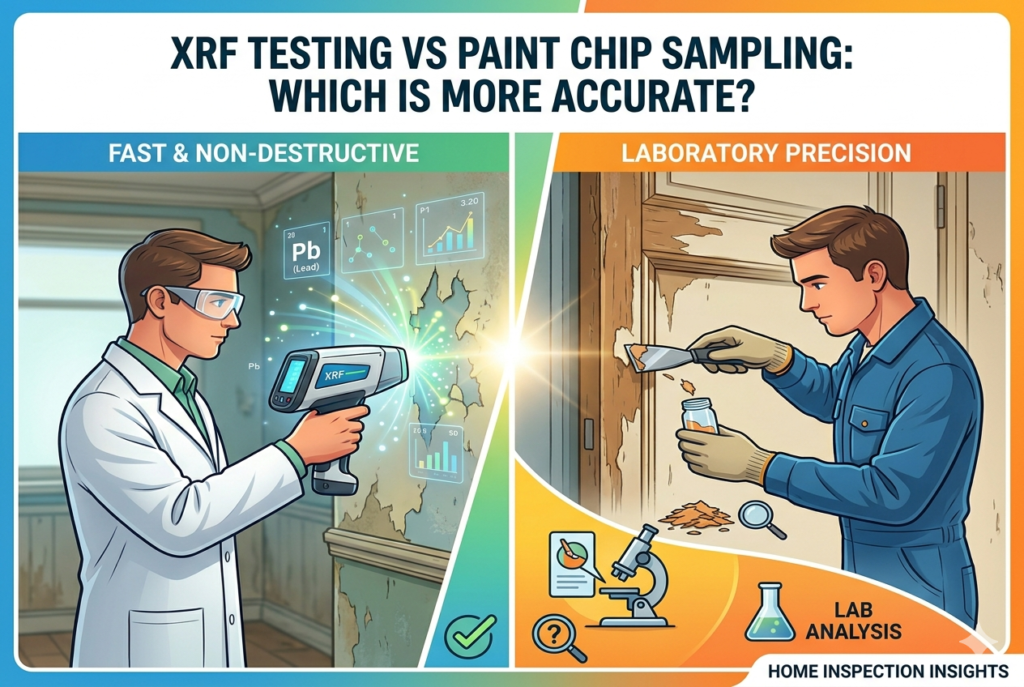
XRF testing (X-ray fluorescence) is a non-destructive method that detects lead in paint using a handheld device. It scans surfaces and provides instant readings without damaging the material. Because of these advantages, our XRF lead paint inspection service is widely used for compliance, real estate evaluations, and pre-renovation assessments across NYC.
What Is Paint Chip Sampling?
Paint chip sampling involves removing a small piece of painted material and sending it to a laboratory for analysis. For cases requiring legally admissible evidence, our certified paint chip sampling service provides lab-grade documentation accepted by HPD and the courts.
XRF Testing vs Paint Chip Sampling: Detailed Comparison
Accuracy
XRF testing is highly accurate when performed by trained professionals using calibrated devices. It measures lead levels through multiple paint layers. Paint chip sampling is slightly more precise because it is analyzed in a controlled laboratory environment.
According to the EPA’s lead-based paint inspection guidelines, XRF instruments used by certified inspectors meet federal standards for residential lead paint detection.
Conclusion: Paint chip sampling offers slightly higher precision, but XRF testing is reliable for most real-world use cases.
Speed
XRF paint testing provides results instantly during the inspection process, allowing quick decisions. Paint chip sampling requires laboratory processing, which can take several days.
Conclusion: XRF testing is significantly faster.
Property Impact
XRF testing is completely non-destructive and does not damage surfaces. Paint chip sampling requires scraping paint, which causes visible damage. If minor surface damage is acceptable and precise measurements are needed, paint chip lead analysis is the right choice for confirmation testing.
Conclusion: XRF testing is safer for maintaining property condition.
Coverage
XRF lead testing allows inspectors to scan many surfaces quickly, making it ideal for full-property inspections. Paint chip sampling is limited to specific areas and may not reflect the entire property. After renovation or abatement work, a dust wipe clearance inspection is often required to confirm that lead dust levels are within safe limits before re-occupancy.
Conclusion: XRF testing provides better coverage and efficiency.
Compliance
Both methods are accepted in regulatory frameworks. XRF testing is commonly used for inspections, while paint chip sampling is used for confirmation and legal purposes. Property owners can consult the NYC HPD lead-based paint compliance guidelines for the latest Local Law 1 and LL31 requirements on accepted testing methods for landlords and building owners.
Conclusion: Both are important depending on the situation.
Which Method Is More Accurate?
Accuracy depends on the purpose. If you need exact laboratory-level results, paint chip sampling is slightly more accurate. If you need fast, reliable, and comprehensive inspection results, XRF testing is the better option. In 2026, XRF testing is considered accurate enough for most compliance and inspection requirements.
When to Choose XRF Testing
Our professional XRF testing service is best when you need to inspect an entire property quickly without causing damage. It is ideal for landlords, property managers, and pre-renovation assessments.
When to Choose Paint Chip Sampling
Our paint chip sampling service is best when you need laboratory confirmation, especially for legal cases or verifying previous test results.
Why XRF Testing Is the Preferred Method in 2026
XRF paint testing has become the industry standard due to its speed and efficiency. It reduces inspection time, minimizes disruption, and provides immediate results. For most situations, XRF lead testing offers the best balance between accuracy and practicality.
If your building has outstanding violations, our HPD lead paint violation filing service helps resolve open HPD orders and keeps your records audit-ready.
Common Mistakes to Avoid
Relying on DIY kits can lead to inaccurate results. Hiring uncertified inspectors or using uncalibrated equipment can also affect accuracy. Using paint chip sampling for large properties when not necessary can increase time and cost without added benefit.
Many property owners also overlook lead in drinking water testing NYC — an equally important compliance requirement for buildings with older plumbing infrastructure.
Real NYC Case: Brooklyn Property Owner
A Brooklyn landlord managing a 1952 apartment building needed to comply with Local Law 31 inspection requirements before a deadline. Rather than using paint chip sampling across all surfaces, the property manager chose XRF testing for speed and minimal disruption.
CleanNYC performed a full-building XRF lead paint inspection across all common areas and units. Results identified lead-positive surfaces in three units. Targeted abatement was completed, followed by a dust wipe clearance inspection 30 days later — confirming safe levels across all units with documented compliance records on file.
Pro Tips for Lead Paint Safety in NYC
Always use certified inspectors with properly calibrated XRF equipment. Do not assume visual inspection alone is sufficient — deteriorating paint that looks stable may still pose a hazard. Schedule a lead test after any renovation or abatement work, and keep all testing records on file for at least 10 years for HPD compliance. For further reading on federal lead paint regulations for property owners and renovators, visit the EPA’s Renovation, Repair and Painting (RRP) Program — the federal standard governing certified lead work in pre-1978 residential buildings.
Professional Lead Paint Testing Services in NYC
If you suspect lead-based paint in your building, working with a trusted certified provider is essential.
CleanNYC Lead and Mold Solutions
841 Knickerbocker Ave, Brooklyn, NY 11207
Phone: 2123816001
Their team provides fast inspections, accurate testing, and full compliance support.
Additional services include:
XRF testing NYC,
dust wipe clearance testing NYC, and
water testing NYC.
How to Prevent Future Lead Paint Issues
Schedule Regular Lead Inspections
Annual XRF testing helps identify problems before they escalate into violations or health issues.
Inspect Paint After Renovations
Construction activity can disturb lead paint surfaces — always arrange a dust wipe clearance test after any renovation or abatement work.
Keep Records Updated
Maintain proper documentation for all lead tests, clearance inspections, and abatement work. HPD filings require detailed records kept for at least 10 years.
Stay Informed About Regulations
Understanding EPA and NYC local laws helps you stay ahead of compliance deadlines. Visit our Why Test page to understand your obligations as a property owner.
Final Thoughts
Lead-based paint remains a serious and largely invisible risk in NYC’s older building stock. Early detection through proper testing is always faster, cheaper, and safer than responding after the fact.
Start with a visual inspection, watch for deteriorating or chipping paint, and schedule certified XRF testing or paint chip sampling if anything raises concern. CleanNYC is here to walk you through every step — from first test to final clearance. To learn more about your options or book an inspection, visit cleannyclmd.com and take the next step toward protecting your tenants and your property.