Lead safety remains one of the most important health concerns in older buildings across New York City. Many apartments built before 1978 still contain lead-based paint beneath multiple layers of newer coatings. Because of the risks associated with lead exposure, accurate inspection methods are essential for identifying hazards and maintaining compliance with local regulations.
One of the most reliable methods used today is apartment XRF testing NYC. This advanced technology allows inspectors to detect lead-based paint quickly and accurately without damaging walls or surfaces.
In this guide, we will explain what XRF testing looks for, how it works during lead inspections, and why it is widely used for residential XRF testing NYC and compliance inspections in apartments and buildings throughout New York City.
Understanding XRF Testing in Lead Inspections
XRF stands for X-ray fluorescence. It is a specialized technology used by certified inspectors to detect the presence of lead within painted surfaces.
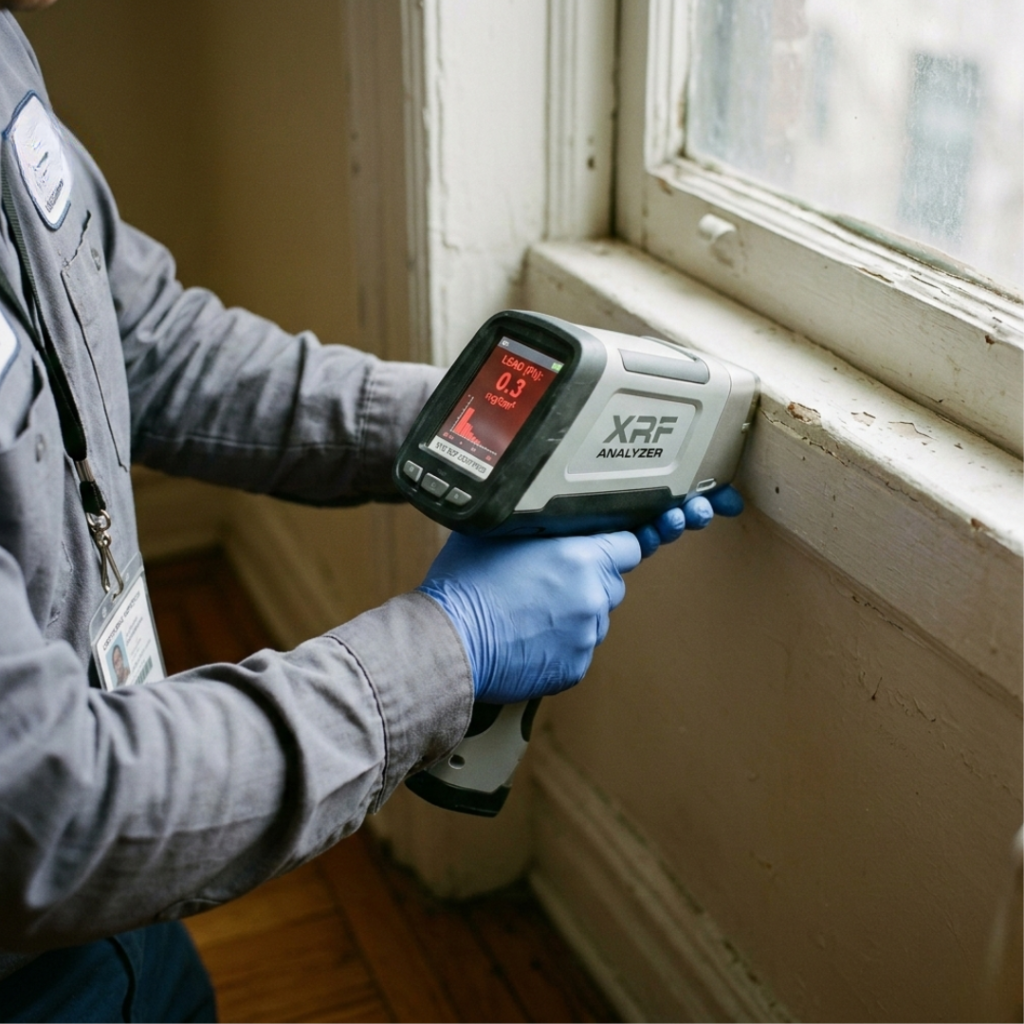
During XRF lead paint testing NYC, a handheld device emits low-level X-rays that interact with the paint layers. The device measures the energy reflected back from the surface, allowing inspectors to determine whether lead is present and how much exists in the paint.
The biggest advantage of this method is that it does not require removing paint samples or damaging walls. Results are generated instantly during the inspection.
Why XRF Testing Is Used in NYC Lead Inspections
Many buildings in New York City were constructed before lead-based paint was banned in 1978. Because of this, thousands of apartments may still contain lead paint under modern coatings.
Lead hazards become dangerous when paint deteriorates, cracks, or produces dust through friction on surfaces like windows and doors.
Apartment XRF testing NYC helps property owners and inspectors:
- Identify hidden lead paint layers
- Determine which surfaces contain lead
- Assess the condition of painted components
- Support compliance with safety regulations
This type of testing is especially important for apartments where children under six years old live.
What Does an XRF Test Actually Test For?
Many people assume XRF testing simply detects lead paint, but the inspection process actually evaluates several important factors.
Lead Content in Paint Layers
The primary purpose of XRF paint inspection NYC is to measure the concentration of lead within painted surfaces.
The device scans through multiple layers of paint and identifies whether lead is present beneath newer coatings.
This allows inspectors to detect hazards even when the top paint layer appears safe.
Location of Lead-Based Paint in the Apartment
Another important part of apartment XRF testing NYC is mapping exactly where lead paint exists within the property.
Inspectors test a wide range of components, including:
- Walls
- Doors and door frames
- Window sashes and frames
- Baseboards
- Moldings
- Radiators
By identifying these locations, inspectors can determine which areas require monitoring or remediation.
Surface Condition of Lead Paint
The inspection process also evaluates the condition of surfaces containing lead paint.
Inspectors look for:
- Peeling or chipping paint
- Cracked surfaces
- Dust-producing friction areas
Even if lead paint exists, intact surfaces may not pose an immediate hazard. However, deteriorating paint requires prompt attention.
Potential Lead Dust Risk Areas
While XRF devices do not directly measure dust, they help identify areas where lead dust is most likely to form.
Common high-risk areas include:
- Window frames and sills
- Doors that rub against frames
- Stair rails
- Baseboards
These surfaces experience frequent contact and friction, which can release lead particles into the environment.
How XRF Lead Paint Testing NYC Works Step by Step
Understanding the inspection process helps property owners know what to expect during testing.
Step 1: Initial Property Assessment
The inspector begins with a visual evaluation of the apartment or building. This helps identify areas where lead paint is most likely present.
Older surfaces and painted structural components are prioritized for testing.
Step 2: Surface Testing with XRF Analyzer
During apartment XRF testing NYC, the inspector places the analyzer directly against the painted surface.
Each reading takes only a few seconds and determines whether lead exists within the paint layers.
Multiple readings are taken throughout the property to ensure accurate coverage.
Step 3: Documentation of Test Results
Every tested surface is recorded in a digital report. The inspector documents:
- Component location
- Lead presence or absence
- Lead concentration levels
- Surface condition
This detailed documentation is essential for compliance and future property management decisions.
Step 4: Inspection Report and Findings
After testing is complete, the inspector prepares a comprehensive report that includes:
- Surfaces containing lead-based paint
- Areas requiring monitoring or repair
- Compliance information
A professional XRF lead paint testing NYC report helps property owners understand risks and plan appropriate actions.
When Apartment XRF Testing NYC Is Recommended
XRF testing is often recommended in several situations.
Older Residential Buildings
Apartments built before 1978 frequently contain lead-based paint. Testing helps confirm whether hazards exist.
Rental Property Compliance
Landlords must ensure apartments are safe for tenants. Professional inspections help meet regulatory requirements and avoid violations.
Renovation Projects
Before renovation work begins, testing is necessary to identify hazardous materials and prevent the release of lead dust.
Child Occupancy
Homes and apartments where children live require additional safety precautions. Lead exposure risks must be minimized through proper inspection.
Advantages of XRF Lead Paint Testing
XRF technology offers several important benefits compared to older testing methods.
Non-Destructive Testing
Unlike paint chip sampling, XRF testing does not damage walls or surfaces.
Immediate Results
Inspectors receive instant readings during the inspection, making the process faster and more efficient.
Highly Accurate Detection
The technology can detect lead beneath multiple paint layers, ensuring hidden hazards are identified.
Comprehensive Coverage
Hundreds of surfaces can be tested in a single inspection, providing a complete evaluation of the property.
Why Professional XRF Inspection Is Important
While some homeowners consider DIY testing kits, these kits cannot match the accuracy of professional inspections.
DIY tests often:
- Only detect surface lead
- Produce unreliable results
- Lack compliance documentation
Certified inspectors performing residential XRF testing NYC use advanced equipment and follow strict protocols to ensure accurate results.
Protecting Your Apartment from Lead Hazards
Lead hazards often remain hidden until professional inspections are conducted. Property owners who invest in regular testing reduce health risks and ensure compliance with local regulations.
A proper XRF paint inspection NYC allows you to:
- Identify hazardous surfaces early
- Protect residents from exposure
- Plan safe renovation work
- Maintain regulatory compliance
Proactive inspections are always more effective than reacting to violations or health concerns.
Frequently Asked Questions
Conclusion
XRF testing is one of the most reliable and efficient methods used in modern lead inspections. In a city like NYC, where many residential buildings were built before the 1978 lead paint ban, accurate testing is essential to protect residents—especially children—from lead exposure. Apartment XRF testing NYC allows inspectors to quickly detect lead-based paint on walls, doors, windows, and other painted surfaces without damaging the property.
Professional inspections using XRF technology provide precise results that help property owners comply with local regulations and maintain safe living environments. Whether you are a landlord, property manager, or homeowner, scheduling residential XRF testing NYC ensures that potential hazards are identified early.
CleanNYC Lead and Mold Solutions provides professional XRF paint inspection NYC services using certified equipment and experienced inspectors. If you need reliable XRF lead paint testing NYC for your apartment or property, our team is ready to help you maintain compliance and keep your living spaces safe.