New York City is known for having one of the largest public drinking water systems in the United States. Millions of residents rely on tap water every day for cooking, drinking, bathing, and cleaning. While the city’s water supply is heavily monitored, recent discussions around aging infrastructure, environmental pollution, and industrial runoff have increased public concern about water safety.
Many homeowners and renters now want clear answers about what may actually be present in their tap water and whether additional filtration or water testing is necessary. Understanding the most common contaminants found in NYC water can help residents make informed decisions for their families.
This guide explains 22 contaminants that may appear in drinking water, how they affect water quality, and why water contamination testing, water quality testing, and professional drinking water testing services are becoming increasingly important in 2026. Residents searching for accurate water safety information now prioritize verified testing methods, transparent reporting, and long-term protection against hidden contaminants.
Why NYC Residents Are Paying Closer Attention to Water Quality
NYC’s water system sources much of its supply from protected reservoirs in upstate New York. Although the city maintains rigorous treatment processes, contaminants can still enter water through old plumbing systems, corroded pipes, industrial pollution, stormwater runoff, and household plumbing materials. You can review the latest findings in the NYC DEP Annual Drinking Water Supply and Quality Report.
The biggest concern for many residents is not always the city’s treatment facilities themselves but what happens after water enters local distribution systems and private buildings.
Older apartment complexes, aging lead service lines, and outdated infrastructure can all contribute to declining water quality at the tap.
This is why many households are now choosing routine drinking water testing to identify potential issues before they become health risks.
22 Contaminants Commonly Found in NYC Water
1. Lead
Lead remains one of the most concerning contaminants in older NYC buildings. Corroded lead pipes and plumbing fixtures can introduce lead into drinking water, especially in apartments built before modern plumbing regulations. According to the U.S. EPA, there is no safe level of lead in drinking water. If you suspect lead in your home’s water supply, our team offers certified lead water testing in NYC to give you accurate, reliable results.
2. Chlorine
Chlorine is commonly used to disinfect municipal water supplies. While effective against bacteria, high chlorine levels can affect taste, smell, and skin sensitivity.
3. Chloramines
Some water systems use chloramines instead of traditional chlorine. These disinfectants may cause irritation for sensitive individuals and can impact aquarium systems.
4. Arsenic
Arsenic may enter water through industrial pollution or natural mineral deposits. Long-term exposure has been associated with serious health concerns.
5. Mercury
Mercury contamination can result from industrial waste and environmental pollution. Even low concentrations may become problematic over time.
6. Nitrates
Nitrates often enter water systems through fertilizer runoff and wastewater contamination. High nitrate levels can be especially dangerous for infants.
7. PFAS Chemicals
PFAS, often called “forever chemicals,” are receiving major attention in 2026 due to their persistence in the environment. These chemicals are linked to industrial manufacturing and consumer products. The EPA’s Lead and Copper Rule Improvements have introduced stricter standards for contaminant testing across the country.
8. Copper
Copper pipes may leach into water due to corrosion. Excessive copper exposure can lead to gastrointestinal issues. Our XRF testing services can help identify corrosion-related contamination risks in your building’s plumbing materials.
9. Iron
Iron contamination may cause reddish staining, metallic taste, and plumbing buildup.
10. Manganese
Manganese is naturally occurring but can affect taste, color, and overall water appearance.
11. Sediment
Sediment particles can develop from pipe deterioration or disturbances within distribution systems.
12. Volatile Organic Compounds (VOCs)
VOCs may enter water from fuel spills, industrial solvents, and chemical runoff.
13. Bacteria
Bacterial contamination can occur from infrastructure failures or localized plumbing problems. If bacterial risk is identified alongside dust or mold concerns, our dust wipe clearance testing may also be recommended for a full indoor environmental review.
14. Pesticides
Agricultural and environmental runoff may introduce pesticides into water supplies.
15. Herbicides
Herbicides can contaminate groundwater and occasionally affect municipal water systems.
16. Microplastics
Microplastics are becoming a growing concern worldwide. Tiny plastic particles have been detected in water systems across multiple cities.
17. Sulfates
High sulfate levels may affect taste and occasionally cause digestive discomfort.
18. Radon
Radon can naturally dissolve into groundwater sources and may become present in household water.
19. Pharmaceutical Residues
Trace amounts of medications and personal care products are increasingly being detected in water systems.
20. Chromium
Industrial contamination may contribute to chromium presence in drinking water.
21. Fluoride
Fluoride is commonly added to public water systems to support dental health, but some residents prefer monitoring its concentration.
22. Rust and Pipe Scale
Aging building infrastructure may release rust particles and pipe scale into tap water. Property owners dealing with pipe deterioration should also consider scheduling an HPD compliance filing review to stay ahead of regulatory requirements.
Signs Your Home May Need Water Quality Testing
Many water contaminants are invisible, odorless, and tasteless. However, certain warning signs may indicate a potential issue:
- Metallic or unusual taste
- Cloudy or discolored water
- Brown or reddish staining
- Strong chlorine smell
- Dry skin after bathing
- Sediment in sinks or tubs
- Recurring plumbing corrosion
- Recent pipe repairs in the neighborhood
Even if water appears normal, hidden contaminants may still be present. Professional water contamination testing provides more accurate information than visual inspection alone.
Why Drinking Water Testing Matters in 2026
Public awareness surrounding water safety has grown significantly in recent years. Residents are becoming more proactive about understanding what is coming from their taps. The CDC confirms that there is no known safe blood lead level in children, making early detection through proper water testing critical for families in older NYC buildings.
Routine drinking water testing helps identify contaminants early and allows households to choose effective filtration systems when needed.
Modern testing methods can detect a wide range of substances, including heavy metals, bacteria, chemical pollutants, and emerging contaminants like PFAS.
Many NYC residents now schedule annual or semi-annual water quality testing services to monitor changing conditions within their buildings and neighborhoods.
How Water Contamination Testing Works
Professional water contamination testing typically involves collecting water samples directly from household taps. Certified laboratories then analyze the samples for a wide range of contaminants.
Testing packages often include:
- Heavy metal analysis
- Bacterial screening
- Chemical contaminant detection
- pH balance evaluation
- Hardness testing
- Chlorine level analysis
- Sediment evaluation
Some homeowners also choose specialized testing for lead, PFAS, or older plumbing systems. To learn more about why certified inspection methods matter, visit our Why Test page.
The results help determine whether additional filtration, pipe replacement, or plumbing maintenance may be necessary.
Best Ways to Improve Water Quality at Home
Although NYC water undergoes treatment, many residents still prefer additional protection inside their homes.
Install a Water Filter
Activated carbon filters, reverse osmosis systems, and whole-house filtration units can help reduce many common contaminants.
Replace Old Plumbing
Older pipes are one of the leading causes of household contamination issues.
Flush Taps Regularly
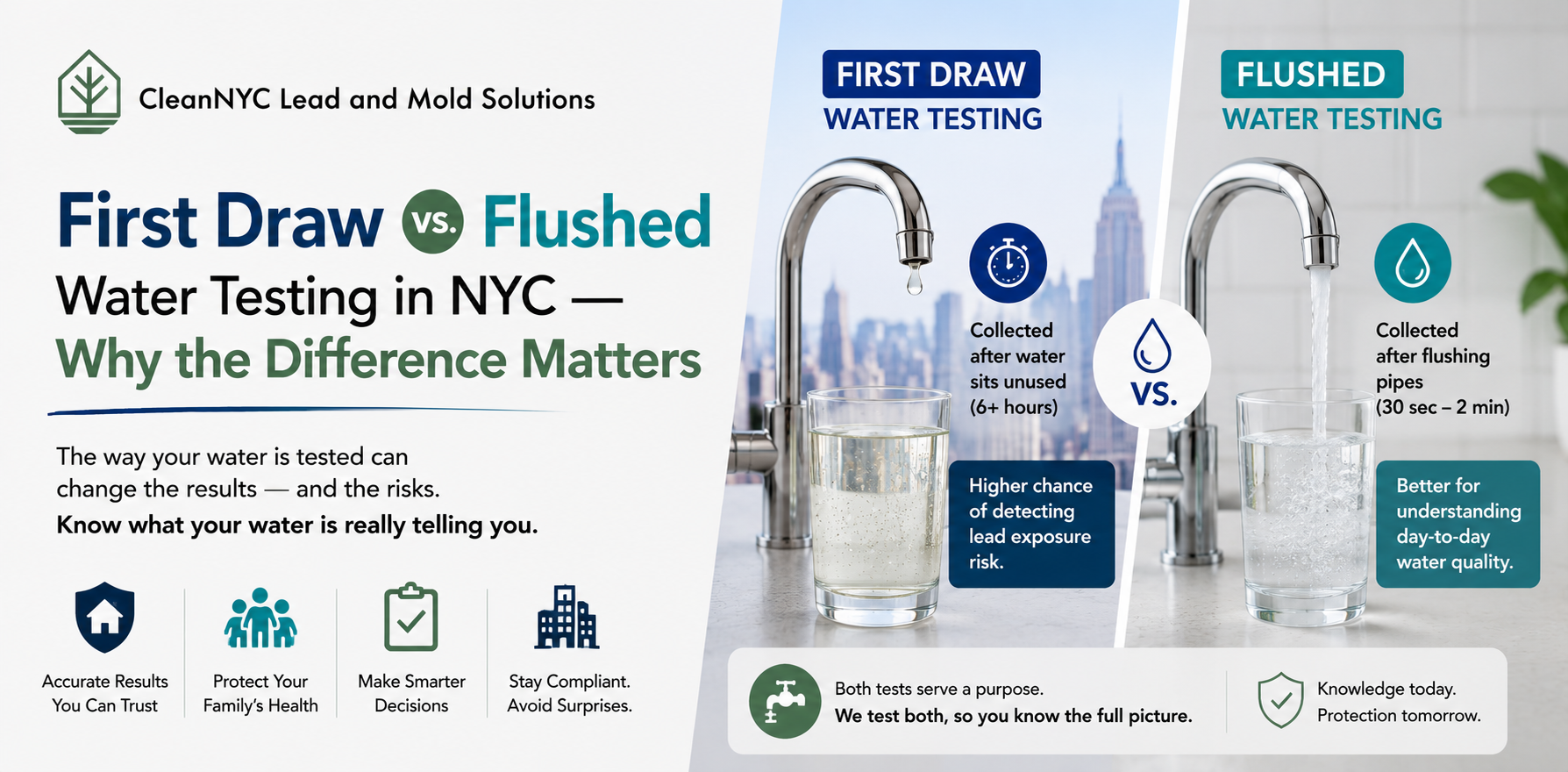
Running cold water for several minutes after periods of inactivity may reduce metal buildup from stagnant pipes.
Schedule Regular Drinking Water Testing
Consistent monitoring allows residents to track changes in water quality over time. Our certified professionals at CleanNYC Lead and Mold Solutions are experienced in providing thorough water and environmental testing across New York City.
Maintain Building Plumbing Systems
Landlords and property owners should regularly inspect pipes, valves, and plumbing fixtures. Owners can also review their past project case studies to understand how proactive testing has helped other NYC property managers stay compliant and protect tenants.
Are NYC Water Contaminants Dangerous?
Not every contaminant automatically creates an immediate health risk. The level of exposure, duration, and individual health conditions all influence potential effects.
However, long-term exposure to certain contaminants like lead, arsenic, PFAS, and bacteria can become serious if left unaddressed.
Children, pregnant women, older adults, and individuals with weakened immune systems may be more vulnerable to water quality issues.
This is one reason why professional water testing services continue to gain popularity among NYC households.
What Residents Should Do Next
If you live in an older building, recently noticed changes in your tap water, or simply want greater peace of mind, professional drinking water testing may be a practical step.
Understanding your home’s water quality helps you make informed decisions about filtration systems, plumbing upgrades, and daily water usage.
As environmental concerns and infrastructure challenges continue to evolve in 2026, staying informed about water safety has become more important than ever.